
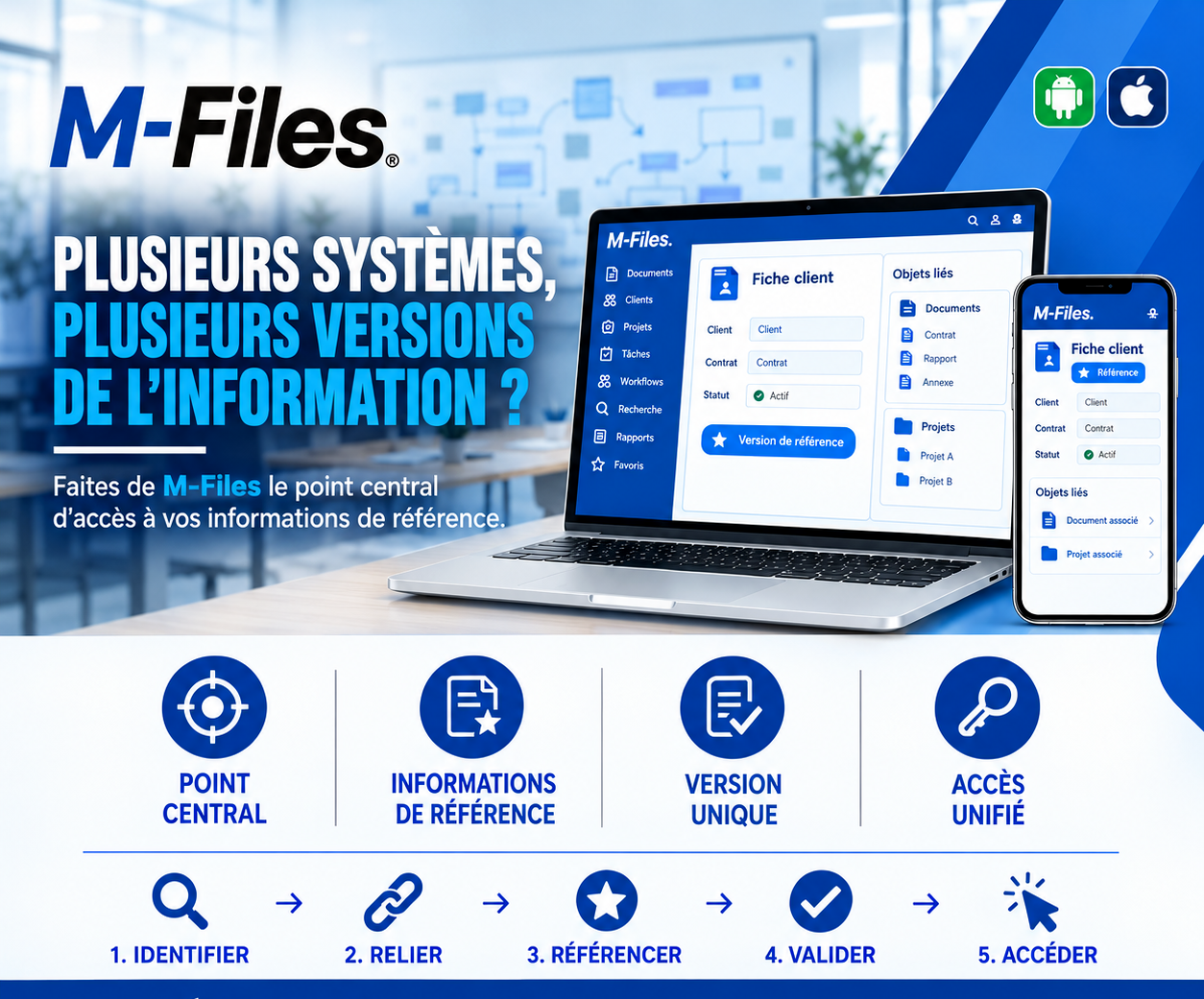
MULTIPLE SYSTEMS, MULTIPLE VERSIONS OF THE INFORMATION?
Central hub, reference information, single version, unified access: make M-Files the reference for your client data.
Galaxy Conseils • Banking & financial institutions sector
In the spring, Société Alpha moved to new premises, and Aïcha appointed a deputy managing director who can now sign on behalf of the company. She notified her bank by letter, with the official documents.
The advisor updated the customer relationship tool. But the banking software kept the old address. The legal department still works with the old list of signatories, in its own file. And the mail department uses a third address file.
A few months later, an important letter from the bank goes to the old address and comes back. An amendment to the credit agreement is prepared in the name of the company's former representative. Aïcha has to call, call again, and resend her supporting documents.
Each department thought it had the right information, and each had its own. To Aïcha, it felt like the bank wasn't listening. In reality, it simply had several versions of the truth.
When the same piece of information — a client's address, its executives, its contracts, or its status — is recorded in several systems, it always ends up diverging. One department updates it, another doesn't. The consequences are very real.
Contradictory information — two addresses, two signatories, two statuses for the same client.
Costly mistakes — misaddressed letters, contracts under the wrong name, decisions made on outdated data.
Multiple updates — the same change has to be entered in several places, and one of them is inevitably missed.
No clear reference — when two systems diverge, no one knows which one to trust.
The solution is to designate, for each important piece of information, a reference version, and to ensure every department ties into it. Documents, contracts, and projects are linked to this reference record instead of copying the information.
Let's replay Aïcha's story, this time at a bank using M-Files.
1. Identify. The bank identifies Société Alpha's key information: company identity, address, executives and signatories, contracts, relationship status.
2. Link. In M-Files, a "Client record" for Société Alpha is created. Documents (contract, report, appendix) and projects (Project A, Project B) are linked to it as related objects.
3. Reference. This record carries the label "Reference version." It's the one the advisor, legal, and the mail department consult.
4. Validate. When Aïcha announces her move and her new signatory, the change is entered once in the record, then validated. The client's status stays "Active."
5. Access. Every department, on computer as well as on mobile, immediately sees the new address and the new signatory, and every linked document relies on the same record.
A central hub. A single reference record for each client, consulted by every department.
Reference information. Address, executives, contracts, status: every piece of information has a clearly identified source.
A single version. An update made once is visible everywhere, with no re-entry.
Unified access. The client's documents, projects and data are linked and accessible from the same record.
In M-Files, a client isn't just a folder name: it's an object, with its own information, to which documents, contracts and projects are linked. Documents don't need to copy the address or the signatory's name: they point back to the client's record.
When the reference sits in another system, such as the banking software, M-Files can connect to it to display up-to-date data, rather than keeping a copy that goes stale. And validated changes are tracked in the record's history.
This way, every department keeps using its own tools, but all of them rely on the same version of the information.
Ask yourself:
"If a client changed address today, how many systems would need updating, and how likely is it that one gets missed?"
If that answer worries you, it's time to define a reference version.
At Galaxy Conseils, we help banks and financial institutions make M-Files the central access point for their reference information, in connection with their existing systems. Want to see concretely what this would look like at your bank?
Galaxy Conseils: innovation serving your performance.
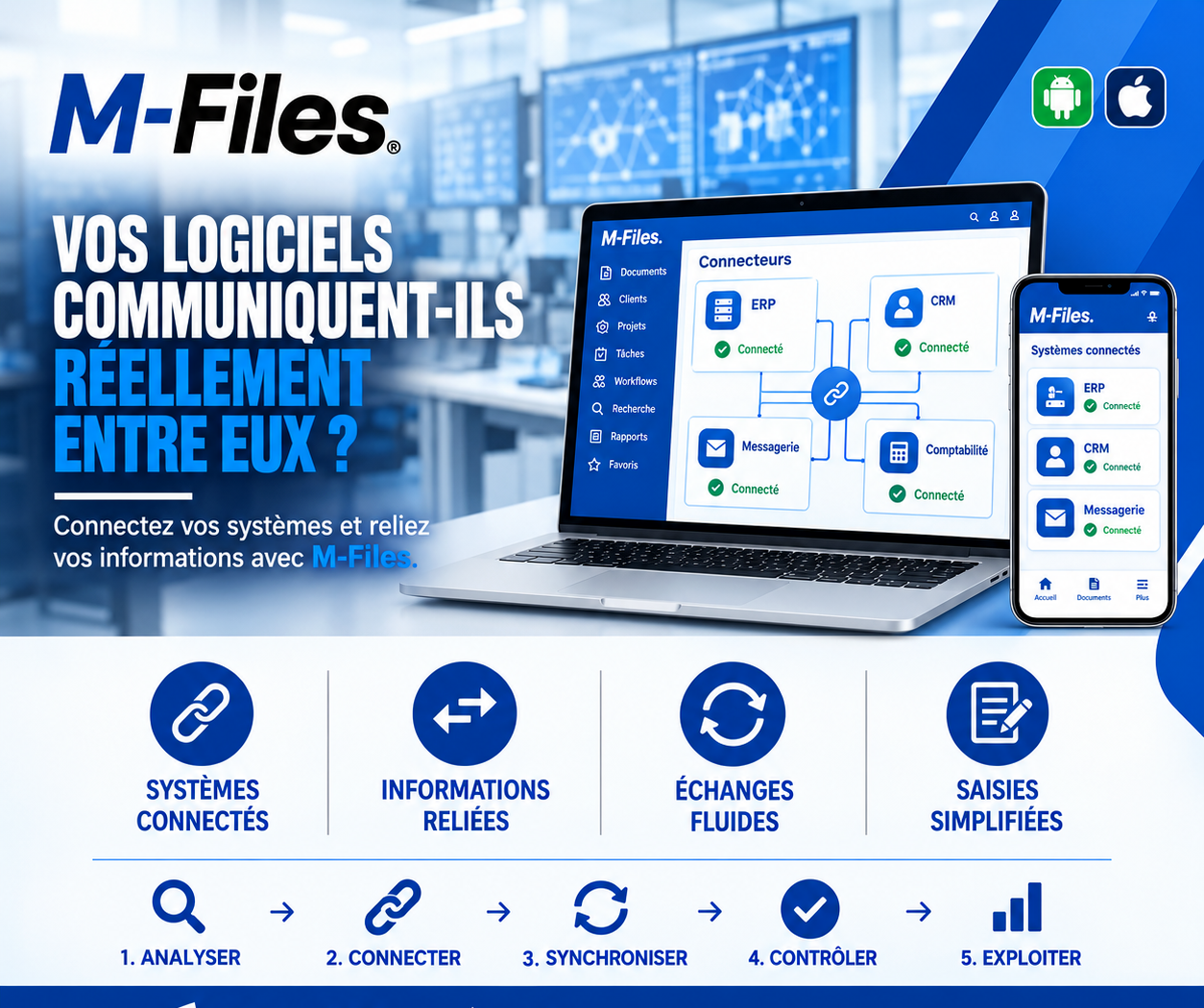
Do your software systems really talk to each other? Connected systems, linked information, smooth exchanges, simplified data entry: discover how M-Files connectors eliminate double entry.
Read more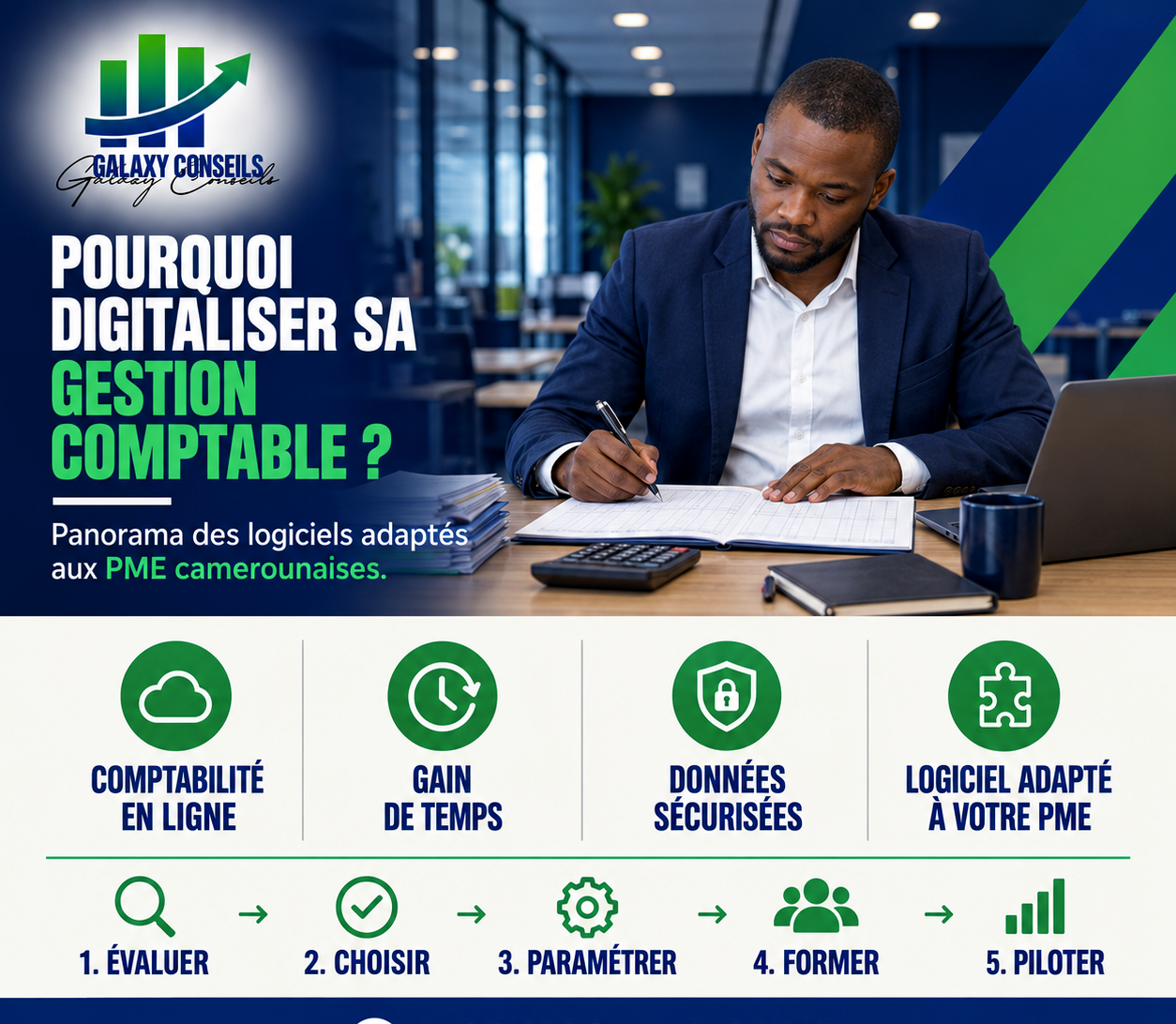
Why digitize your accounting management? Online accounting, time savings, secure data: an overview of the software types suited to Cameroonian SMEs and criteria to choose well.
Read more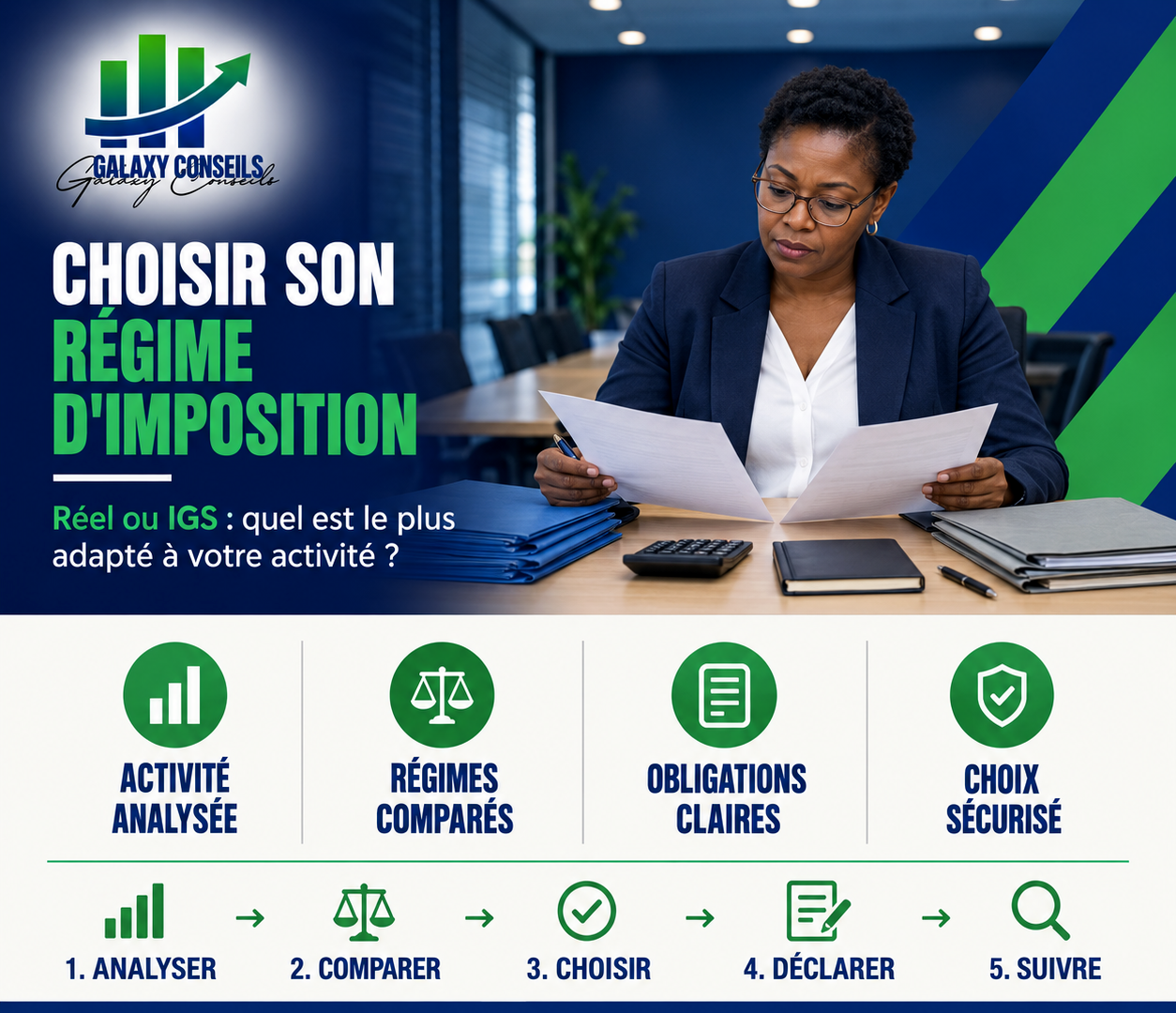
Actual earnings or simplified flat tax (IGS): which tax regime fits your business in Cameroon? Thresholds, obligations, advantages and pitfalls: the steps to make the right choice.
Read moreContact us to learn more about our news and upcoming events.
Our offers, news and document management tips, straight to your inbox. One e-mail a month at most.
Unsubscribe in one click at any time. Privacy policy
Check your inbox
We've sent you a confirmation link. Click it to complete your sign-up.
Comments
No comments yet. Be the first to react!