

Approval tracking & workflow visibility
How many files are still waiting for approval?
This time, let's change perspective. Let's leave Aïcha for a moment and sit in her branch manager's office instead.
Galaxy Conseils • Banking & financial institutions sector
It's the end of the month. The branch manager is preparing his review with regional management. Loan figures are down, even though demand has never been higher. He can't understand why.
He starts asking questions. The credit department tells him the files are "with risk". The risk department says they're waiting on compliance. Compliance says several files are "with legal". And legal says some are waiting on "final approval".
No one has the full picture. Each department only sees its own pile. It takes two days and dozens of calls to piece the situation together: 23 files are waiting for approval, some for more than three weeks.
Among them is Aïcha's SME credit file. Her solar panel business needs to finance a new work vehicle. The file has been complete for a while. It's simply waiting on one final signature.
That same day, Aïcha receives an offer from another bank, with an answer promised within a week.
In a bank, a file often passes through several approvals: manager, compliance, risk, legal, final approval. Each step is necessary. But each is also an opportunity for delay. Most often, the problem isn't that teams are working slowly. It's that no one can see where files are piling up:
The result shows up in the numbers: lead times stretch out, clients leave, and teams are worn out by follow-ups that could have been avoided.
Speeding up approvals doesn't mean removing controls. It first means seeing: how many files are waiting, at which step, with whom, and since when. With that visibility, a manager can act in the right place: follow up with the right person, reassign a file during an absence, reinforce an overloaded team.
A full picture at a glance. Opening M-Files, the manager immediately sees the "Pending approvals" view: 23 files, each showing its current step, who it's assigned to, and the date.
Bottlenecks surface. He immediately spots Aïcha's SME credit file: it's at "Final approval", assigned to Jean K., and has been waiting longer than the others. He also notices several files stuck at the same step.
Automated workflows. Each file moves on its own from one step to the next. Approvers are notified at the right time and get automatic reminders when a file is running late. If someone is away, their files can be reassigned in a few clicks.
Targeted action. The manager follows up with Jean K., who approves Aïcha's file from his phone within the hour.
The next day, Aïcha receives approval for her work vehicle. She politely turns down the other bank's offer. And by the end of the month, the manager no longer needs two days of digging: he presents a clear report, with lead times that have dropped significantly.
Full visibility — you instantly identify pending files: how many, where, with whom, and since when.
Automated workflows — the right people are engaged at the right time, with no manual follow-up, and files never sit without an owner.
Faster approvals — you cut lead times and avoid delays. Approvers sign off in a few clicks, from their computer or phone.
Improved performance — you speed up your processes and gain efficiency. Decision-makers steer with facts, not impressions.
With M-Files, every file follows a pre-defined approval workflow: you always know which step it's at and who needs to act. That information isn't locked away in someone's head — it's visible to the people managing the operation.
Tracking dashboards update automatically as approvals move forward. They show late files, the steps that slow things down, and each team's workload.
And what applies to credit files applies to every approval in a bank: account openings, compliance checks, client commitments, contracts, correspondence.
Ask yourself the question in this article's title, and try to answer it in under a minute:
"How many files are waiting for approval in our bank right now? And which one has been waiting the longest?"
If you can't answer without making several phone calls, your clients are probably waiting longer than you think.
We help banks and financial institutions automate their approval workflows and track their files in real time with M-Files, starting from their actual processes.

Where does each account opening stand? Received, under review, in approval, open? Discover how M-Files gives real-time visibility over every file, at every step.
Read more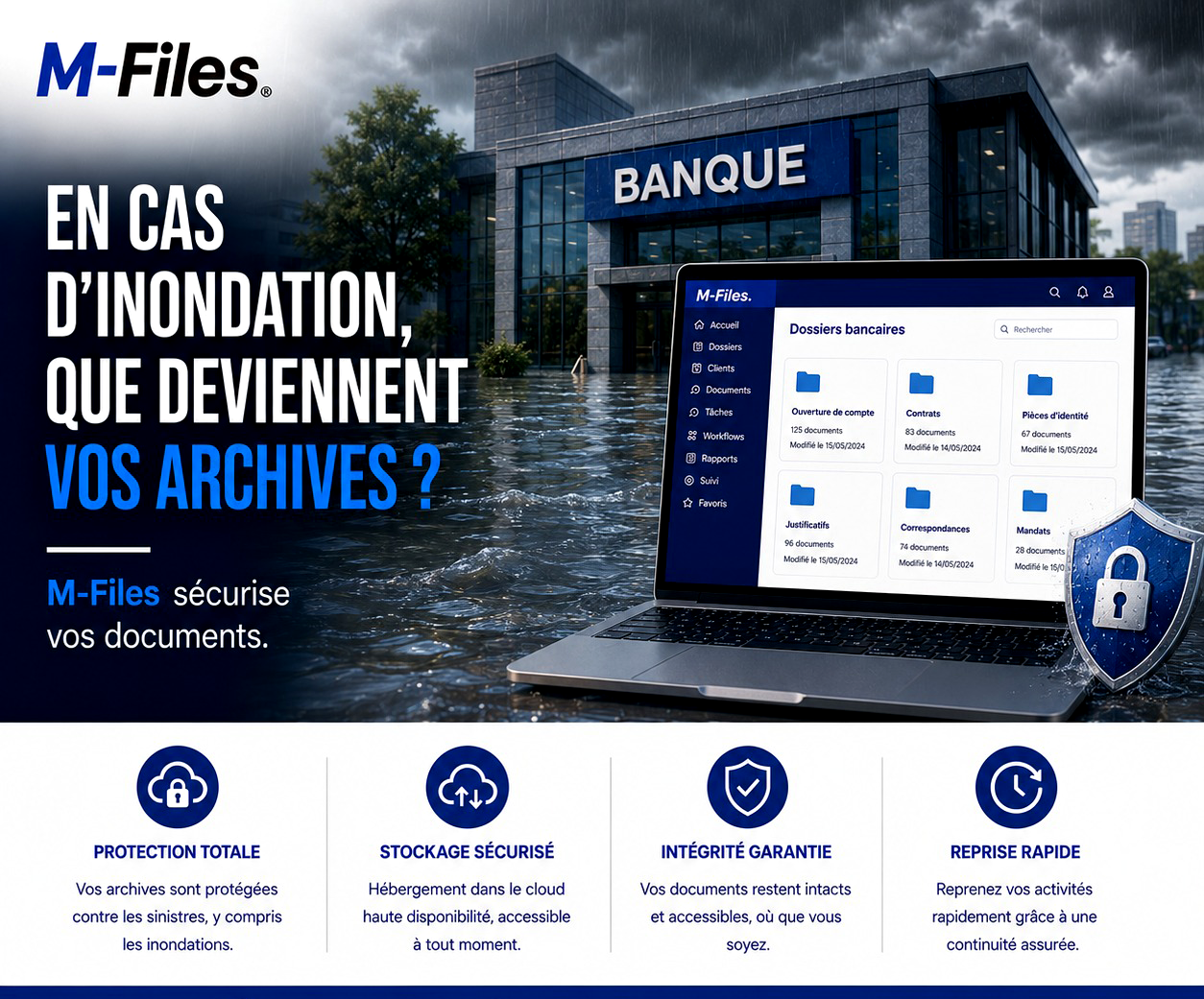
Rainy season, a flooded branch, a server submerged in the basement: what happens to your archives? Discover how M-Files protects your documents and ensures a fast recovery of your operations.
Read more
Letters stuck in the signature binder, approvals waiting on the director's return, replies that can't be found... Discover how M-Files tracks every letter, from receipt to archiving.
Read moreContact us to learn more about our news and upcoming events.
Our offers, news and document management tips, straight to your inbox. One e-mail a month at most.
Unsubscribe in one click at any time. Privacy policy
Check your inbox
We've sent you a confirmation link. Click it to complete your sign-up.
Comments
No comments yet. Be the first to react!