
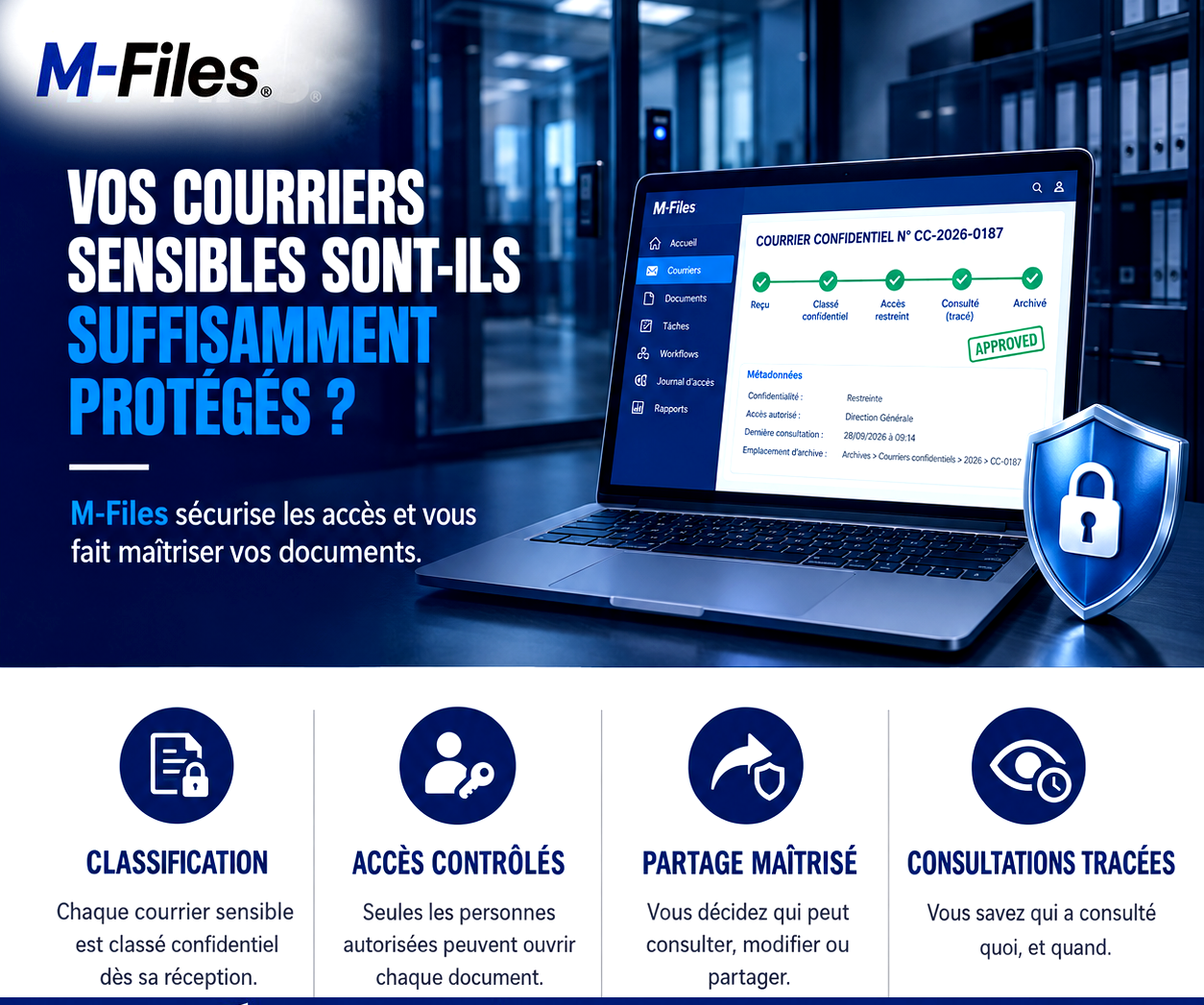
Are your sensitive letters truly protected?
A letter marked "Confidential" in red on the envelope. And yet, once opened, it travels like any other document: photocopied, forwarded, filed away in a shared folder.
Galaxy Conseils • Banking & financial institutions sector
Aïcha is preparing the biggest project of her career: Société Alpha wants to acquire a competing company. Nothing is signed yet, and everything depends on discretion. To finance the deal, Aïcha writes to her bank's General Manager. On the envelope, she writes in red: "Confidential."
At the bank, the letter arrives at the mail room with dozens of others. It's opened, photocopied "for tracking purposes," then dropped in a tray. One copy goes to the commitments department, another to legal. The document is scanned into a shared folder that many staff members can open.
"A few weeks later, a rumor spreads around town: Société Alpha is said to be acquiring a competitor. The leader of the targeted company, concerned, suspends the talks."
No one at the bank meant any harm to Aïcha. But no one can say who read that letter, or how many copies exist. And Aïcha now wonders whether she can still trust her bank with her projects.
No classification
Nothing distinguishes a confidential letter from an ordinary one once it's opened.
Access that's far too broad
Paper copies, shared folders, forwarded emails: the document ends up in many hands.
Uncontrolled sharing
Anyone can photocopy, forward or print it, without authorization.
No trace at all
If a leak occurs, there's no way to know who viewed the document, or when.
For a bank, whose business rests on trust and discretion, a single leak can cost a client, a reputation, or even a sanction.
A sensitive letter must be protected the moment it comes through the door: identified as confidential, accessible only to the people concerned, and tracked at every consultation. Protection shouldn't depend on everyone's good will, but on rules applied automatically.
Received
Logged on arrival, with no desk-to-desk travel.
CC-2026-0187➜
Classified confidential
"Restricted" level, protection kicks in automatically.
➜
Restricted access
Only the General Manager can open it.
➜
Viewed and logged
Every single consultation is recorded.
09/28 9:14am➜
Archived
Same access rights kept, with no copy and no forwarding.
When the General Manager wants to bring the commitments director into the review, he grants access to the document directly in M-Files. No photocopy, no forwarded email: access is granted to one specific person, and it's logged.
Aïcha's project stays confidential right up to signing. The financing is approved, the acquisition goes through. And Aïcha now knows she can trust her bank with her most sensitive projects.
Classification — every sensitive letter is classified confidential as soon as it arrives, and that classification protects it automatically.
Controlled access — only authorized people can open each document. Others simply don't see it.
Managed sharing — you decide who can view, edit or share. You grant access, you don't make a copy.
Logged consultations — you know who viewed what, and when. If there's ever any doubt, the answer is in the history.
In a typical shared folder, rights are attached to the folder: simply moving or copying a file is enough for it to escape all protection. In M-Files, rights follow the document itself, based on its metadata. A letter marked "restricted confidentiality" stays protected wherever it's viewed.
The activity log records every view, every edit and every change of rights. The bank can then demonstrate, during an audit or an incident, that its sensitive letters were handled according to its own rules.
These rules are configured to match your organization: confidentiality levels, departments concerned, retention periods. And they apply the same way in the office, remotely, or on mobile.
"If a confidential letter arrived this morning, how many people would have seen it before it reached its recipient?"
If you can't answer with certainty, your sensitive letters deserve better protection.
We help banks and financial institutions protect their sensitive letters and documents with M-Files, working with them to define the confidentiality levels and access rules suited to their organization.
Galaxy Conseils: innovation in the service of your performance.
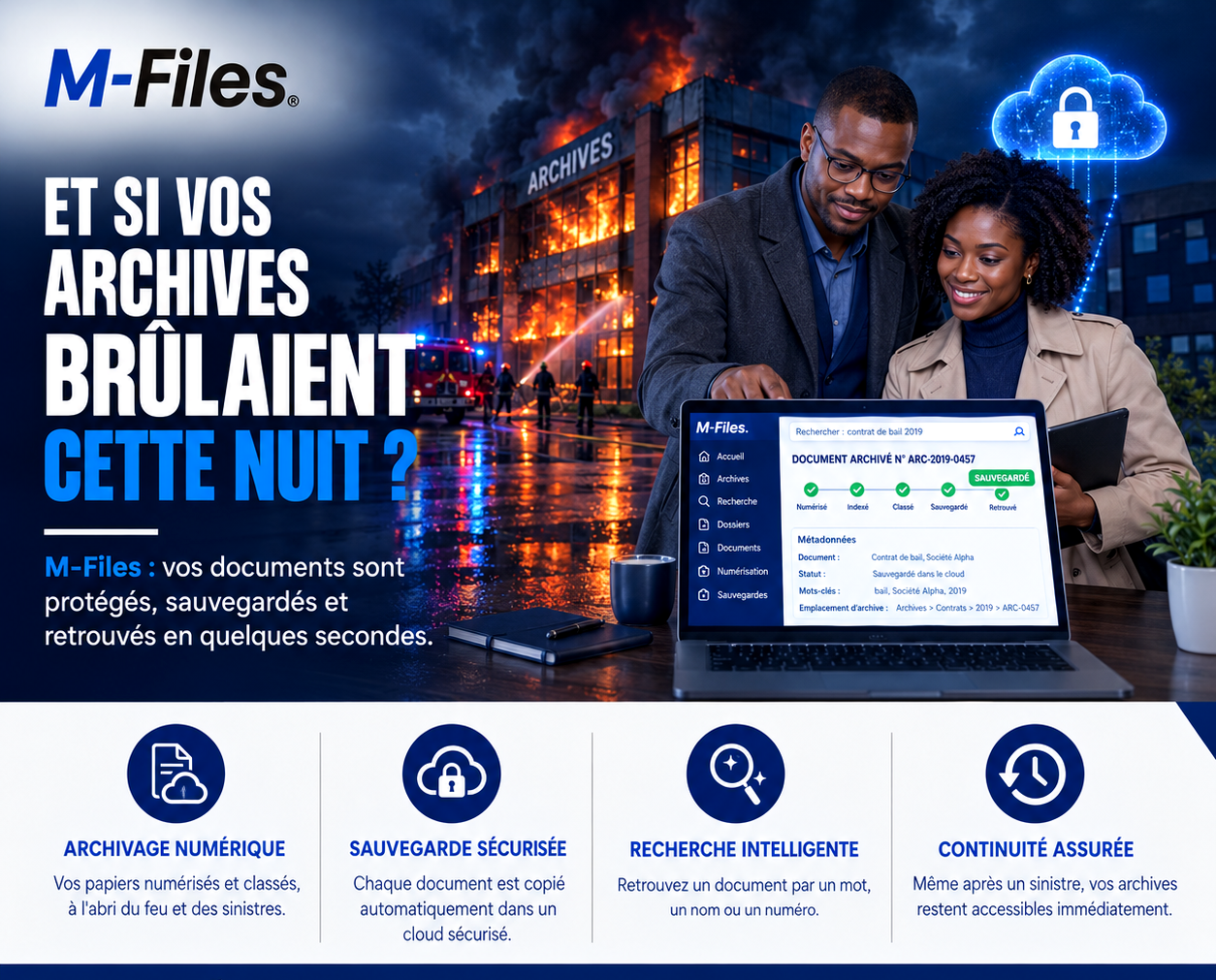
What if your archives burned tonight? Digital archiving, secure cloud backup, smart search: discover how M-Files keeps your documents accessible even after a disaster.
Read more
VAT on deposits, tax credit for youth employment, accounting records file, business closure: what the 2026 Finance Act changes for your business in Cameroon, and how to get ahead of it.
Read more
Received an audit notice? Documents in order, obligations up to date, accounting records file ready, timely response: best practices for facing a tax audit in Cameroon with confidence.
Read moreContact us to learn more about our news and upcoming events.
Our offers, news and document management tips, straight to your inbox. One e-mail a month at most.
Unsubscribe in one click at any time. Privacy policy
Check your inbox
We've sent you a confirmation link. Click it to complete your sign-up.
Comments
No comments yet. Be the first to react!