
Security & data protection
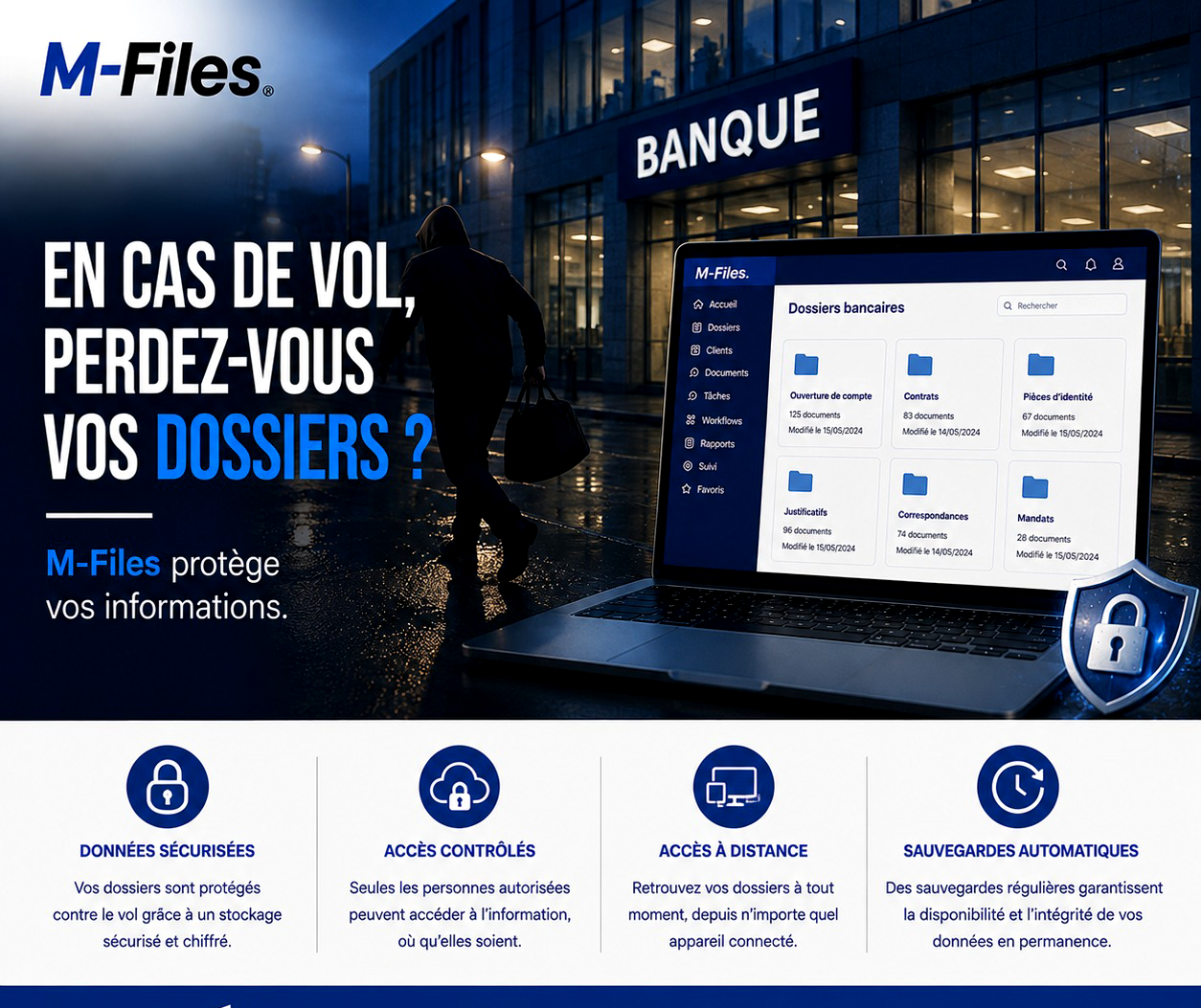
In the event of a break-in, do you lose your files?
Break-in, stolen laptop, forced cabinet : what happens to your clients' files? Here's Aïcha's story — and what would have changed with M-Files.
Galaxy Conseils • Banking & financial institutions
Aïcha just moved into her new house. The boxes are still sitting in the living room, but life is getting back to normal. One Tuesday morning, she gets a call from her bank.
"Ma'am, our branch was broken into last night. The thieves forced open a filing cabinet and took several laptops. Your file is among those that disappeared."
It takes Aïcha a few seconds to grasp what this means. That file held a copy of her ID, her pay slips, her bank statements, her mortgage contract, and the address of her new house.
All of it is now in the hands of strangers.
In the days that follow, the bank asks her to bring in all her documents again to rebuild her file. Aïcha does it, but a worry won't leave her : what if someone uses her information to open an account or take out a loan in her name?
Aïcha lost nothing but her peace of mind. But for a client, that's already a lot.
When people think of theft at a bank, they picture money first. Yet client files also hold great value — for the bank, and for anyone looking to exploit them.
A bank file contains everything needed to steal an identity : ID documents, addresses, income, account numbers, signatures. When it's stolen, the damage is twofold :
And the risk isn't limited to filing cabinets. A stolen laptop can hold hundreds of documents saved on its drive, downloaded attachments, or a synced folder. Opening it is all it takes to get in.
Beyond the harm to clients, such an incident exposes the bank to a crisis of trust and to tough questions from regulators about how it protects client data.
A break-in can never be fully ruled out. Doors can be forced, and computers can disappear. So the right question is : if it happens tomorrow, what will the thief actually be able to do with what they took?
If the files are on paper in a cabinet, or in files stored on computers, the answer is worrying. If they're protected inside a secure system, the answer changes completely.
Let's replay Aïcha's story, this time at a bank that uses M-Files.
The break-in happens, just like before. The cabinet is forced, the laptops disappear. But this time, the situation is very different.
In the cabinet, there was nothing left but paper originals already digitized and archived. The thieves take sheets of paper, but the bank loses no files.
On the laptops, there are no client files sitting around unprotected. Documents are kept in M-Files, in secure, encrypted storage, and only open with the right credentials.
By morning, the IT department locks the accounts tied to the stolen laptops and resets access. Access rights ensure only authorized people can view the information.
A few minutes later, Aïcha's advisor logs in from another workstation. Aïcha's file is complete and intact, thanks to automatic backups.
Aïcha isn't asked to bring in her documents again. If the bank tells her about the incident, it's to reassure her : her information never left the secure system.
The thieves left with hardware. The clients' data stayed safe.
Secured data. Your files are protected against theft through secure, encrypted storage. A stolen laptop doesn't give access to your clients' documents.
Controlled access. Only authorized people can access information, wherever they are. Each user sees only what their role allows, and every view is logged.
Remote access. Your teams can find their files at any time, from any connected, authorized device. A stolen laptop gets replaced, and the work continues.
Automatic backups. Regular backups constantly ensure the availability and integrity of your data. Even after an incident, nothing is lost.
In many organizations, document security relies on locked cabinets and everyone's good intentions. M-Files changes that logic : documents are no longer scattered across computers, USB drives, or desk drawers. They're brought together in a single system, protected and governed by clear rules.
✓ Every file — whether it's an account opening, a contract, identity documents, supporting records, correspondence, or mandates — is classified, protected by access rights, and backed up automatically.
It's the same logic that protects files in the event of a fire, that guarantees the traceability of every action, and that ensures a single version of every document. Security isn't bolted on afterward : it's built into how documents are managed every day.
Imagine one of your advisors' laptops gets stolen tonight, or your branch's filing cabinet is forced open.
"Tomorrow morning, could you say with certainty which client data left the building, and whether it's readable?"
If that answer makes you uncomfortable, it's time to protect your files before a thief asks the question for you.
At Galaxy Conseils, we help banks and financial institutions secure their clients' files with M-Files : digitization, access rights, secure storage, and backups, starting from their real-world organization. Want to see exactly what this would look like at your bank?
Galaxy Conseils: innovation in service of your performance.
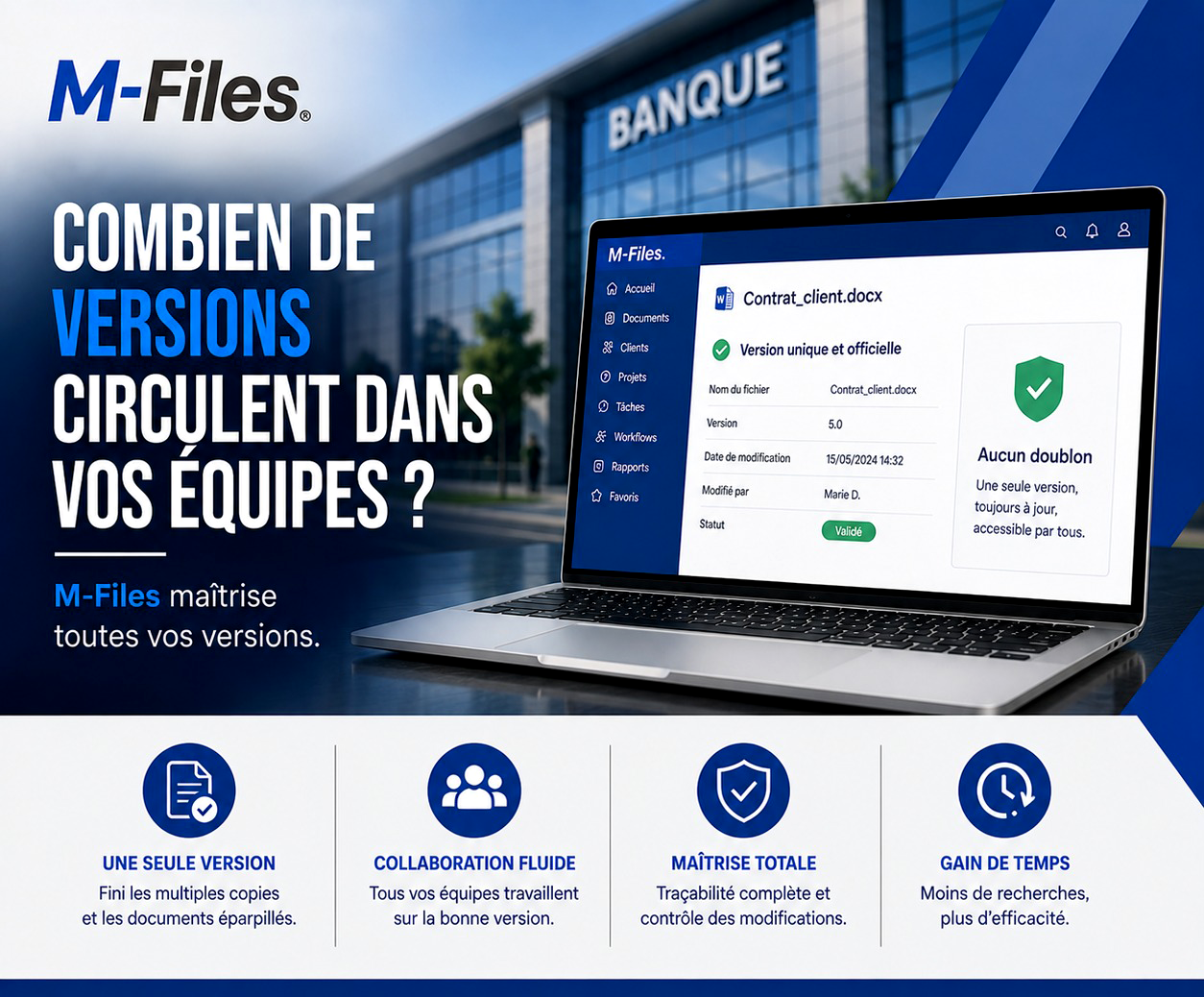
Contract_v2, Contract_final, Contract_final_OK... How many versions are circulating in your teams? Discover how M-Files guarantees a single, up-to-date, validated version.
Read more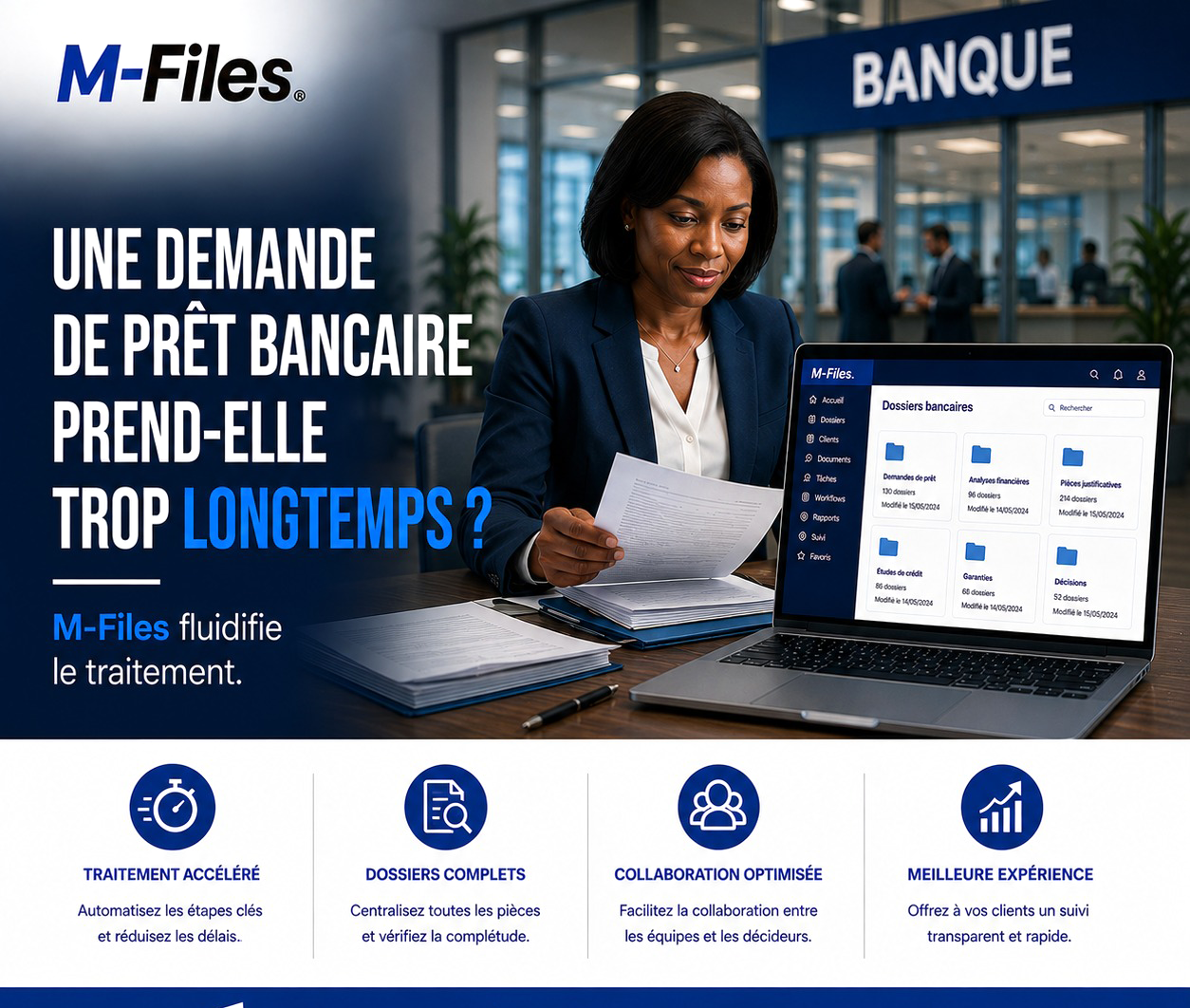
Documents requested again, files shuttled from desk to desk, clients waiting for weeks... Discover how M-Files speeds up loan application processing.
Read more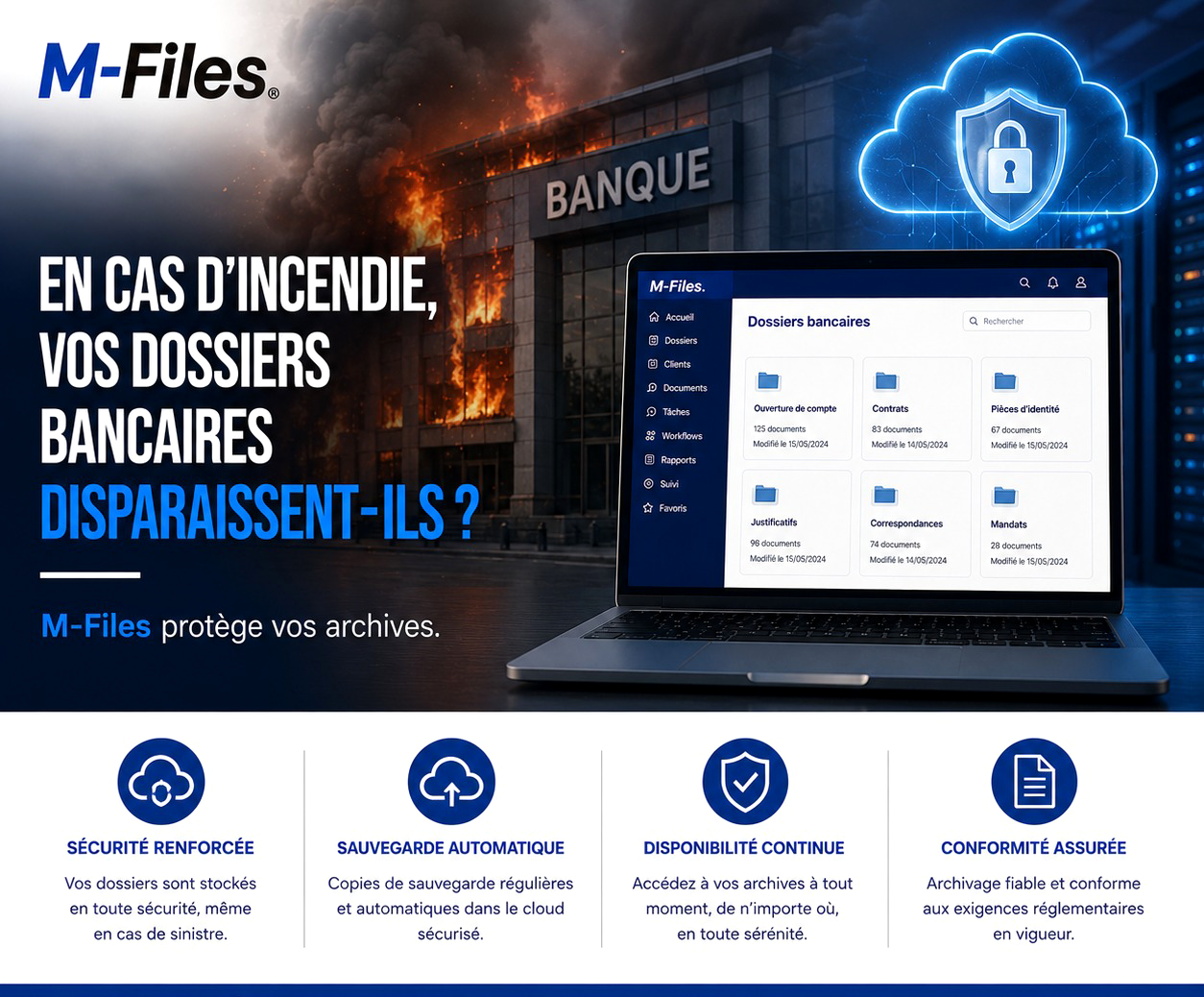
If your paper archives burned down tonight, what would be left of your clients' files? Discover how M-Files protects, backs up, and keeps your documents available, even in the event of a disaster.
Read moreContact us to learn more about our news and upcoming events.
Comments
No comments yet. Be the first to react!