
Tenders & deadlines
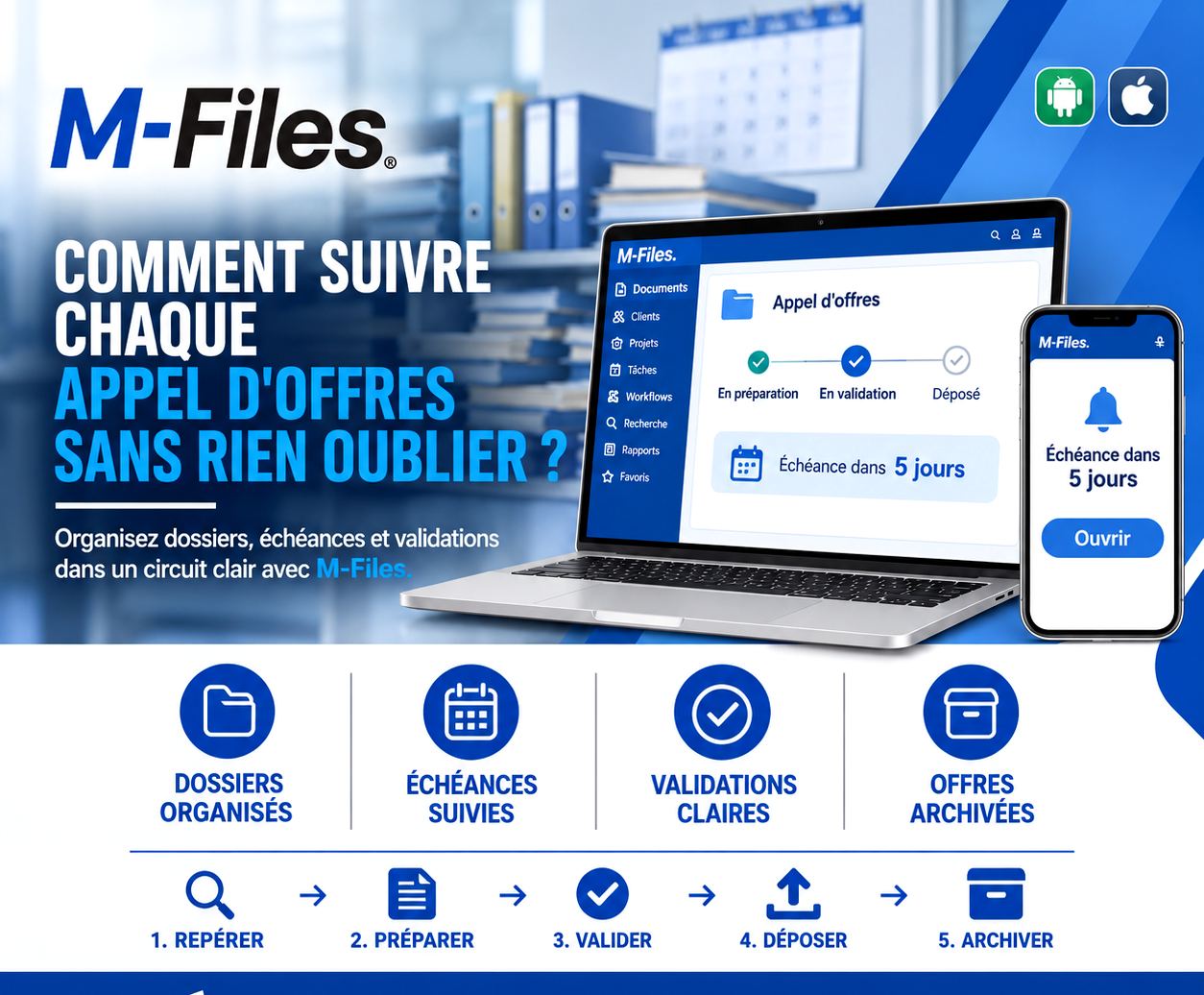
HOW TO TRACK EVERY TENDER WITHOUT FORGETTING ANYTHING?Discover how M-Files organizes every tender: file, deadlines, approvals, submission and archiving.
Galaxy Conseils • Banks & companies
At Société Alpha, Aïcha would never let an interesting tender go by. Yet on this particular day, the bank publishes a call for tenders for equipment, and the information arrives in an email sent to several people.
Yannick, the salesman, saves the specifications on his computer. Carine prepares the administrative documents in a shared folder. The financial offer circulates as email attachments, in three versions, between Yannick and Aïcha. Everyone thinks someone else is watching the deadline.
The evening before, they discover that an administrative document is out of date, and that the latest version of the financial offer is not the one that was reviewed. They rush, correct, and submit at the last minute.
A rushed submission, a fragile file, and Aïcha wonders how many opportunities are lost this way, not for lack of skill, but for lack of a process.
Deadline: a cut-off date that nobody is explicitly responsible for watching.
Documents: specifications, administrative documents, technical offer, financial offer, spread across several people.
Versions: several versions of the offer circulate, with no way to know which one was approved.
Memory: once the offer is submitted, the documents are hard to find for the next tender.
Each tender becomes a file in which everything is gathered: documents, deadline, status and the people involved. The file follows a simple workflow: in preparation, in approval, submitted. At every step, everyone knows what remains to be done.
Let's revisit the bank tender story, with M-Files.
1. Spot. Upon receipt, the tender is registered as a file, with its title, its issuer and its submission deadline.
2. Prepare. Specifications, administrative documents, technical offer and financial offer are gathered in the file, and their versions are tracked.
3. Approve. Carine checks the documents, Aïcha approves the offer. The status changes to “In approval”, then the approval is recorded.
4. Submit. A notification reminds the team of the deadline as the cut-off date approaches. The team submits the offer, and the status changes to “Submitted”.
5. Archive. The submitted offer, its documents and the tracking remain archived in the file, easy to find for the next tender.
This time, nobody discovers the problem the evening before: the deadline was visible from day one, and the right version of the offer was the one that had been approved.
Organized files. Each tender has its own file, with all its documents.
Tracked deadlines. A reminder warns you before the cut-off date.
Clear approvals. You know who approved what, and when.
Archived offers. Submitted offers are easy to find later on.
M-Files does not just store documents: it tracks their status and their dates. A tender “in approval” or “to be submitted in 5 days” is visible without anyone having to remind others by email.
Let's be clear about what M-Files does and does not do: it organizes the file, the approvals and the reminders. It does not submit the offer for you on the issuer's portal, and it does not guarantee that an offer will be selected. Deadline reminders are configured according to your rules.
Once the file is archived, it becomes a working base: reusable documents, approval history, comparable offers.
Ask yourself this question:
For each tender currently under way, do you know today who is watching the deadline and which version was approved last?
If the answer depends on someone's memory, the risk of oversight is real.
At Galaxy Conseils, we help banks and companies organize their files, deadlines and approvals with M-Files.
Want to see concretely what this would look like in your bank?
✉️ Request a demo 💬 Write to us on WhatsAppGalaxy Conseils: innovation in service of your performance.
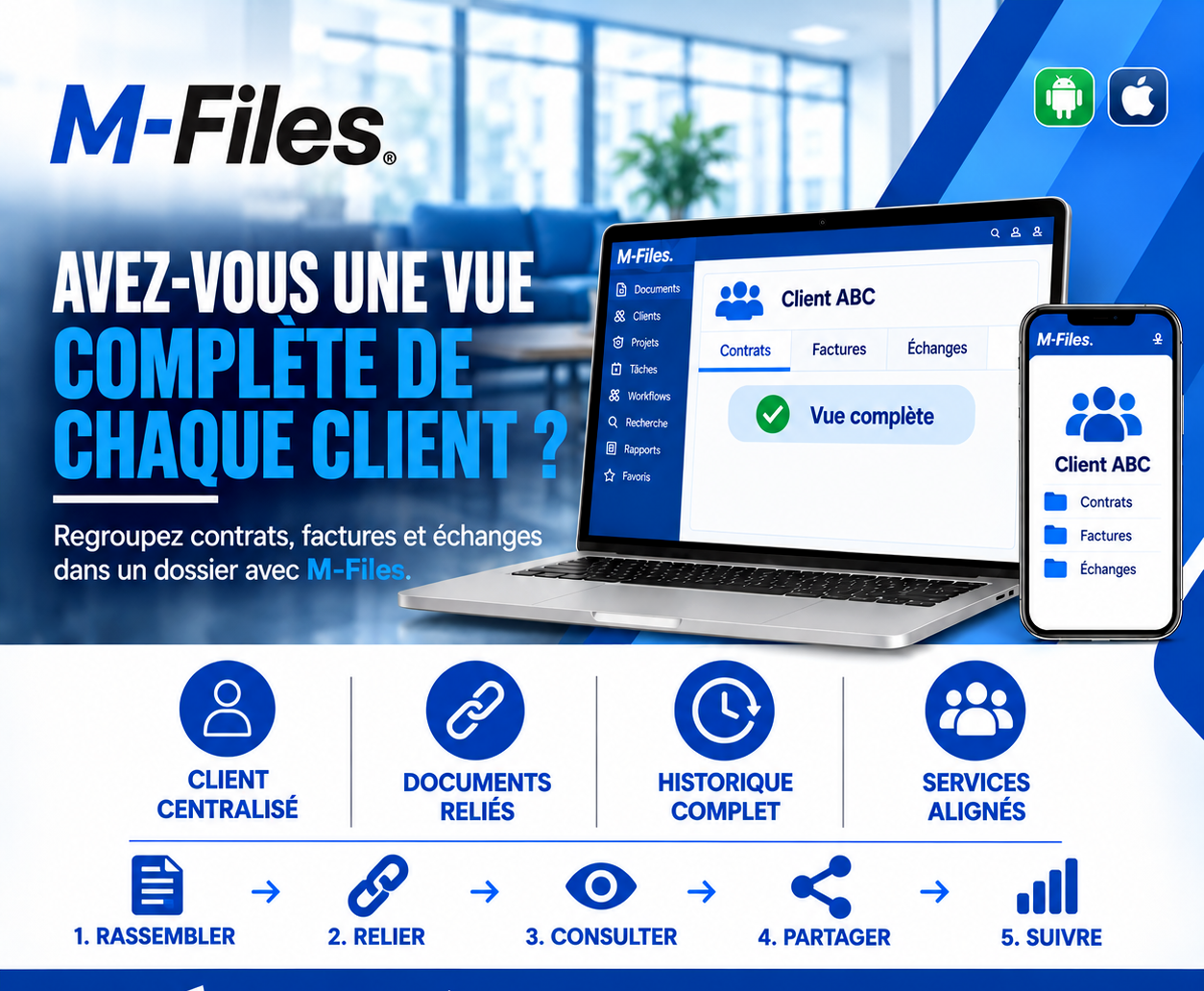
Contracts here, invoices there, exchanges elsewhere? Discover how M-Files gathers everything about a customer in a single file, with a complete history and aligned departments.
Read more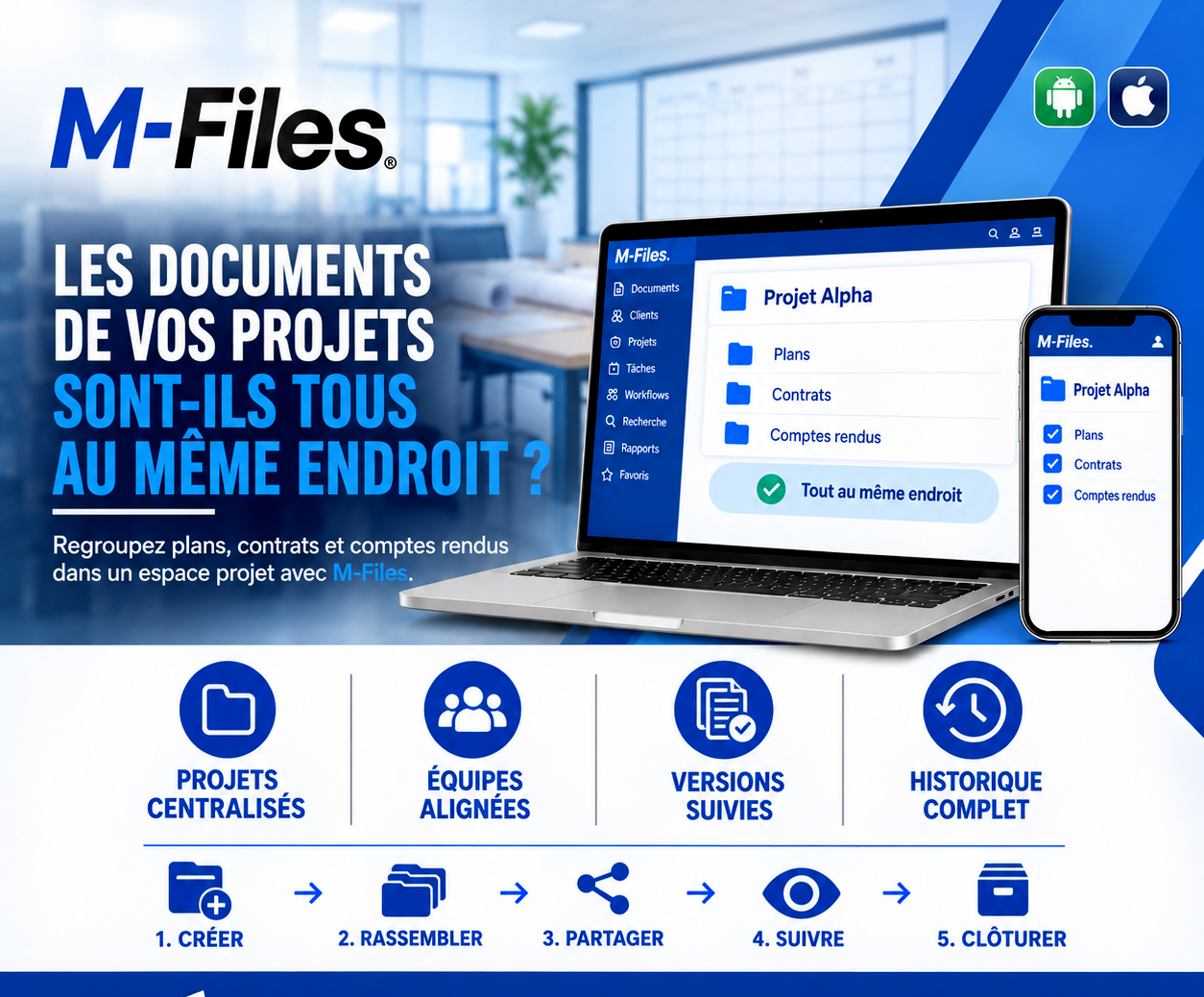
Scattered plans, contracts and meeting minutes? Discover how M-Files gathers each project's documents in a single space, with tracked versions and a complete history.
Read more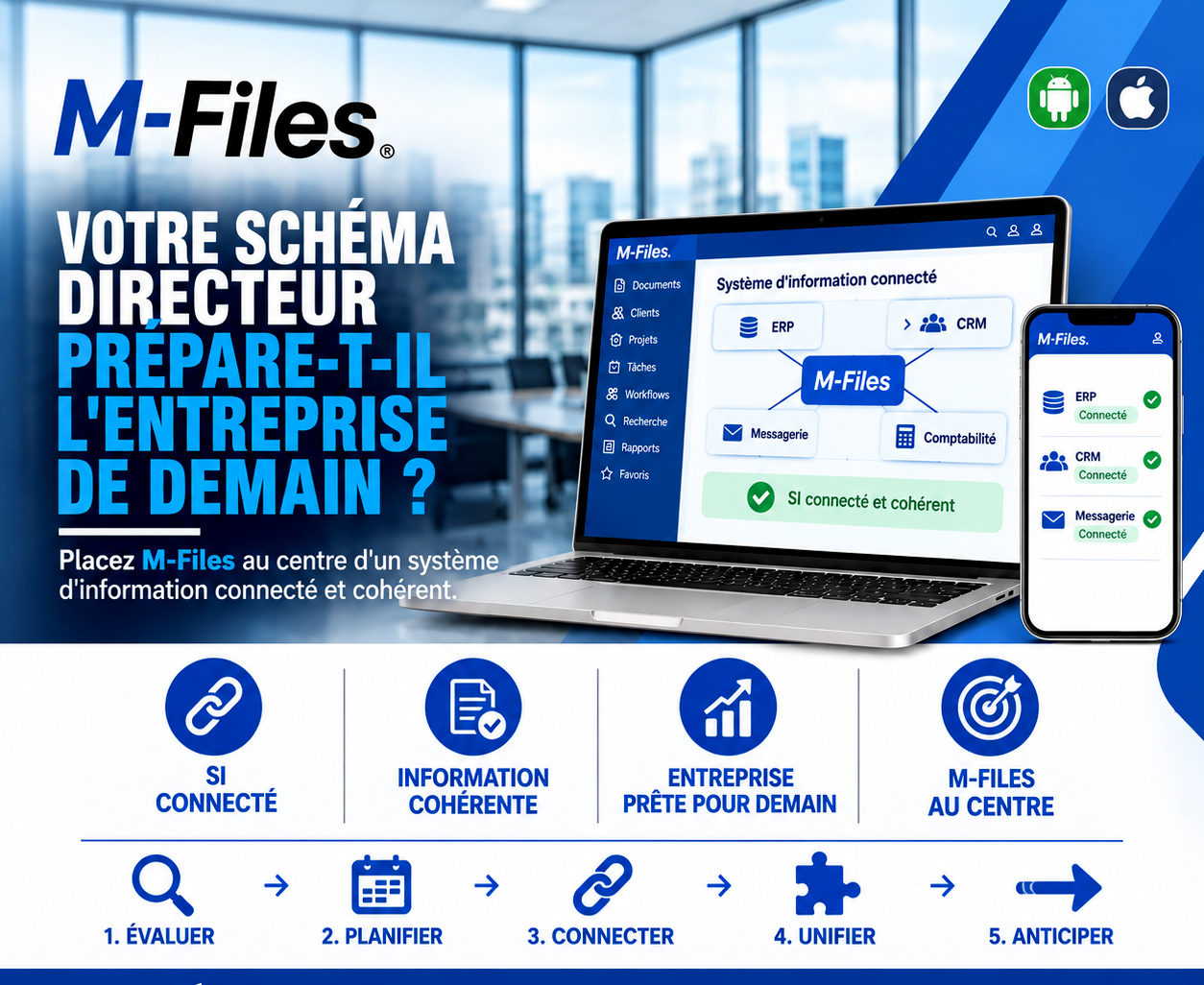
Does your IT master plan prepare the company of tomorrow? Connected IS, consistent information, a company ready for tomorrow, M-Files at the center: anticipate your next tools without recreating silos.
Read moreContact us to learn more about our news and upcoming events.
Our offers, news and document management tips, straight to your inbox. One e-mail a month at most.
Unsubscribe in one click at any time. Privacy policy
Check your inbox
We've sent you a confirmation link. Click it to complete your sign-up.
Comments
No comments yet. Be the first to react!