
Who's answering this email?
Six people see the same message go by. And yet, ten days later, no one has answered it. In a shared mailbox, what belongs to everyone belongs to no one.
Galaxy Conseils • Banking & financial institutions sector
Checking her statement, Aïcha notices that account-maintenance fees were charged twice on Société Alpha's account. Nothing dramatic, but she wants it corrected. So she writes to her bank's general address, contact@, with her statement attached.
That morning, six people have access to this shared mailbox. All of them see the message go by. The first thinks customer service will handle it. The second marks it as read, telling herself she'll come back to it. The third forwards it to a colleague... who is in training all week.
"Ten days later, Aïcha still has no answer. She calls the branch. She's asked to resend her message. No one knows who received it, or what was done with it."
The complaint was simple and could have been settled in five minutes. But in a shared mailbox, what belongs to everyone belongs to no one. And Aïcha is left with the impression that her bank isn't listening to her.
🤷 No one is designated
D+0Everyone assumes someone else will reply.
🔕 No alert
D+3An email can sit unanswered for days without anyone noticing.
🙈 No visibility
D+7There's no way to know who's handling what, what's pending, and what's overdue.
📭 Messages fall through the cracks
D+10An email that's read, moved or forwarded drops off the radar, and the client keeps waiting.
For a bank, every unanswered complaint means one more unhappy client, and sometimes a finding flagged during a complaint-handling audit.
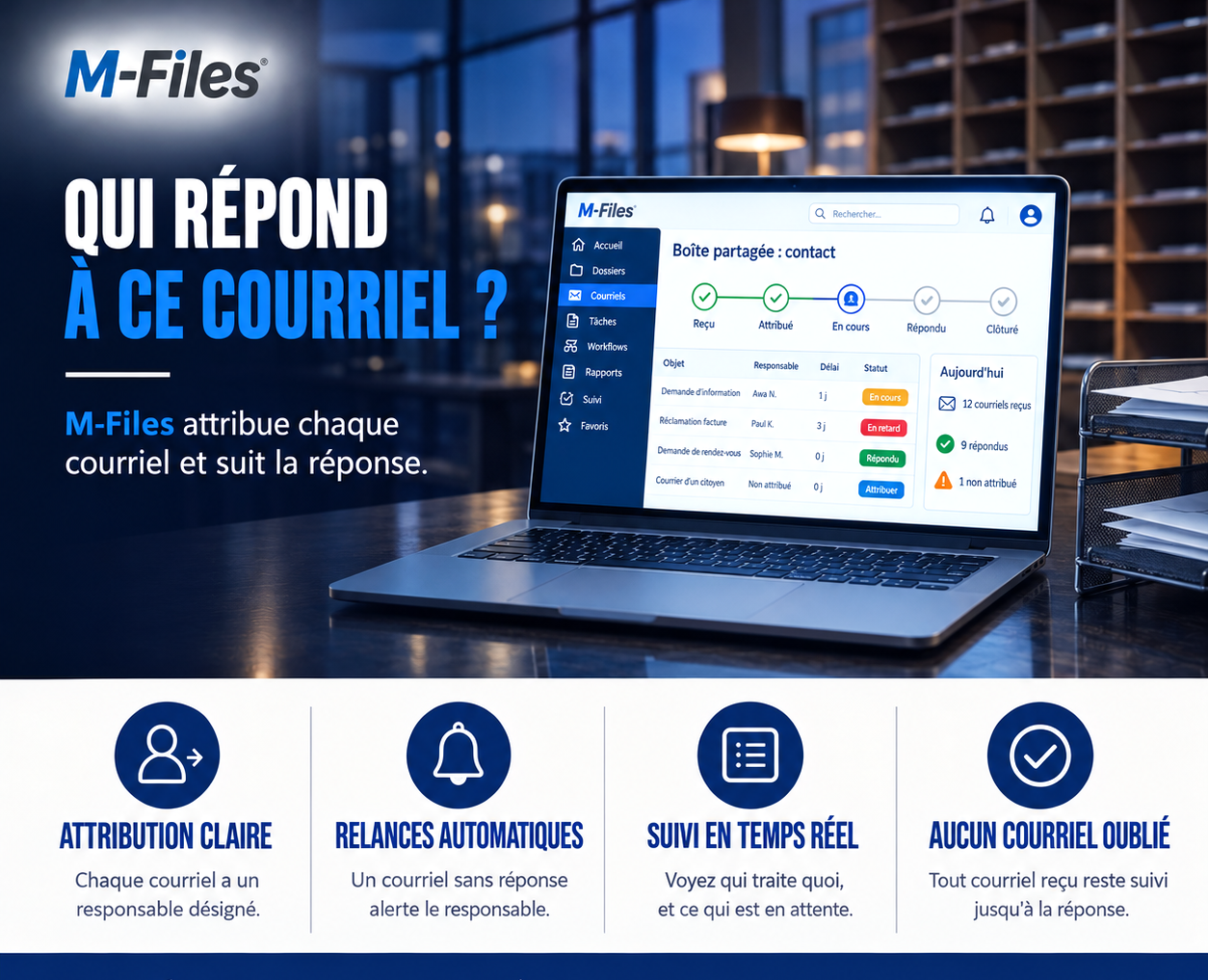
The solution comes down to one rule: every email received must have a designated owner, a response deadline, and a status visible to everyone, right up to closure. If the deadline is missed, someone must be alerted.
Received
Assigned
In progress
Replied
Closed
Received — Aïcha's complaint arrives in the shared "contact" mailbox, with the subject line "Billing complaint."
Assigned — it's assigned to Paul K. in customer service. His name appears in the "Owner" column. No more doubt about who should reply.
In progress — Paul has a response deadline. The day it's missed, the status turns red, "Overdue," and Paul gets an automatic reminder.
Replied — Paul checks the statement, has the double charge corrected, and replies to Aïcha. The status changes to "Replied."
Closed — the complaint is closed and kept, along with its exchanges, in Société Alpha's file.
And every morning, the team lead sees the day's summary at a glance:
12
emails received
9
replied to
1
unassigned
That one, she assigns right away.
Aïcha gets her answer and her refund on time. She never had to follow up. And she knows her next message will be handled the same way.
Clear ownership — every email has a designated owner. No one has to wonder who should reply.
Automatic reminders — an email with no reply within the expected deadline automatically alerts its owner.
Real-time tracking — see who's handling what, what's pending, and what's overdue.
No email forgotten — every email received stays tracked until it's answered and closed.
M-Files turns every important email into a tracked item, with an owner, a deadline and a status. The flow (received, assigned, in progress, replied, closed) is defined once according to your rules, and it applies to every single message.
Reminders no longer depend on anyone's memory: M-Files sends notifications when a task is due or overdue. And because every email is attached to the client's file, the relationship history is complete.
Finally, tracking dashboards give managers a clear view of workload and delays, so they can act before the client runs out of patience.
"How many emails sitting in your shared mailboxes right now are waiting for a reply, and who's responsible for them?"
If no one can answer that, your emails deserve real tracking.
We help banks and financial institutions organize how they handle emails and complaints with M-Files, from receipt through to closure.
Galaxy Conseils: innovation in the service of your performance.
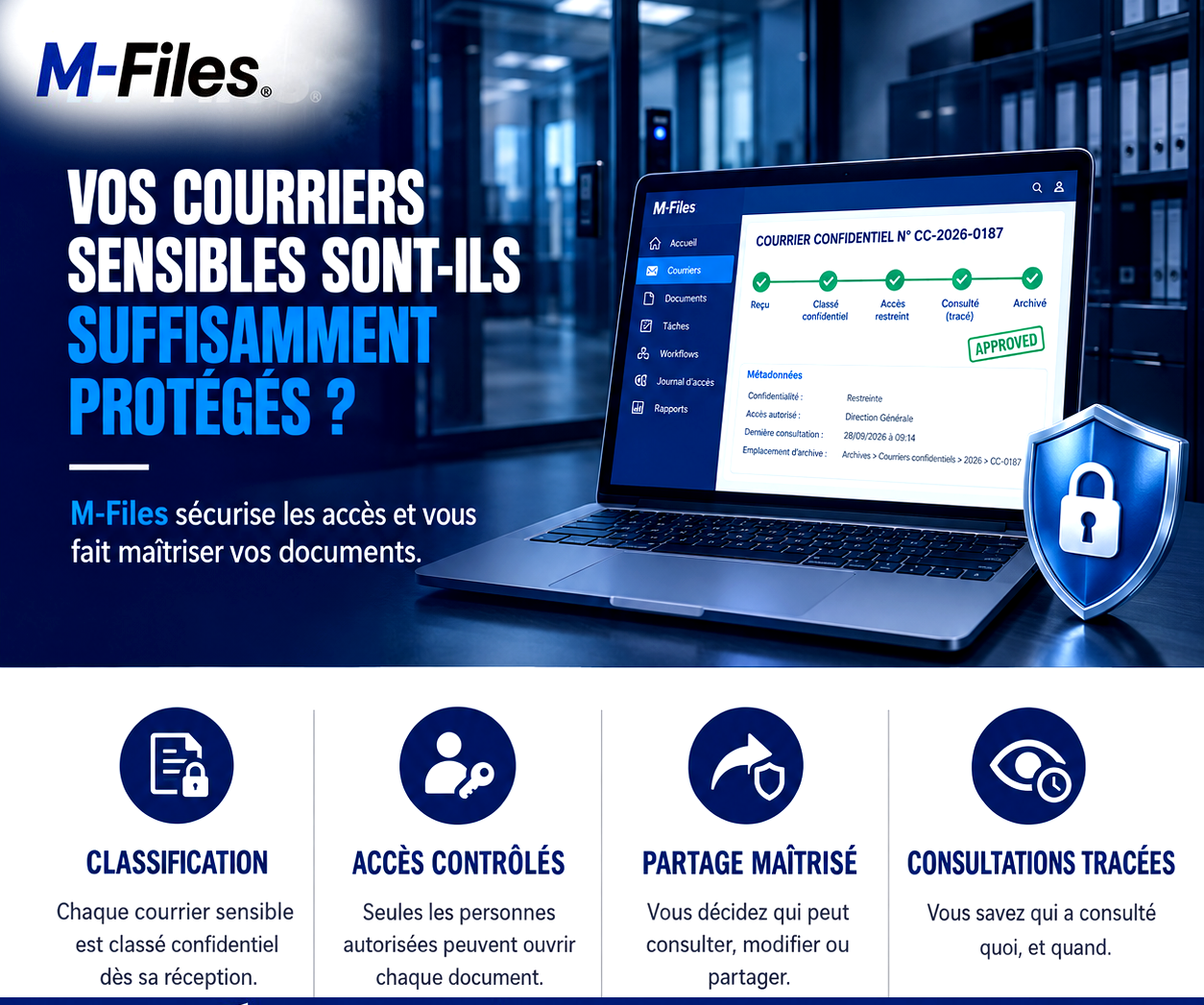
Are your sensitive letters truly protected? Confidential classification on arrival, access restricted to authorized people, and every consultation logged: discover how M-Files protects your mail.
Read more
What if your archives burned tonight? Digital archiving, secure cloud backup, smart search: discover how M-Files keeps your documents accessible even after a disaster.
Read more
VAT on deposits, tax credit for youth employment, accounting records file, business closure: what the 2026 Finance Act changes for your business in Cameroon, and how to get ahead of it.
Read moreContact us to learn more about our news and upcoming events.
Our offers, news and document management tips, straight to your inbox. One e-mail a month at most.
Unsubscribe in one click at any time. Privacy policy
Check your inbox
We've sent you a confirmation link. Click it to complete your sign-up.
Comments
No comments yet. Be the first to react!