
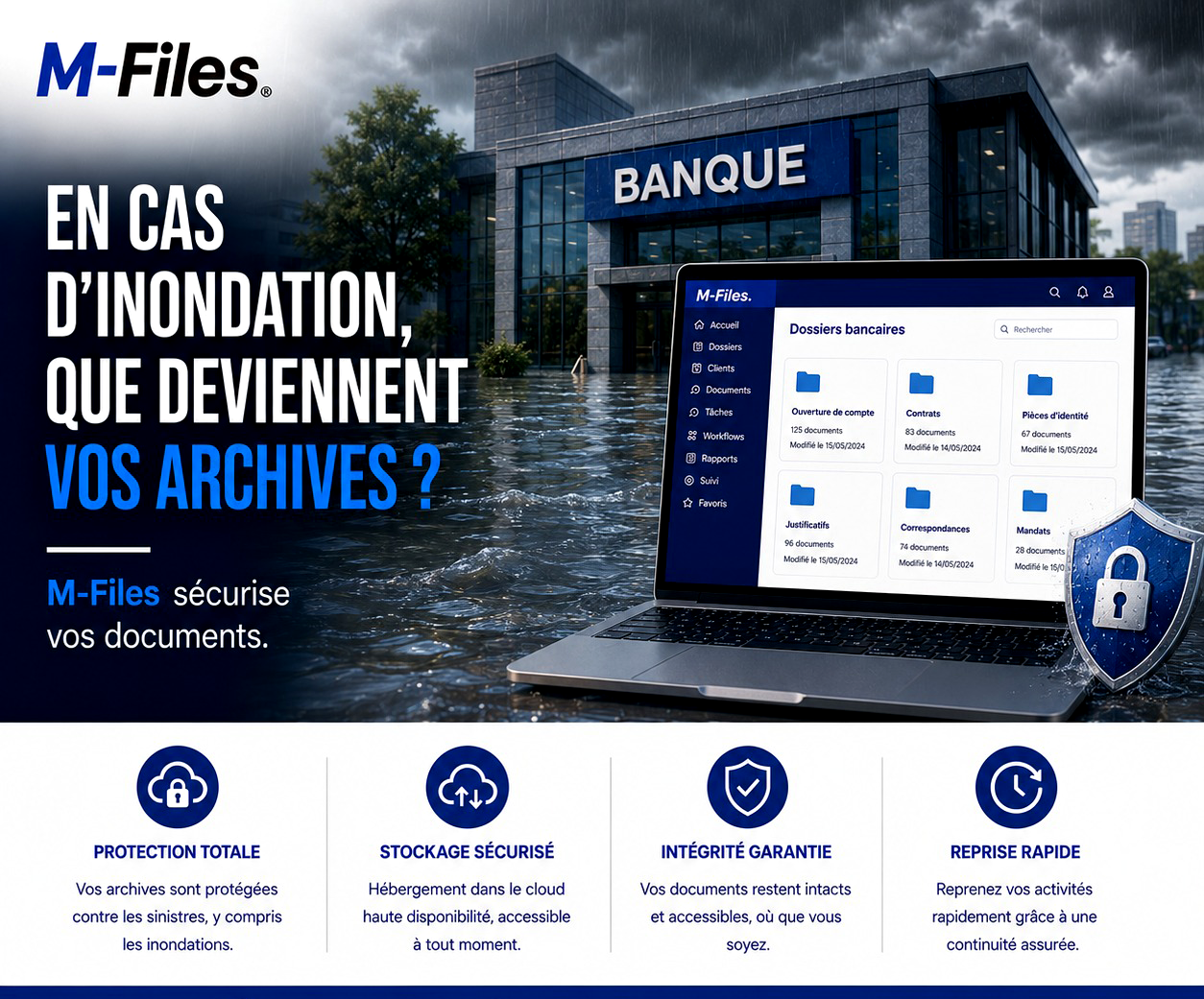
Business continuity & archive protection
What happens to your archives in the event of a flood?
A rainy season, a flooded branch, a server submerged in the basement: in just a few hours, years of documents can disappear. And with them, sometimes, a file that was decisive for a client.
Galaxy Conseils • Banking & financial institutions sector
Aïcha runs a small business that has just submitted a bid for a hospital's solar equipment tender. It's a major contract, one that could change her whole year. The file has to be complete and submitted by Friday at noon. Among the required documents: a recent bank attestation, which her branch needs to prepare for her.
"I booked an appointment first thing Monday, Aïcha recalls. I knew I had no margin at all: the file had to go out Friday, not a day later."
But on the night between Sunday and Monday, heavy rain hits the city. Aïcha's bank branch, located in a low-lying area, floods. Water fills the basement, where both the paper archives and the local server hosting scanned copies of client documents are kept. Both, in the same place, are lost that same night.
The branch stays closed all week. Aïcha's file, like thousands of others, is unrecoverable. On Friday at noon, the tender closes. Aïcha's file is incomplete, and it is not selected.
When archives and their digital backup sit in the same place, a single disaster can wipe out everything at once:
Scanning documents is a first step, but it protects nothing if the files stay stored on-site. Real protection requires secure off-site hosting, high data availability, and regular backups, independent of the building where the branch operates.
Monday morning, despite the branch being closed, Aïcha's advisor logs in from another branch. The archives don't live in a basement: they're hosted in a secure, highly available cloud. He finds Aïcha's file intact, as if nothing had happened.
Tuesday, the bank attestation is prepared, validated, and sent to Aïcha.
Meanwhile, the branch team keeps serving clients from other locations while repairs are completed. On Friday, Aïcha submits a complete file. A few weeks later, she learns she has won the hospital contract.
Total protection — documents no longer depend on the physical condition of a branch or a basement.
Secure storage — off-site hosting keeps archives safe from local disasters.
Guaranteed integrity — regular backups ensure no document is ever permanently lost.
Fast recovery — even with a building closed, operations continue from any other access point.
With M-Files, documents aren't filed away in a folder or a building: they're classified and linked to the client, wherever they're accessed from. Fire, flood, theft: the risks change, but the response stays the same.
"Where are our archives kept? Where is our server located? And what would happen if the water rose a meter tonight?"
Protect your archives and ensure your business keeps running, no matter what happens. Let's talk about your situation.
Galaxy Conseils: innovation at the service of your performance.
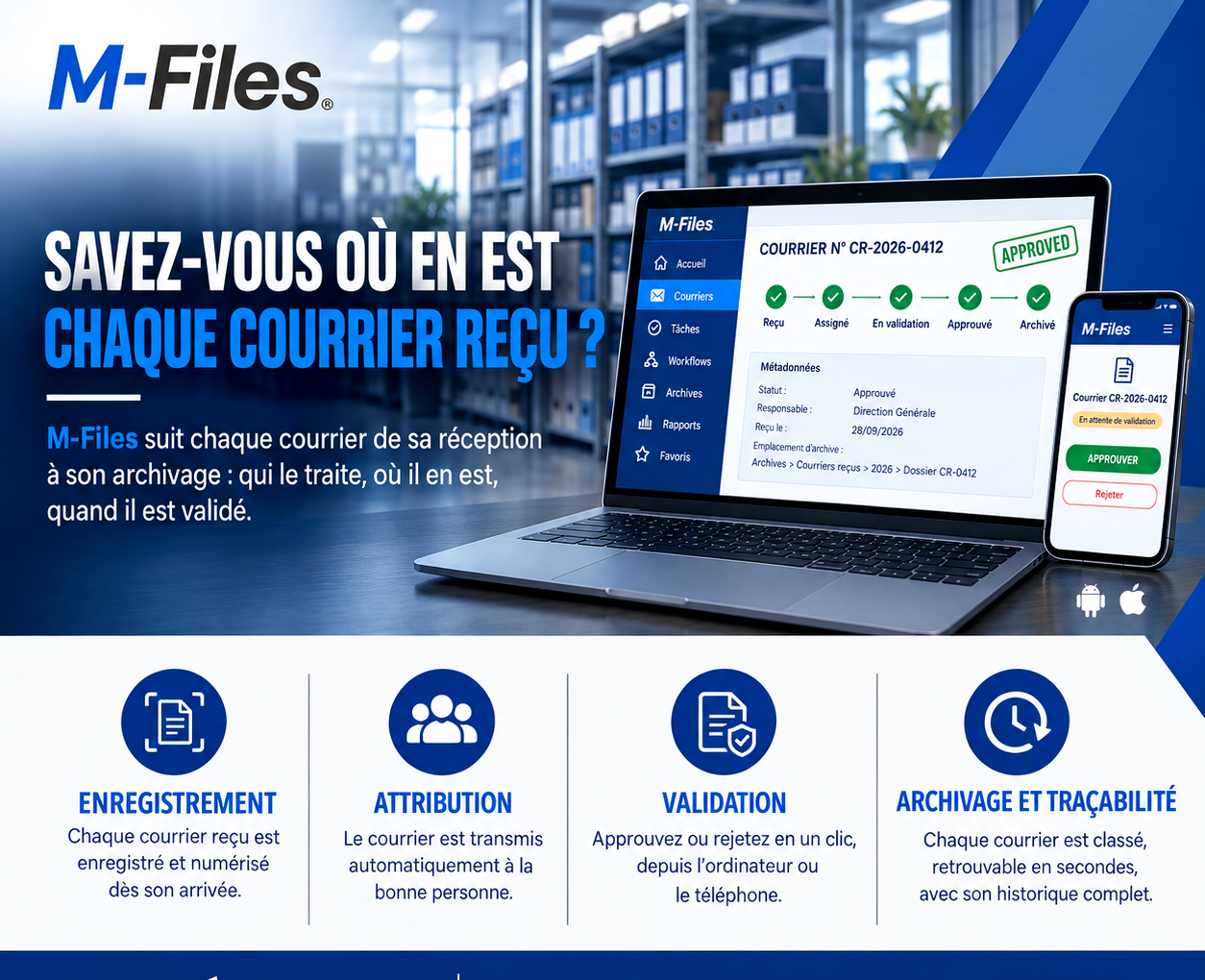
Letters stuck in the signature binder, approvals waiting on the director's return, replies that can't be found... Discover how M-Files tracks every letter, from receipt to archiving.
Read more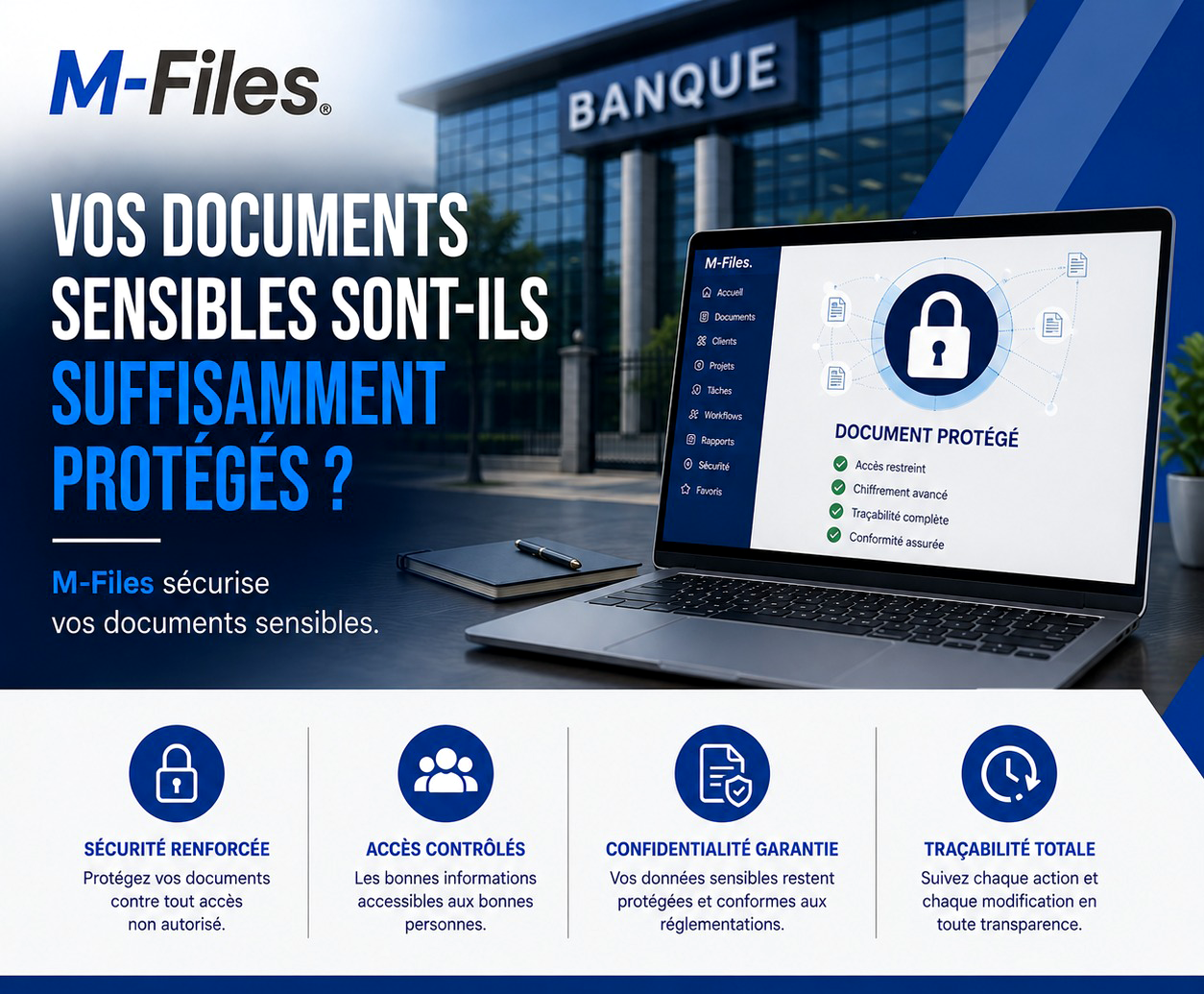
Shared folders open to everyone, client information looked up for no reason... Are your sensitive documents really protected? Discover how M-Files guarantees controlled access, confidentiality, and traceability.
Read more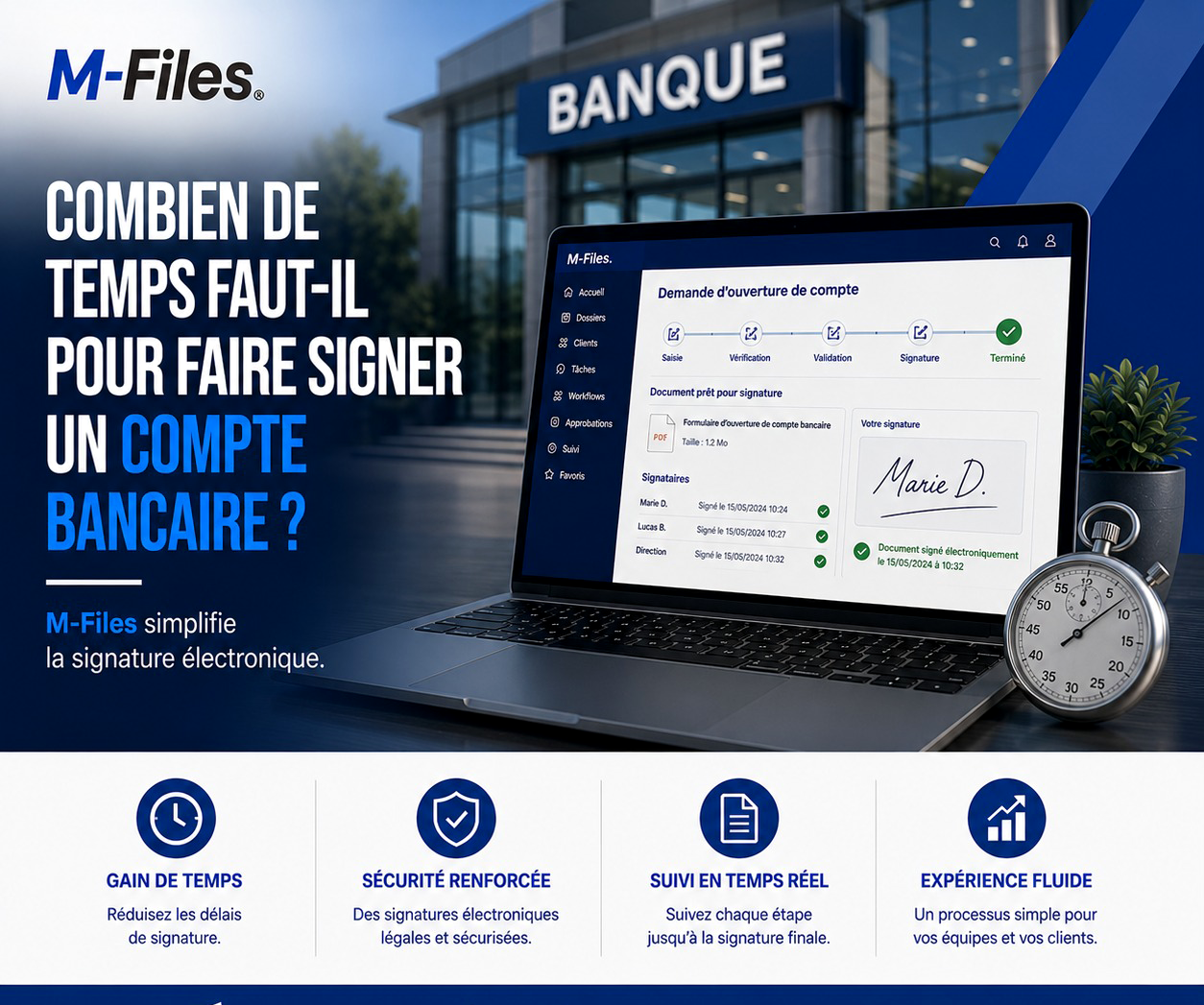
Clients on the road, internal signatures dragging on, forms sent by post... Discover how M-Files simplifies electronic signature for banking documents.
Read moreContact us to learn more about our news and upcoming events.
Comments
No comments yet. Be the first to react!