
Information quality & document governance
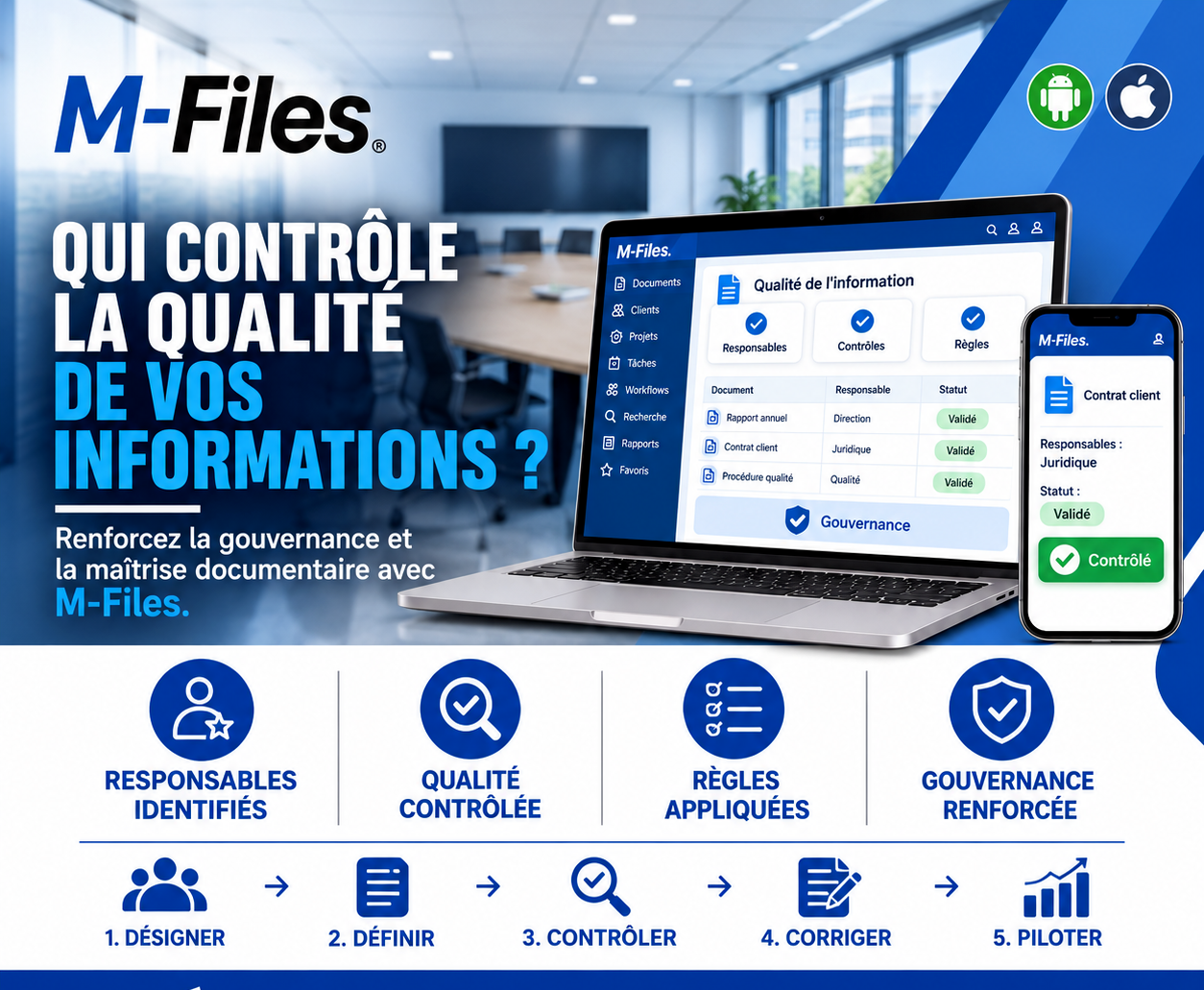
WHO CONTROLS THE QUALITY OF YOUR INFORMATION?Identified owners, controlled quality, enforced rules, stronger governance: discover how M-Files guarantees up-to-date, reliable documents.
Galaxy Conseils • Companies & financial institutions
To win a major contract with a public company, Société Alpha must show that it meets strict quality requirements. The auditor appointed by the client comes on site to check its procedures, with documents as evidence.
Aïcha is confident: the company wrote all its procedures three years ago. But the auditor opens the workshop's “Quality Procedure”: it still mentions a machine sold last year and a manager who has left the company. The standard customer contract cites old terms. The annual report attached to the file dates from the previous year.
None of these documents was wrong when it was written. But nobody was in charge of reviewing them, updating them or checking that they were still valid. They had simply aged.
The auditor notes several discrepancies. Société Alpha has to update everything urgently, and the contract is postponed to the next session. Aïcha realizes that information, like equipment, needs regular maintenance.
Procedures, standard contracts, reports, internal policies: these documents are created with care, then forgotten. The world changes around them (someone leaves, a product evolves, a rule changes), but they stay frozen. Without control, the quality of information quietly degrades:
No designated owner: nobody feels responsible for keeping a document up to date.
No review rule: a document stays “in force” for years without being reviewed.
Errors that spread: outdated information gets copied into other documents, then passed on to customers.
Surprises during audits: it is often an outside auditor who discovers that not everything is up to date.
Guaranteeing the quality of information means applying a few simple rules: every important document has an identified owner, a review date, an approval workflow, and a status that clearly shows whether it is valid. The system reminds owners when a document needs to be reviewed.
Let's revisit Aïcha's story, this time with a Société Alpha that manages the quality of its documents in M-Files.
1. Designate. Every key document gets an owner: the annual report goes to Management, the customer contract to Legal, the quality procedure to the Quality manager.
2. Define. Rules are set for each document type: review frequency, who approves, mandatory information.
3. Control. On the scheduled date, the owner receives a review task. They confirm that the document is still valid or update it. The “Approved” status appears only after this check.
4. Correct. When a machine is sold or a manager changes, the relevant procedure is corrected and approved again. The previous version stays in the history.
5. Steer. An “Information quality” dashboard shows Aïcha which documents are up to date, which need review and which are overdue.
At the next audit, every document presented carries the mention “Controlled”, with its owner and its last review date. The auditor notes no discrepancies, and Société Alpha wins the contract.
Identified owners. Every important document has an owner known to all, in charge of keeping it up to date.
Controlled quality. Documents are reviewed regularly, and their status clearly shows whether they are valid.
Enforced rules. Reviews, approvals and mandatory information are applied automatically, not just written in a memo.
Stronger governance. Leaders see at a glance where information quality stands.
In M-Files, the owner, the review date and the status are part of each document's information. Workflows can automatically trigger a review task on the scheduled date, remind the owner and block the “Approved” status until the check has been done.
Mandatory information prevents saving an incomplete document, and the history keeps every version and every approval.
This principle applies to an SME like Société Alpha as well as to a bank, where procedures and internal policies are regularly examined by auditors and supervisory authorities.
Ask yourself this question:
“For each of your procedures currently in force, could you say who is responsible for it, and when it was last reviewed?”
If the answer is no, the quality of your information is controlled by nobody.
At Galaxy Conseils, we help companies and financial institutions set up governance and quality control for their documents with M-Files.
Want to see concretely what this would look like in your organization?
✉️ Request a demo 💬 Write to us on WhatsAppGalaxy Conseils: innovation in service of your performance.
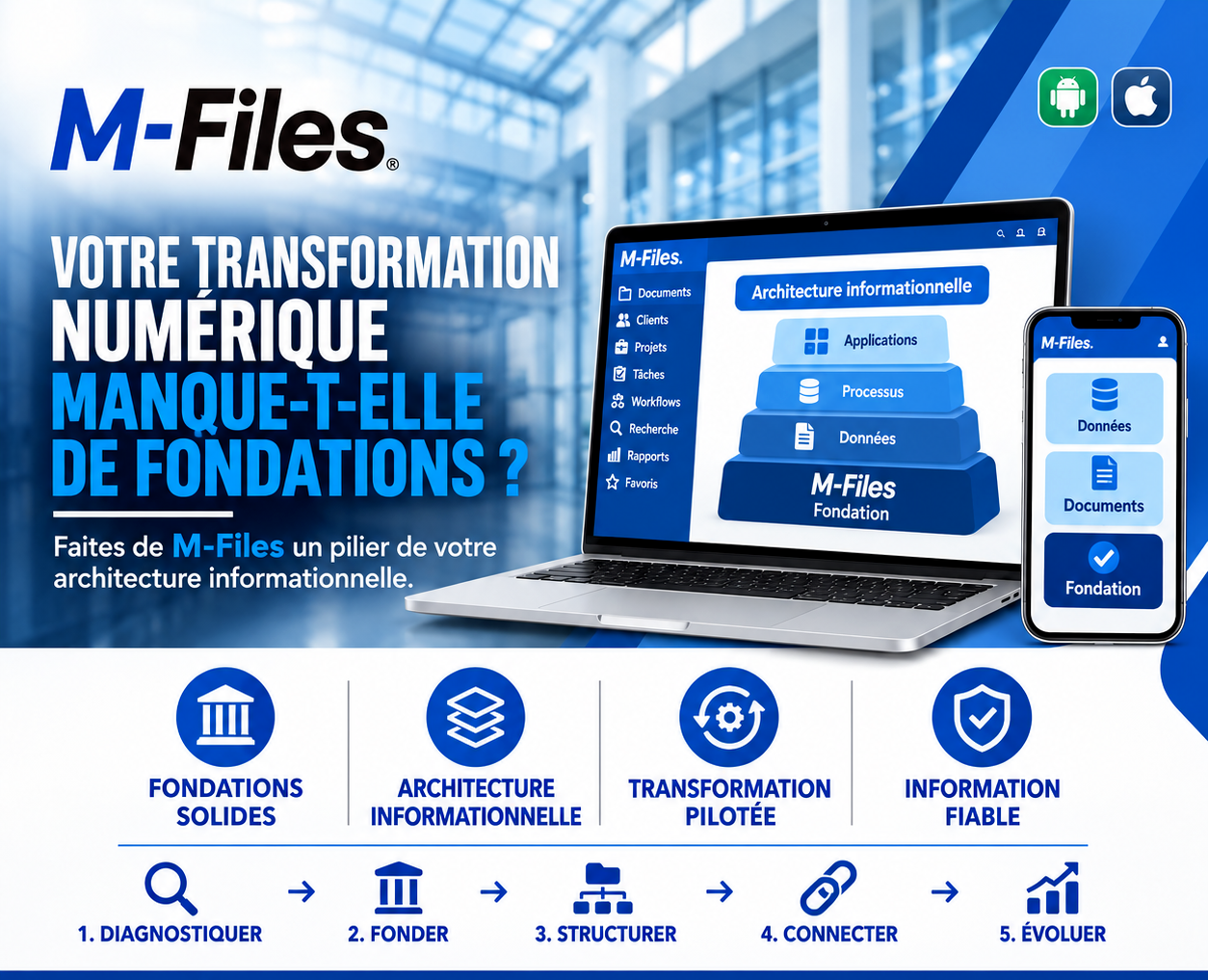
Does your digital transformation lack foundations? Solid foundations, information architecture, a guided transformation, reliable information: discover why M-Files is a pillar of your digital projects.
Read more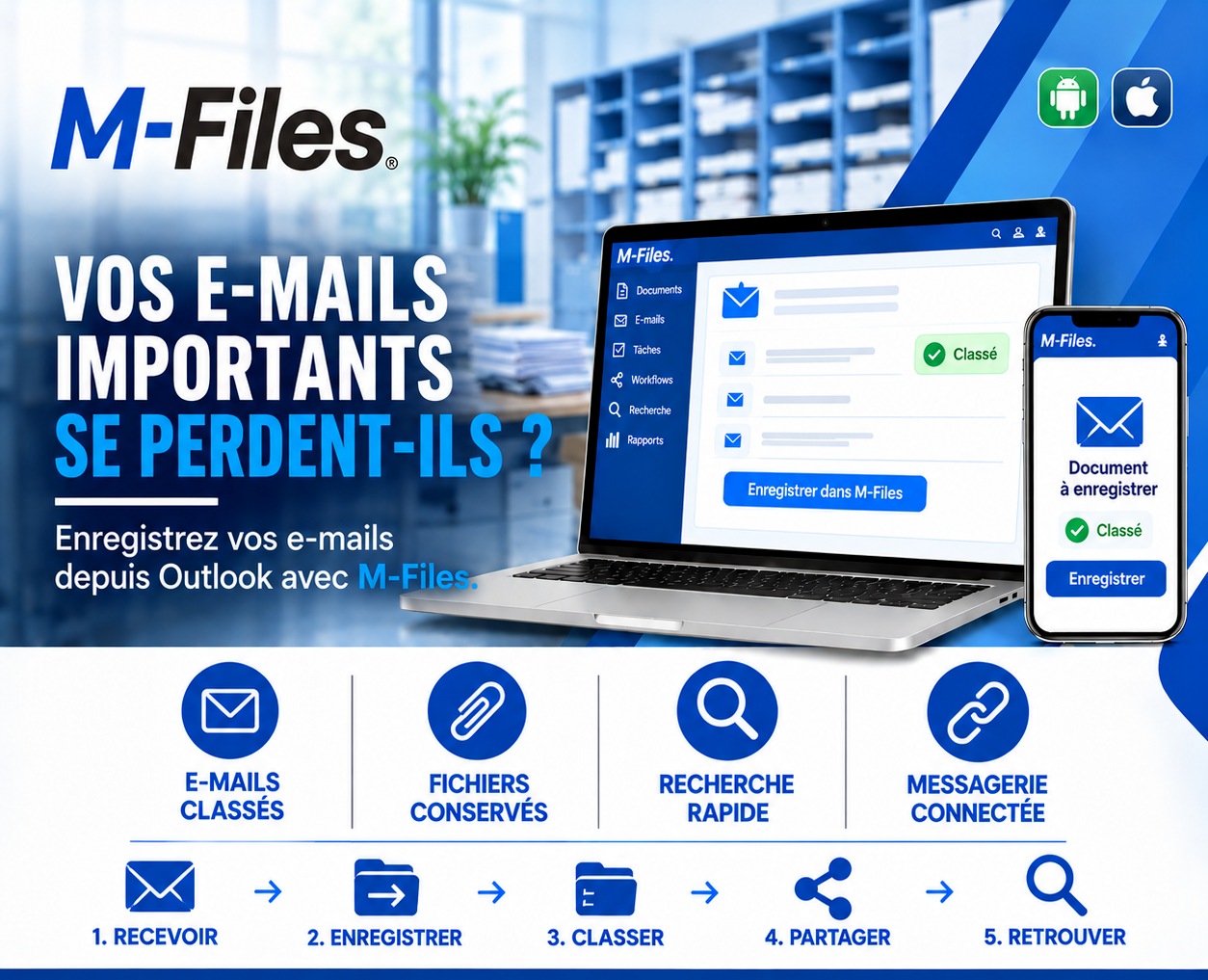
Are your important emails getting lost? Classified emails, preserved files, fast search, connected mailbox: discover how to save your emails from Outlook into M-Files in one click.
Read more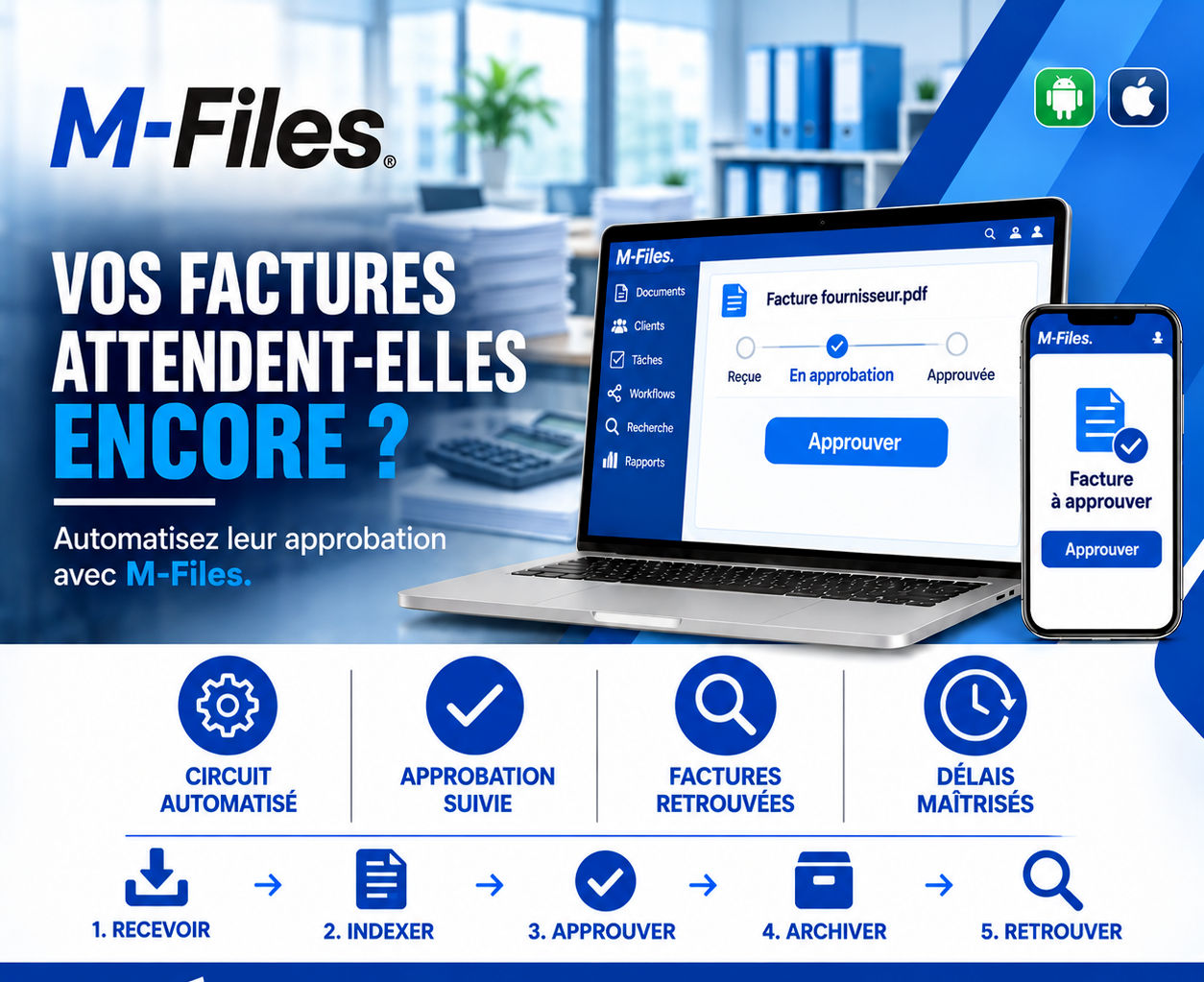
Are your invoices still waiting? Automated workflow, tracked approvals, invoices easy to find, controlled deadlines: discover how M-Files speeds up supplier invoice approval.
Read moreContact us to learn more about our news and upcoming events.
Our offers, news and document management tips, straight to your inbox. One e-mail a month at most.
Unsubscribe in one click at any time. Privacy policy
Check your inbox
We've sent you a confirmation link. Click it to complete your sign-up.
Comments
No comments yet. Be the first to react!