
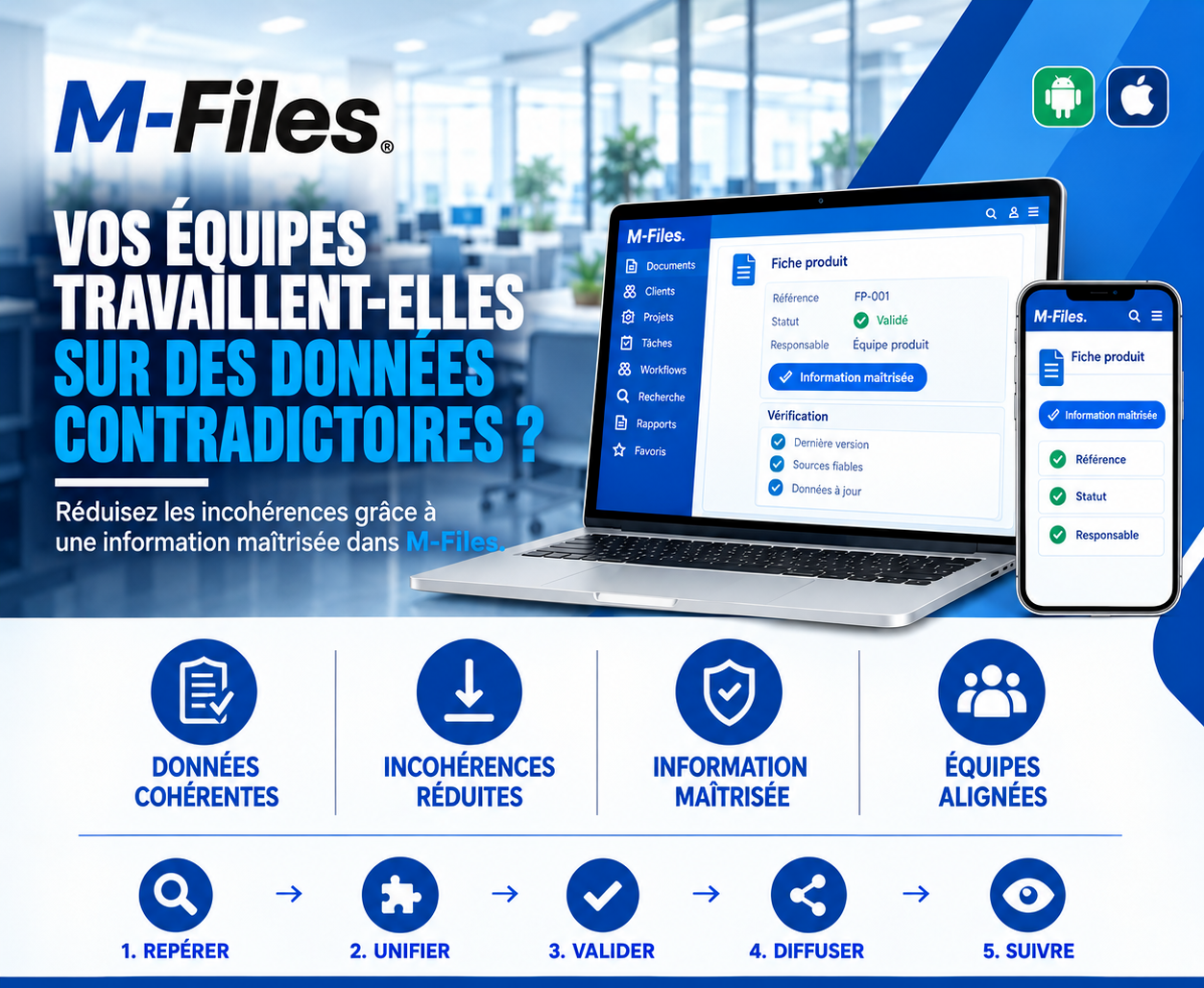
IS YOUR TEAM WORKING WITH CONTRADICTORY DATA?
Consistent data, fewer inconsistencies, controlled information, aligned teams: discover how M-Files guarantees validated, up-to-date information.
Galaxy Conseils • Banking sector & financial institutions
The bank is launching a new equipment loan offer for SMEs. Aïcha is interested: Société Alpha needs to renew part of its machinery. She looks into it in several ways, like many busy executives.
On the bank's website, the stated rate is one level. In the brochure handed out at the Bonanjo branch, it's different. And the advisor at the Akwa branch, whom she calls to compare, mentions a maximum term that matches neither document.
Aïcha asks for an explanation. The reason is simple: the product team updated the offer sheet several times before launch. The communications department used an earlier version for the website, the branches printed a second version, and some advisors kept in mind the terms presented at a preparatory meeting.
Aïcha eventually gets the right terms. But she wonders how much weight to give the figures her bank provides. And the bank took a risk: promising a client terms it had never validated.
Rates, pricing, terms, procedures, product sheets: a bank distributes information to its teams and clients every day. When this information exists in several versions, contradictions appear.
Different figures depending on the source. Website, brochure, advisor — each one says something different.
Updates that don't reach everyone. A change is made, but not all teams are informed of it.
No official source. No one knows which version was validated, or by whom.
A risk to the client relationship. A promise made on incorrect data puts the bank on the hook and damages its credibility.
The solution is to designate, for each important piece of information, a single source, validated by an identified owner, and to ensure that all teams consult that source rather than a copy. When the information changes, everyone sees the new version at the same time.
Let's revisit the story, this time at a bank that uses M-Files.
1. Identify. The bank identifies the offer's sensitive information: rates, terms, conditions, required documents. It also identifies the documents that repeat it: website, brochure, advisors' talking points.
2. Unify. This information is brought together in a single "Product Sheet" in M-Files, reference FP-001, under the responsibility of the Product Team.
3. Validate. The sheet goes through an approval workflow. Once approved, its status changes to "Validated" and it carries the "Controlled information" badge. Three checks are displayed: latest version, reliable sources, up-to-date data.
4. Distribute. Communications, branches and advisors all consult this same sheet, on desktop and mobile alike. The brochure and the website content are produced from the validated version.
5. Track. When the offer changes, the Product Team updates the sheet and has it validated again. Every user sees the new version, and previous ones remain in the history.
When Aïcha looks into it, the website, the brochure and both advisors give her exactly the same terms. She signs her loan with full confidence. And the bank knows it is only promising what it has validated.
Consistent data. The same information, at the same time, for every team and every channel.
Fewer inconsistencies. Fewer copies, fewer parallel versions, fewer errors.
Controlled information. Every sheet has an owner, a status and a validation.
Aligned teams. Head office, branches and advisors all speak the same language to clients.
In M-Files, a product sheet isn't a file that gets copied and passed along. It's a single object, with its own information (reference, status, owner), its versions and its approval workflow. Teams consult the sheet itself, not a copy that goes stale.
Workflows guarantee that no change is distributed without validation, and notifications inform the relevant teams whenever a new version is approved.
This principle applies to many other types of information: pricing grids, procedures, contract templates, general terms and conditions.
Try the test:
"If a client compared your website, your brochure and two of your advisors today, would they get exactly the same terms?"
If you're not sure, your teams may already be working with contradictory data.
At Galaxy Conseils, we help banks and financial institutions set up validated reference sheets with M-Files, so that every team shares the same information. Want to see exactly what this would look like in your bank?
Galaxy Conseils: innovation serving your performance.
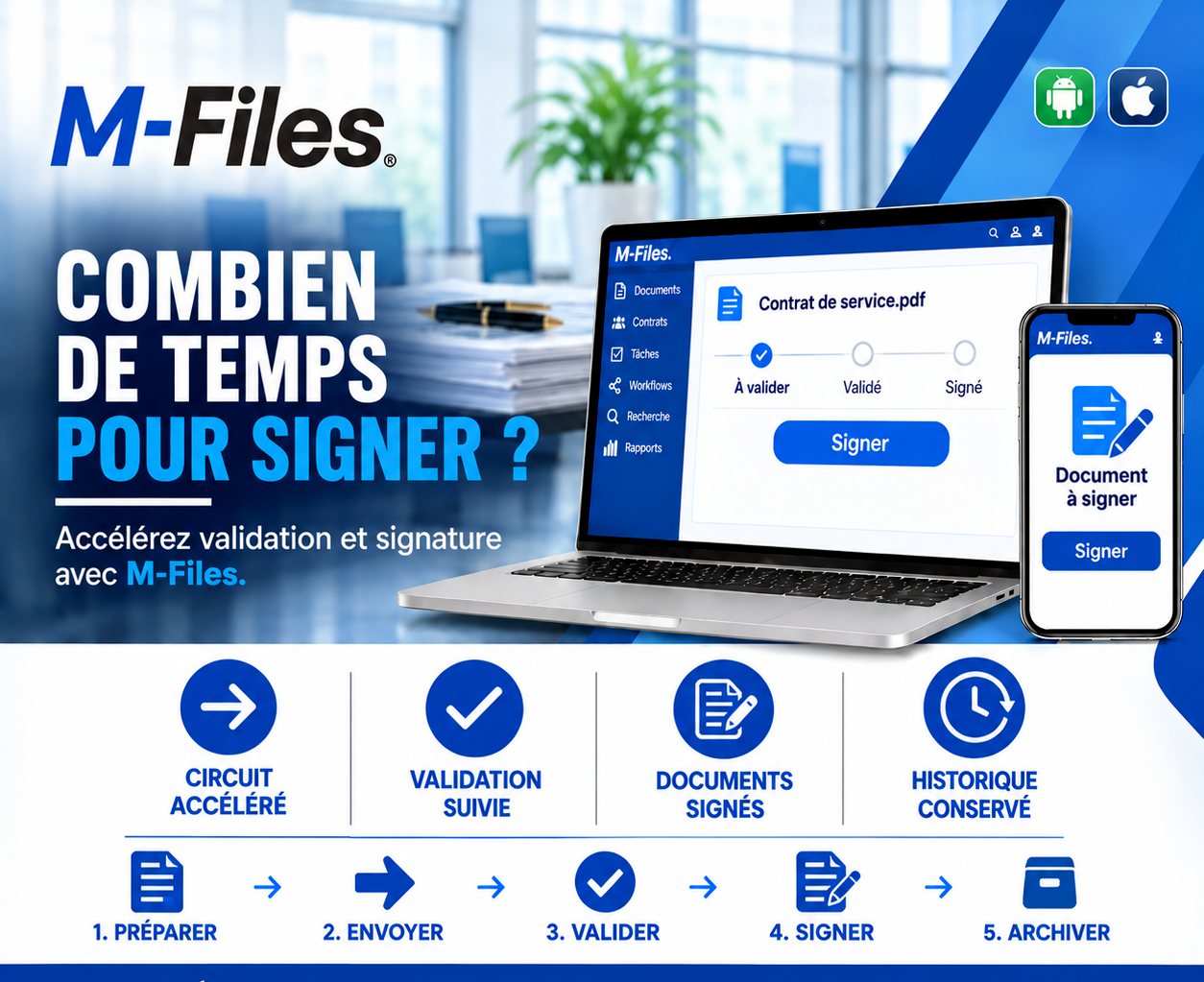
How long does it take to sign? A faster workflow, tracked approvals, signed documents, a kept history: discover how M-Files cuts the time between preparing a contract and signing it.
Read more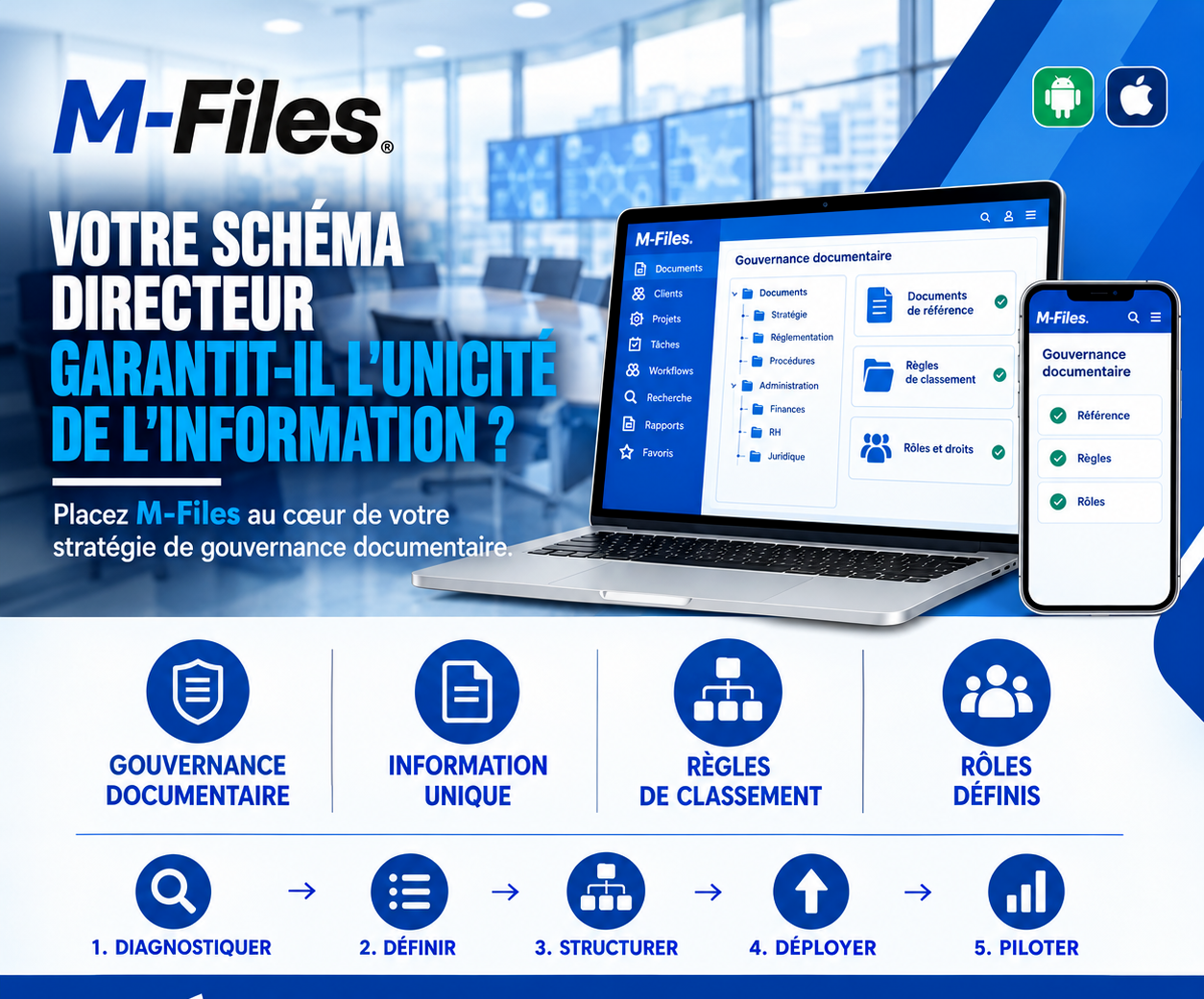
Does your IT master plan guarantee a single source of information? Document governance, a single source of information, classification rules, defined roles: put M-Files at the heart of your strategy.
Read more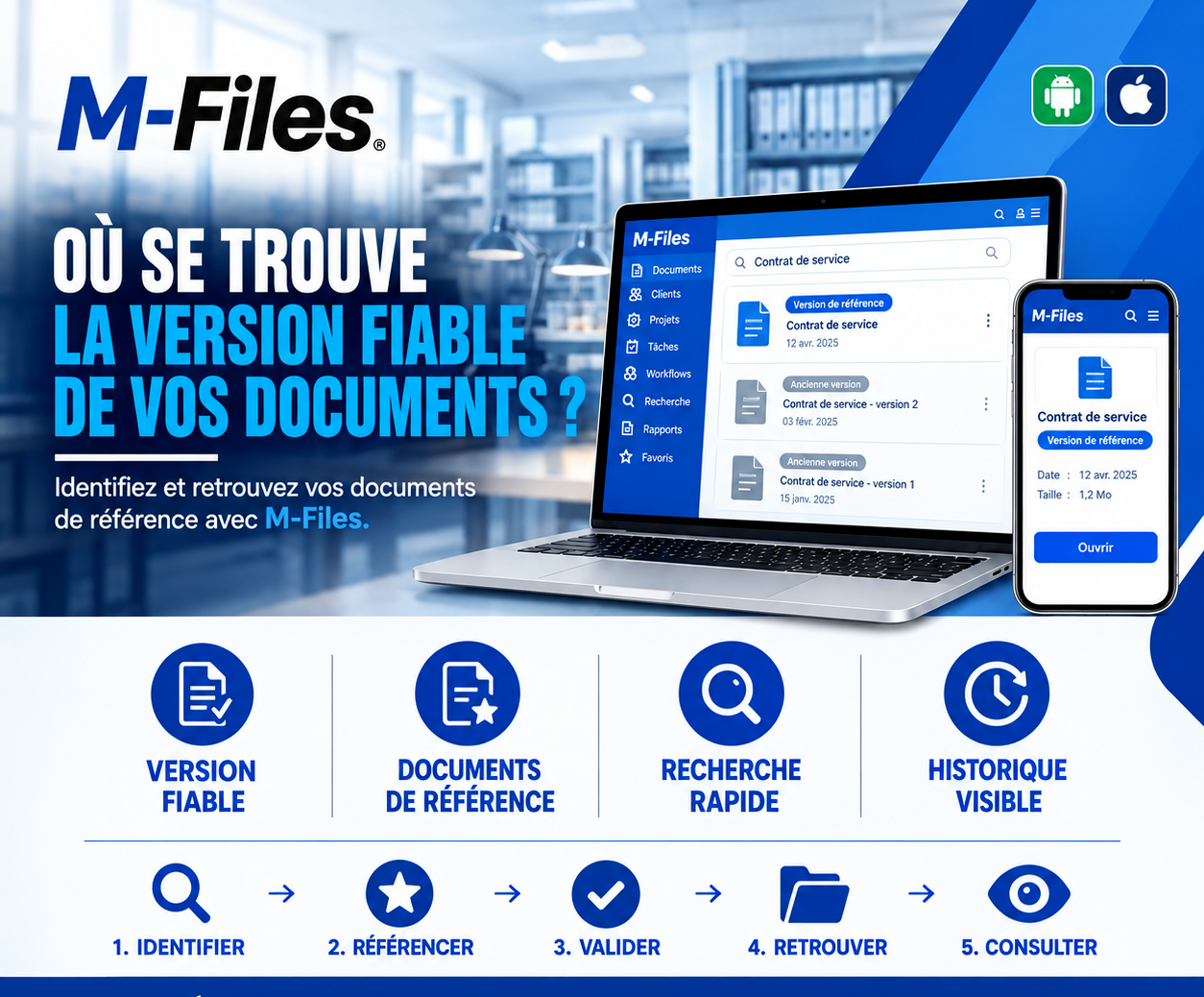
Where is the reliable version of your documents? Reliable version, reference documents, fast search, visible history: discover how M-Files tells the right version apart from the old ones.
Read moreContact us to learn more about our news and upcoming events.
Our offers, news and document management tips, straight to your inbox. One e-mail a month at most.
Unsubscribe in one click at any time. Privacy policy
Check your inbox
We've sent you a confirmation link. Click it to complete your sign-up.
Comments
No comments yet. Be the first to react!