
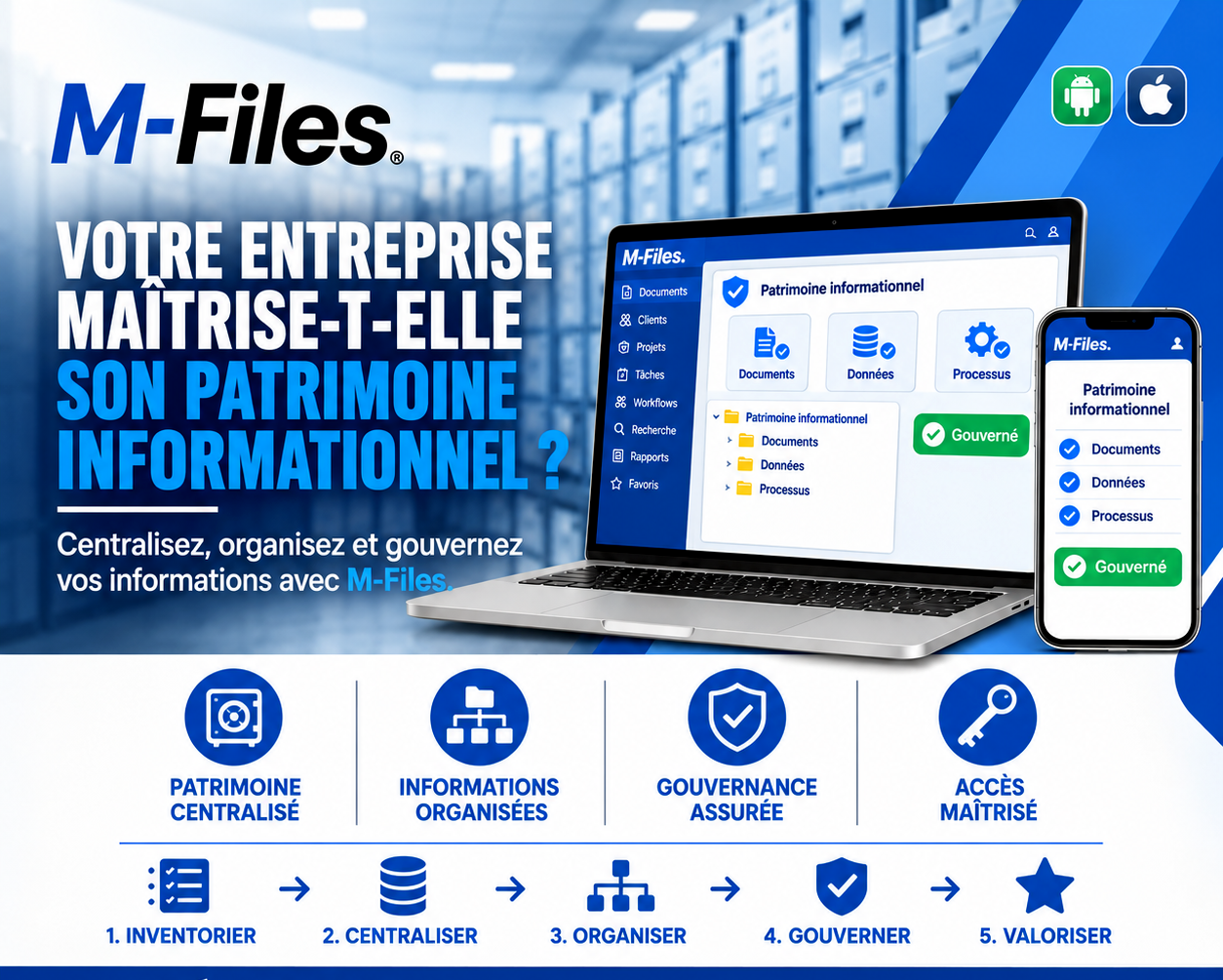
DOES YOUR COMPANY MASTER ITS INFORMATION ASSETS?
Documents, data and processes centralized, organized and governed: discover how M-Files turns information into an asset.
Galaxy Conseils • Information governance & business valuation
In a few years, Société Alpha has grown a great deal: eighty employees, three sites, contracts with several banks and large companies. To fund the next stage, Aïcha is in talks with an investor ready to take a stake.
Before committing, the investor asks to examine the company in detail: client and supplier contracts, personnel files, quality procedures, property titles, administrative approvals. A list of nearly two hundred documents.
Aïcha mobilizes her team. The contracts are with the sales director, partly in his emails. The procedures are in a shared folder no one has updated in two years. Some documents only exist on paper, in an office at another site. For others, no one knows who's responsible.
It takes six weeks to put the file together, instead of the two planned. The investor grows uneasy: if the company struggles this much to find its own documents, how is it being run? The negotiation grows tense, and Société Alpha's valuation suffers.
A company owns premises, machinery, cash. It also owns a less visible but equally valuable asset: its documents, its data, and its processes. Contracts, know-how, client history, procedures: this is the asset that lets it operate, prove what it does, and make good decisions.
Yet this asset is often poorly known and poorly managed:
No one knows exactly what exists. Which documents, which data, where, and in which version.
It's scattered. Across several departments, several tools, several sites, paper and digital alike.
It has no owner. No one is responsible for keeping it up to date, protecting it, or deciding how long to keep it.
It isn't valued. Instead of being an asset, it becomes a source of risk and wasted time.
Governing information means applying to this asset the same principles as to the company's other assets: knowing what you own, organizing it under clear rules, assigning owners, protecting access, and drawing value from it.
Let's replay Aïcha's story, this time with a Société Alpha that has taken charge of its information assets with M-Files.
1. Take inventory. With Galaxy Conseils' help, the company maps out its documents, data and processes: what exists, where, in what form, and who needs it.
2. Centralize. Important documents are gathered in M-Files, or linked from their original systems. Essential paper is scanned.
3. Organize. The information asset is structured into three main families: Documents, Data, Processes. Each item is described, classified, and tied to its client, contract, or site.
4. Govern. Each family has its own rules: an owner, access rights, a retention period, a validation workflow. On screen, a single word: "Governed."
5. Create value. Information becomes an asset: better-informed decisions, simpler audits, and a file ready the moment a partner asks for it.
When the investor sends his list of documents, Société Alpha puts the file together in a few days, giving the investor limited access to only the relevant documents. He draws a simple conclusion: this company knows where it's going. The negotiation closes on the terms Aïcha hoped for.
A centralized asset. Documents, data and processes gathered or linked in a single environment.
Organized information. Each item is described, classified, and tied to what it concerns.
Assured governance. Clear owners, retention rules, and validation workflows.
Controlled access. Everyone accesses what they need, and only that, even when opening a file to an outside partner.
M-Files doesn't just store files. It describes every document by its information (type, client, site, owner, status), which makes it possible to apply rules automatically: access rights, retention periods, validation workflows.
It can also connect to other systems to link data and documents, offering an overview of the information asset without having to move everything. Dashboards let leaders track this asset like any other.
Finally, because everything is tracked, the company can demonstrate to an investor, an auditor, or a regulator that it has mastered its information.
Ask yourself:
"If an investor, an auditor, or a partner asked you tomorrow for the complete list of your current contracts and procedures, how long would it take you to provide it?"
If the answer is counted in weeks, your information assets deserve to be governed.
At Galaxy Conseils, we help companies and financial institutions inventory, organize, and govern their information assets with M-Files, step by step. Want to see concretely what this would look like at your company?
Galaxy Conseils: innovation serving your performance.
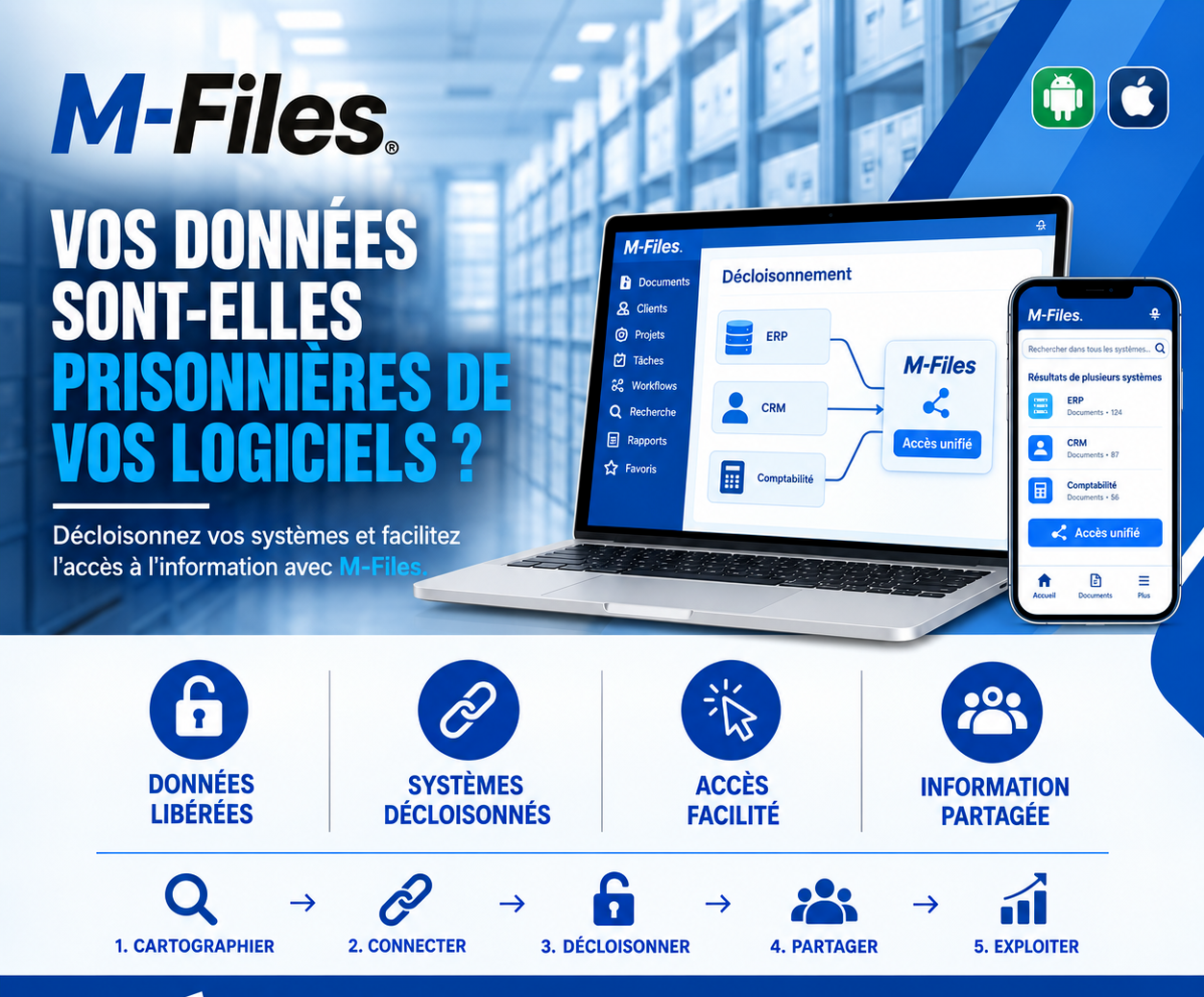
Is your data trapped inside your software? Freed data, unsiloed systems, easier access, shared information: discover how M-Files opens up access to information without changing your tools.
Read more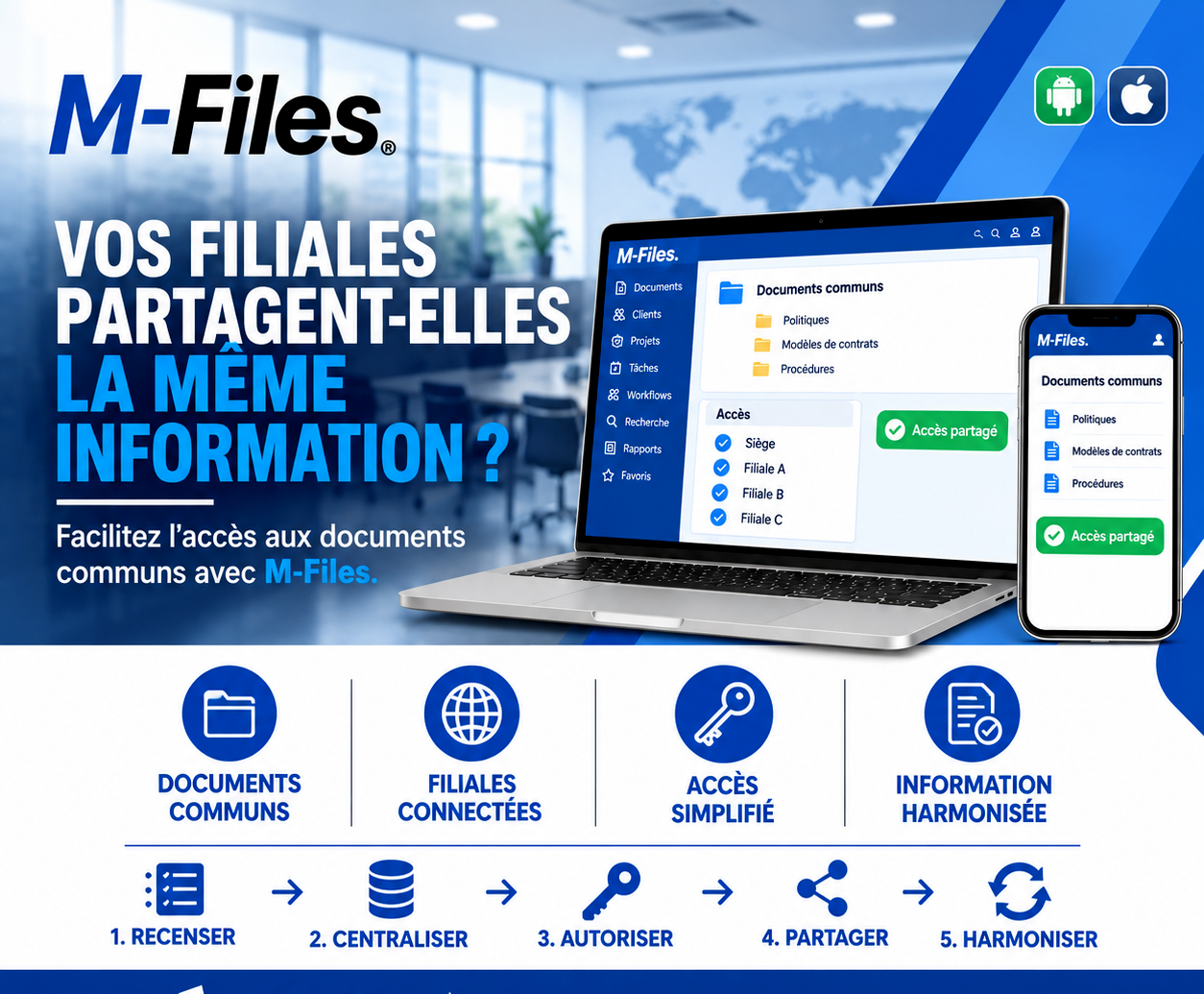
Do your subsidiaries share the same information? Shared documents, connected subsidiaries, simplified access, harmonized information: discover how M-Files aligns head office and subsidiaries.
Read more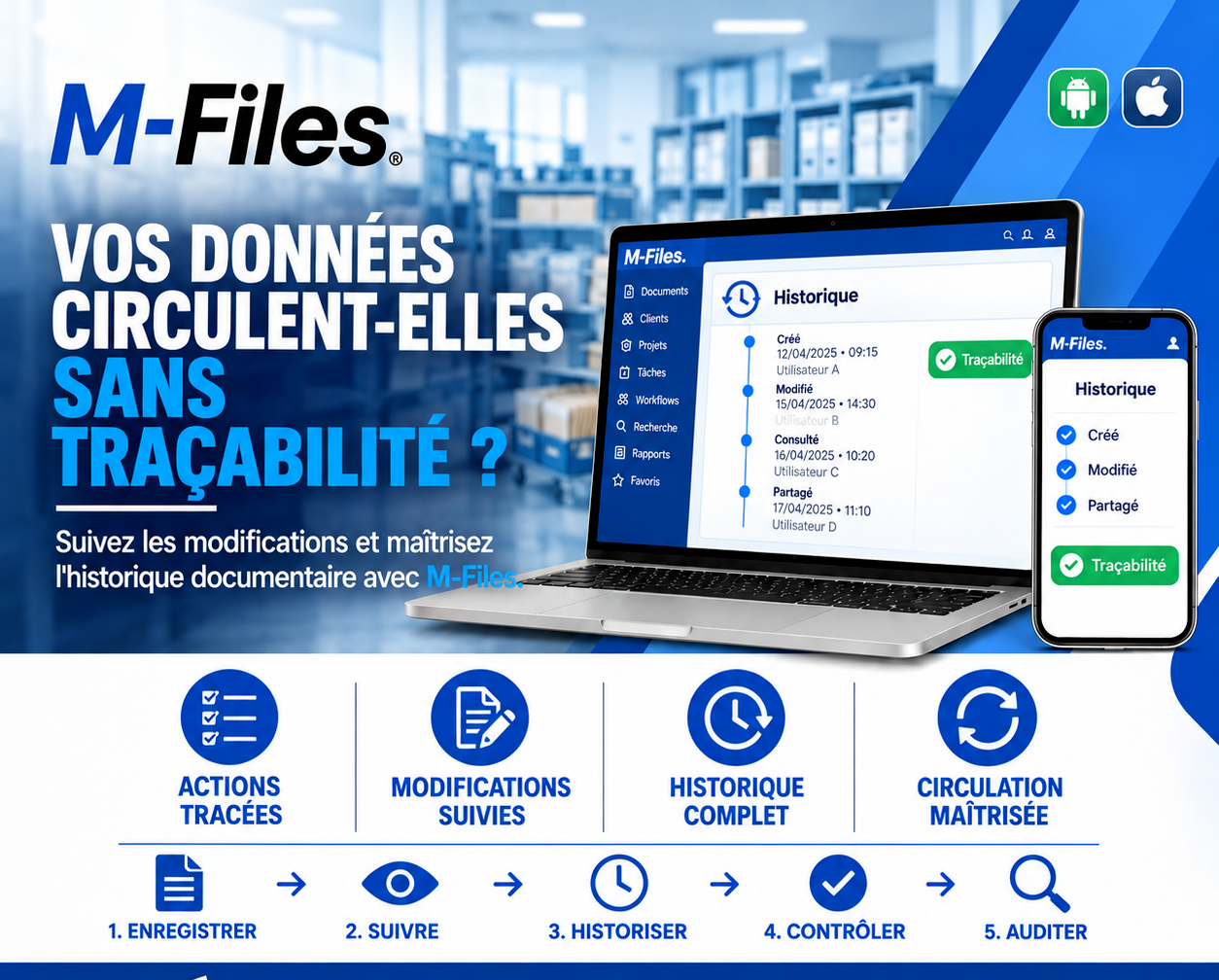
Is your data circulating without traceability? Tracked actions, monitored changes, complete history, controlled circulation: discover how M-Files follows every document, from creation to sharing.
Read moreContact us to learn more about our news and upcoming events.
Our offers, news and document management tips, straight to your inbox. One e-mail a month at most.
Unsubscribe in one click at any time. Privacy policy
Check your inbox
We've sent you a confirmation link. Click it to complete your sign-up.
Comments
No comments yet. Be the first to react!