
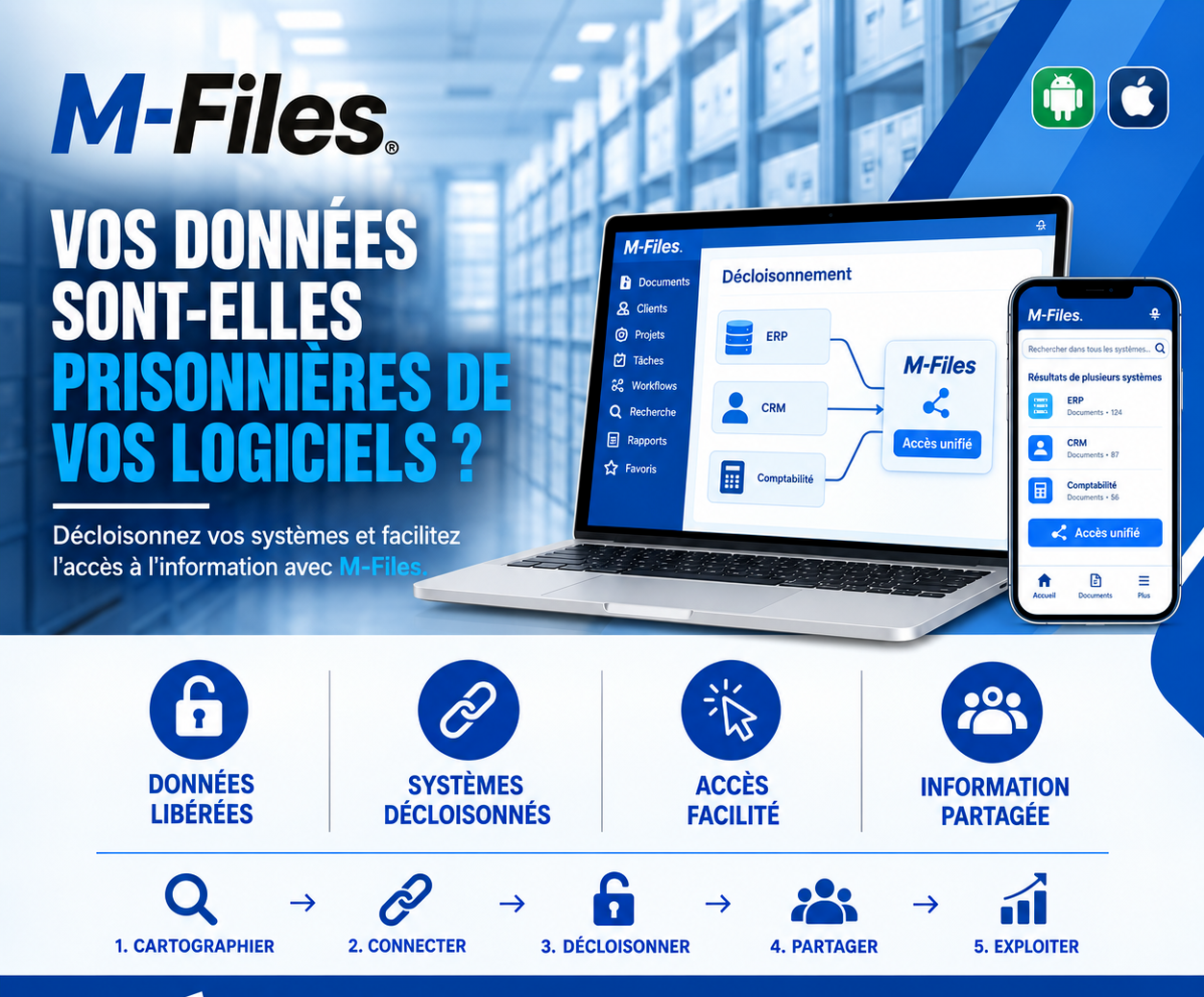
IS YOUR DATA TRAPPED INSIDE YOUR SOFTWARE?
Freed data, unsiloed systems, easier access, shared information: discover how M-Files opens up access to information without changing your tools.
Galaxy Conseils • Banking & financial institutions sector
One morning, Aïcha calls her branch: fees have been charged to Société Alpha's account for a maintenance contract she thought had been cancelled. She asks for a quick explanation, with supporting documents.
Her advisor wants to help right away. But the answer sits in three pieces of software. The contract and its cancellation amendment are in the management tool, which only a few back-office staff can open. The history of exchanges with Aïcha is in the CRM. And the fee entry is in the accounting software, reserved for the accounting department.
The advisor only has access to one of these tools. She emails the back office, another email to accounting, and waits. The colleague who manages contracts is on leave. The answer comes back four days later: the cancellation had indeed been recorded, the fees should never have been charged.
For four days, the information existed inside the bank. It was simply locked inside software the advisor couldn't open. And Aïcha, meanwhile, had time to wonder if anyone was really listening to her.
Every piece of software has its own users, licenses, rights, and way of organizing information. That's normal. But when documents and data are only accessible from inside each tool, they become trapped.
Access reserved for a few. Only those with a license and training for a given piece of software can search it for information.
Colleagues turned into go-betweens. To get a document, you have to ask someone else, and wait.
Searches to redo in every tool. A single question means opening several applications.
Dependence on people. When the only user of a piece of software is away, everything stops.
Unsiloing doesn't mean abandoning your software. It means opening a common door: a single interface where every authorized employee can search and view the documents they need, whatever system they're held in, without having to master each tool.
Let's replay Aïcha's story, this time at a bank using M-Files.
1. Map. The bank maps its systems (management, customer relations, accounting) and the useful documents they hold: contracts, amendments, exchanges, supporting documents.
2. Connect. M-Files is linked to these systems through its connectors. Their documents become viewable from M-Files, without being moved.
3. Unsilo. On her phone, the advisor runs a single search: "Société Alpha maintenance." Results come in from several systems at once: ERP, CRM, and Accounting.
4. Share. She opens the cancellation amendment and the matching internal note. Access rights apply: she sees what her role allows, nothing more.
5. Act. She confirms the error to Aïcha within the hour and starts the fee refund, backed by the supporting documents.
Aïcha gets an answer the same day, with her supporting documents and her refund. She didn't have to follow up. And the advisor didn't need anyone's help to find the information.
Freed data. Documents are no longer locked inside a single piece of software: they're viewable by those who need them.
Unsiloed systems. Your software stays in place, but its content is accessible from a common entry point.
Easier access. A single search, with results coming from several systems, on computer as well as on mobile.
Shared information. Every authorized employee finds the answer on their own, without going through a colleague.
M-Files is built to work with existing systems. Its connectors make it possible to search for and display documents stored elsewhere (shared folders, other software, databases), without migrating or duplicating them.
Access rights stay under control: unsiloing doesn't mean opening everything up. Everyone accesses the information their role justifies, and every lookup is tracked.
Each connection is designed around the systems already in place, together with your IT teams, starting with the information requested most often day to day.
Ask yourself:
"How many client requests are stuck waiting today because the information sits in a piece of software the person facing them can't open?"
If the answer isn't zero, your data deserves to be freed.
At Galaxy Conseils, we map your systems and connect M-Files to your existing tools to unsilo access to information, step by step. Want to see concretely what this would look like at your bank?
Galaxy Conseils: innovation serving your performance.
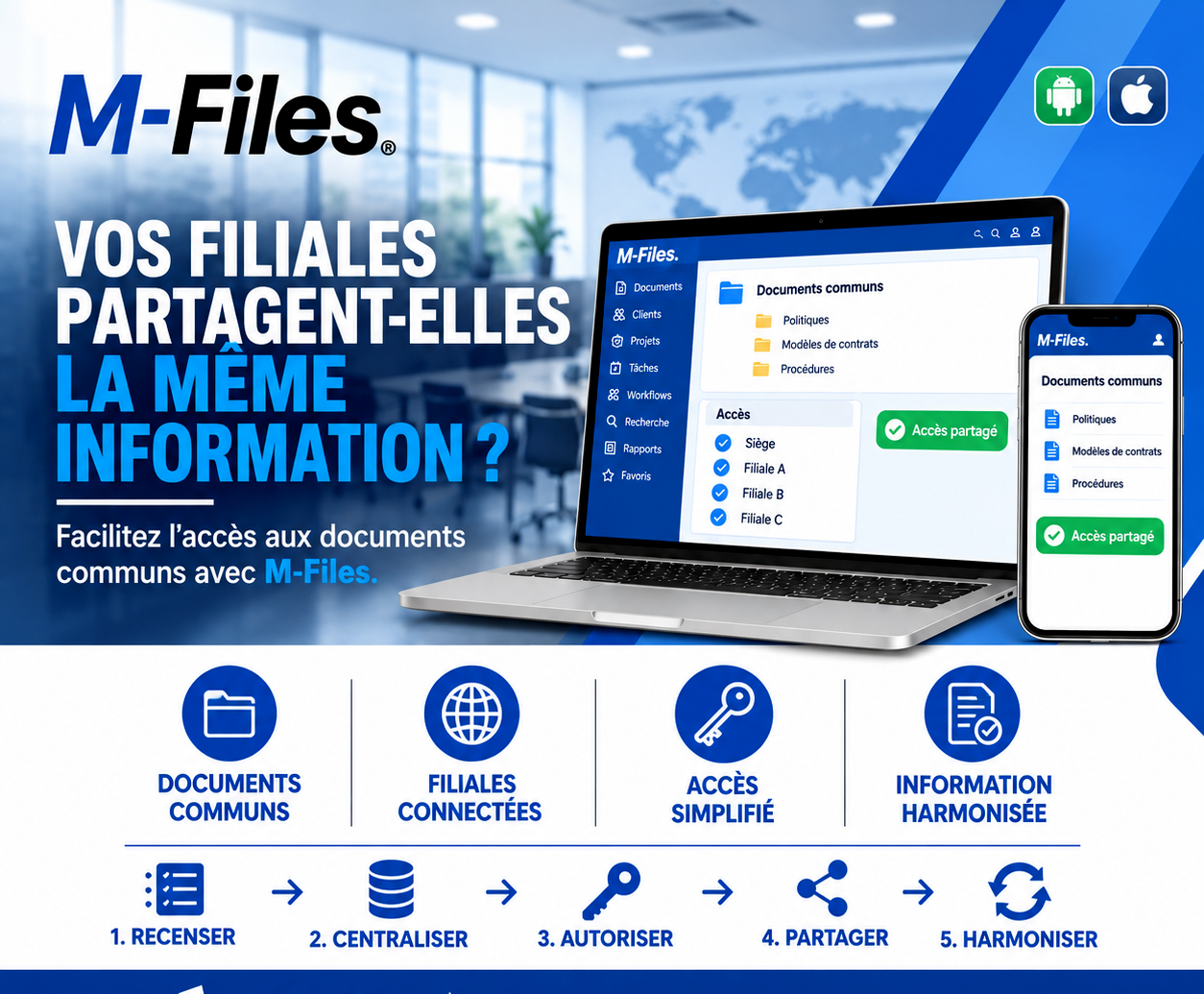
Do your subsidiaries share the same information? Shared documents, connected subsidiaries, simplified access, harmonized information: discover how M-Files aligns head office and subsidiaries.
Read more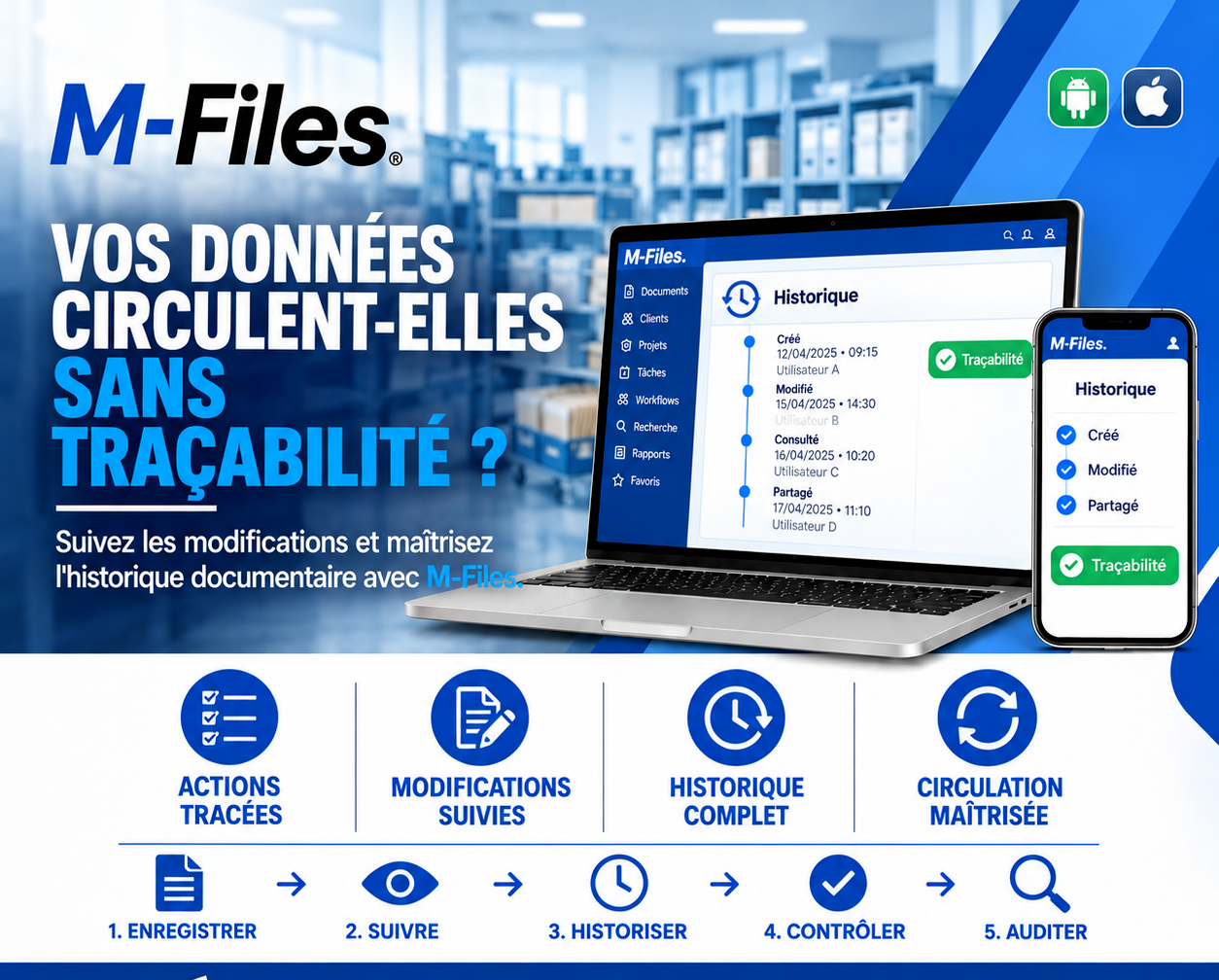
Is your data circulating without traceability? Tracked actions, monitored changes, complete history, controlled circulation: discover how M-Files follows every document, from creation to sharing.
Read more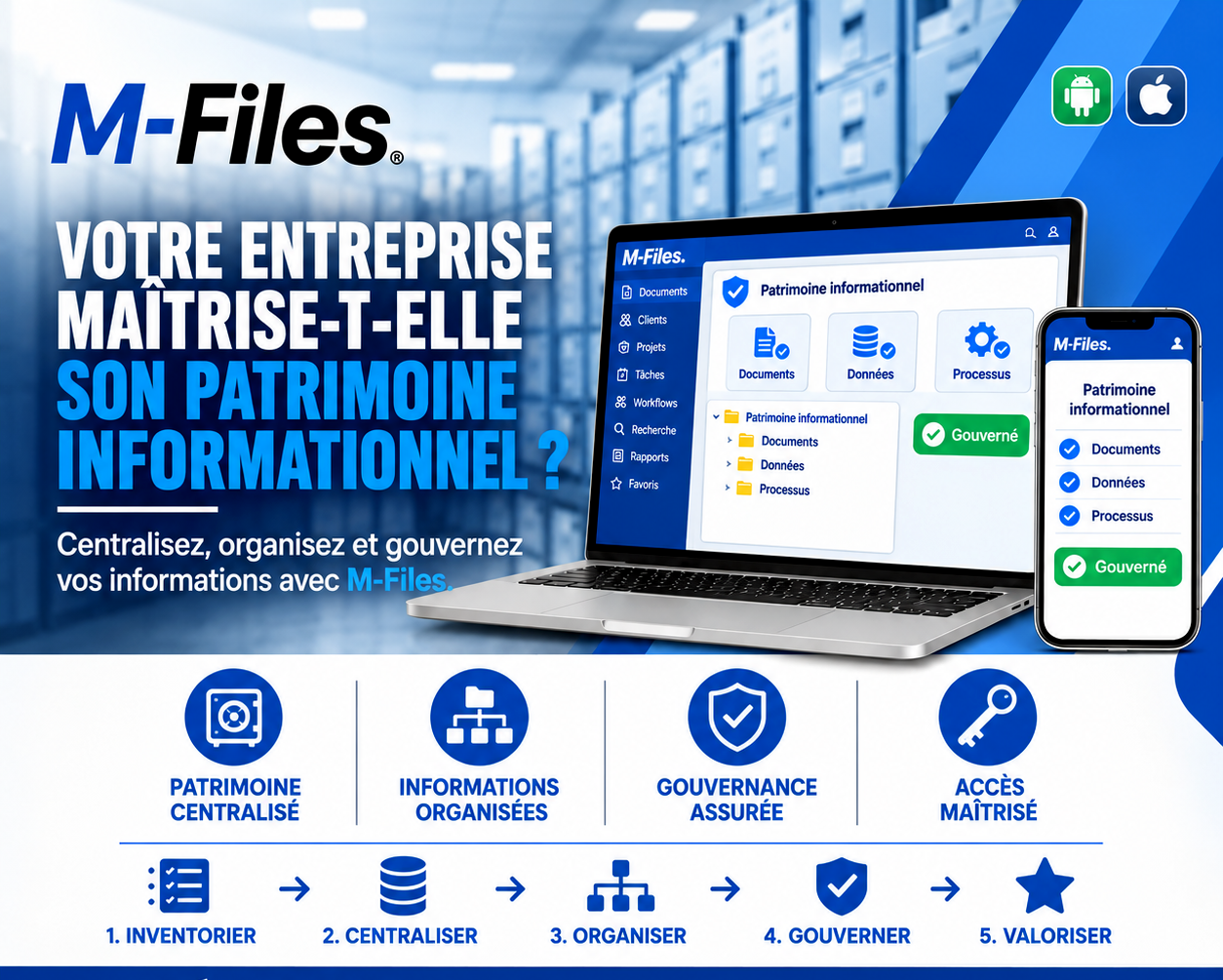
Does your company master its information assets? Documents, data and processes centralized, organized and governed: discover how M-Files turns information into an asset.
Read moreContact us to learn more about our news and upcoming events.
Our offers, news and document management tips, straight to your inbox. One e-mail a month at most.
Unsubscribe in one click at any time. Privacy policy
Check your inbox
We've sent you a confirmation link. Click it to complete your sign-up.
Comments
No comments yet. Be the first to react!