
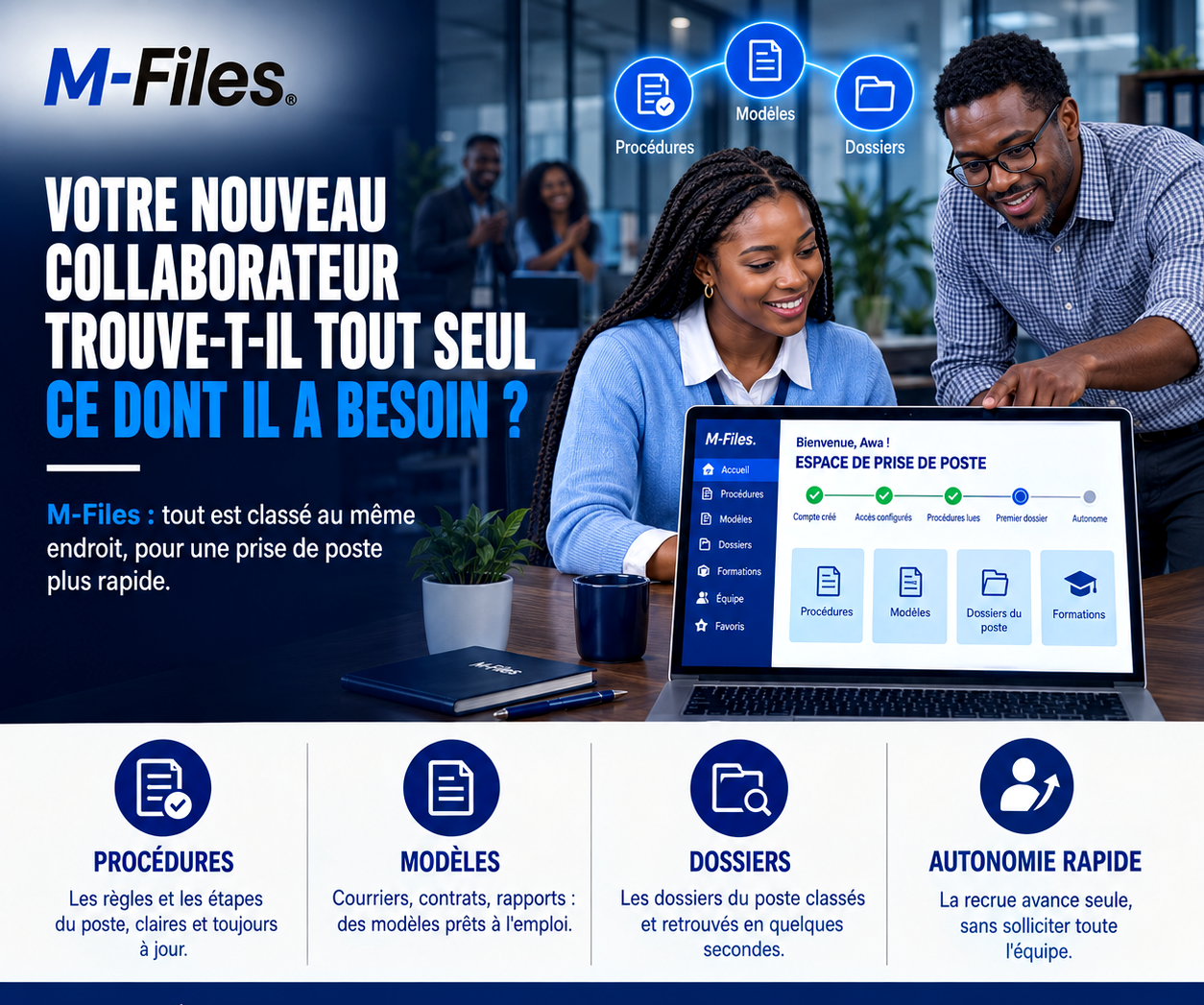
CAN YOUR NEW HIRE FIND WHAT THEY NEED ON THEIR OWN?
Can your new hire find what they need on their own? Procedures, templates, position files, and training all in one place: discover how M-Files speeds up onboarding.
Galaxy Conseils • Banking & financial institutions sector
Awa has just joined the branch as a corporate client advisor. Among the files handed to her in her very first week: that of Société Alpha, Aïcha's company, which is requesting an increase to its overdraft facility to finance new equipment.
Awa is skilled and motivated. But where to start? The overdraft review procedure is "somewhere on the server." She finds two versions, with no way to know which one is correct. The reply letter template? A colleague sends her one by email... dated last year and mentioning outdated terms.
Société Alpha's file, meanwhile, is scattered: part of it in a binder, another part in the previous advisor's mailbox. So Awa asks around. Her manager, Didier. The colleague in the next office. Then Didier again. Everyone helps willingly, but each interruption pulls someone away from their own work.
The result: the reply to Aïcha goes out ten days late, and with a letter that needs correcting. Aïcha, who was counting on this financing to start a new project, wonders if her bank really took her request seriously.
In many organizations, onboarding a new employee relies on their colleagues' memory. What they need to know is scattered across shared folders, mailboxes, and binders. This creates well-known problems:
Procedures that can't be found or are outdated: several versions circulate and no one knows which one is authoritative.
Outdated templates: letters, contracts, and reports are copied from old documents, carrying their errors along.
Scattered files: a client's history is spread across several places, sometimes with someone who's no longer there.
A constantly interrupted team: every question from the newcomer pulls a busy colleague away from their work.
For a bank, the stakes are twofold: an employee applying an outdated procedure creates a compliance risk, and a client left waiting loses confidence.
Good onboarding means a new employee who can find the essentials on their own: the rules of their role, the right templates, the files they're taking over, and the training to complete. Their colleagues stay there to share their experience, not to go searching for files.
Let's revisit Awa's story, this time in a bank that uses M-Files.
Account created. From day one, Awa logs in and finds her onboarding space: "Welcome, Awa!"
Access configured. Her access rights are assigned based on her role. She sees the files in her portfolio, and only those.
Procedures read. The overdraft review procedure is right there, in its single current version. Awa reads it, and her onboarding path moves forward a step.
First file. Société Alpha's file opens in one click: Aïcha's request, financial statements, previous exchanges, all brought together. To reply, Awa uses the up-to-date letter template, ready to use.
Independent. A few days later, Awa handles her files on her own. She asks Didier about genuine business questions, not to go searching for a document.
The reply reaches Aïcha on time, with the correct terms. And Aïcha discovers a new advisor who already knows her file.
Procedures. The rules and steps of the role are clear, gathered in one place and always up to date: everyone consults the version that's authoritative.
Templates. Letters, contracts, reports: ready-to-use, approved templates that prevent copying from old documents.
Files. The role's files are organized and found within seconds, with their full history.
Fast independence. The new hire moves forward on their own, without needing the whole team, and becomes productive faster.
With M-Files, you don't search for a file in a folder tree. You search for what you want:
Every document is described with simple information (type, client, department, status) that makes it findable wherever it is.
Procedures and templates are managed with versioning: when a rule changes, everyone sees the new version, and the old one stays in the history. Access rights follow each person's role, which protects the confidentiality of client files.
Finally, when an employee changes role or portfolio, their files stay organized and accessible to whoever takes over. The branch's knowledge no longer depends on a single person.
Ask yourself:
"If a new employee started on Monday, how many times would they have to interrupt their colleagues to find a procedure, a template, or a file?"
If the answer is "often," your documents deserve better organization.
At Galaxy Conseils, we help banks and financial institutions organize their procedures, templates, and files with M-Files, so every new employee becomes productive faster. Want to see what this would look like at your bank?
Galaxy Conseils: innovation at the service of your performance.
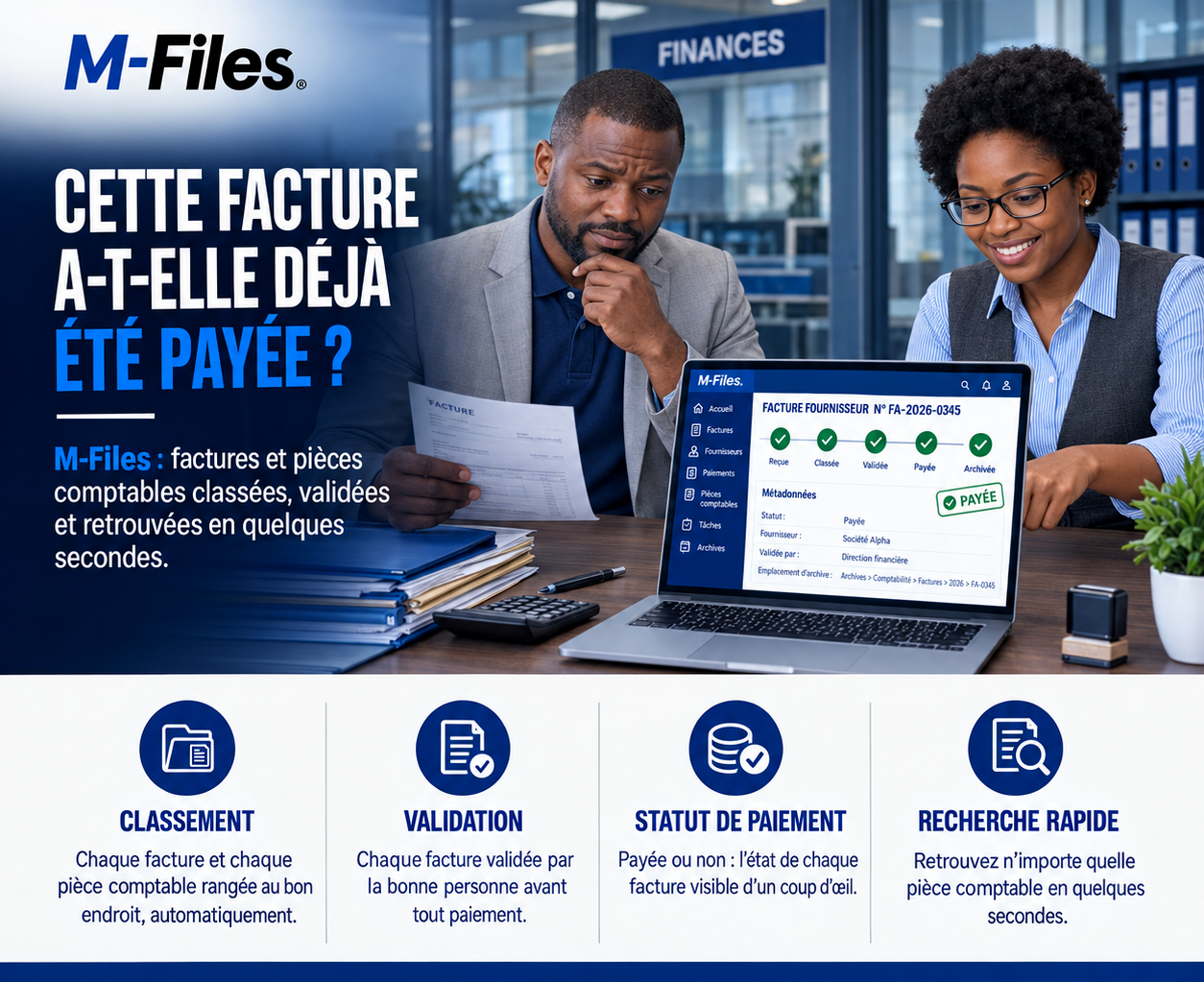
Has this invoice already been paid? Duplicate invoices, late supplier payments, missing accounting documents: discover how M-Files classifies, validates, and tracks every invoice.
Read more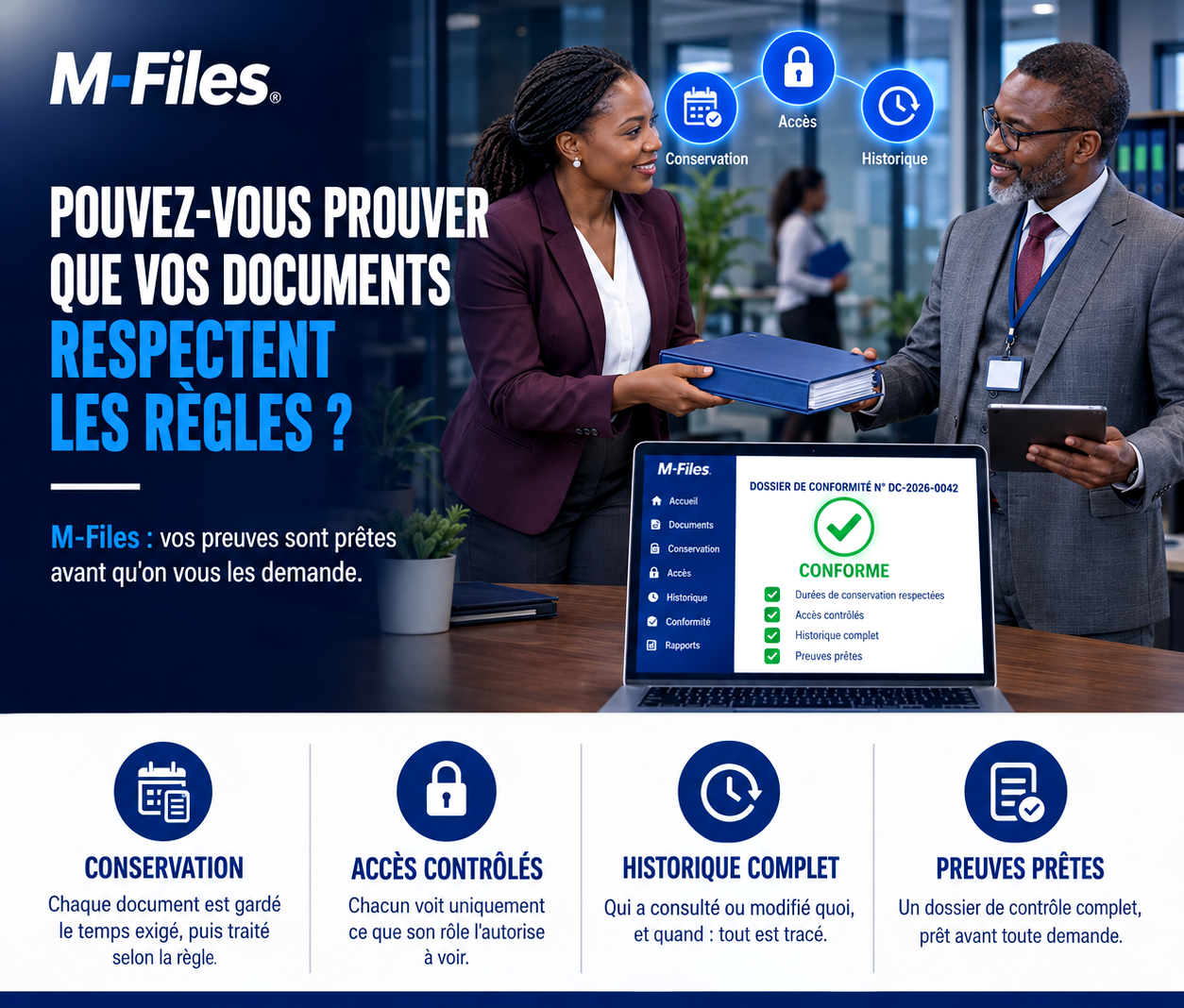
An inspection has been announced: can you prove your retention periods, access controls, and document history? Discover how M-Files prepares your evidence before anyone asks for it. Contenu
Read more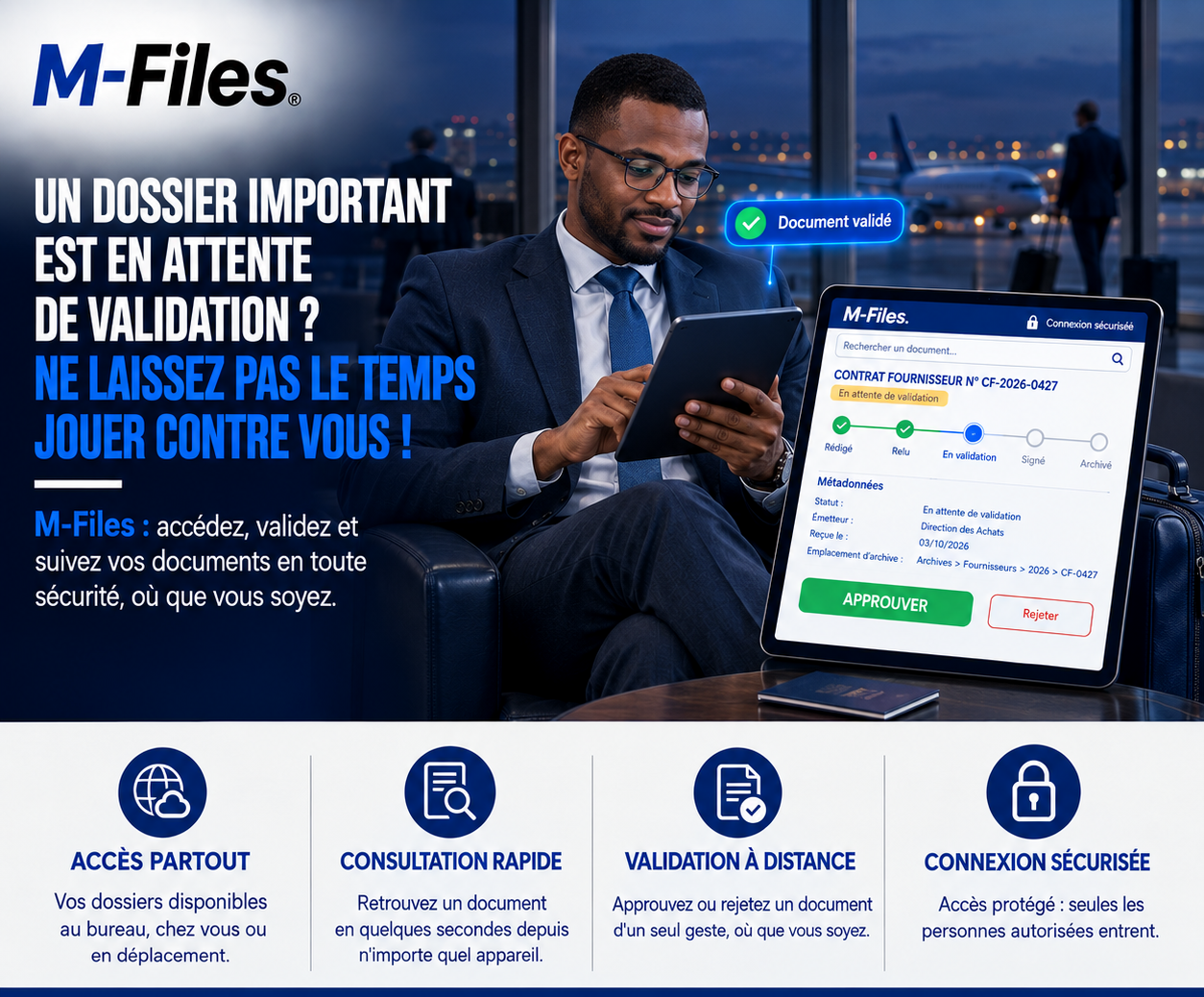
A supplier contract is waiting on a traveling director's signature, and the offer is about to expire? Discover how M-Files lets you access, approve, and track your documents securely, wherever you are.
Read moreContact us to learn more about our news and upcoming events.
Our offers, news and document management tips, straight to your inbox. One e-mail a month at most.
Unsubscribe in one click at any time. Privacy policy
Check your inbox
We've sent you a confirmation link. Click it to complete your sign-up.
Comments
No comments yet. Be the first to react!