
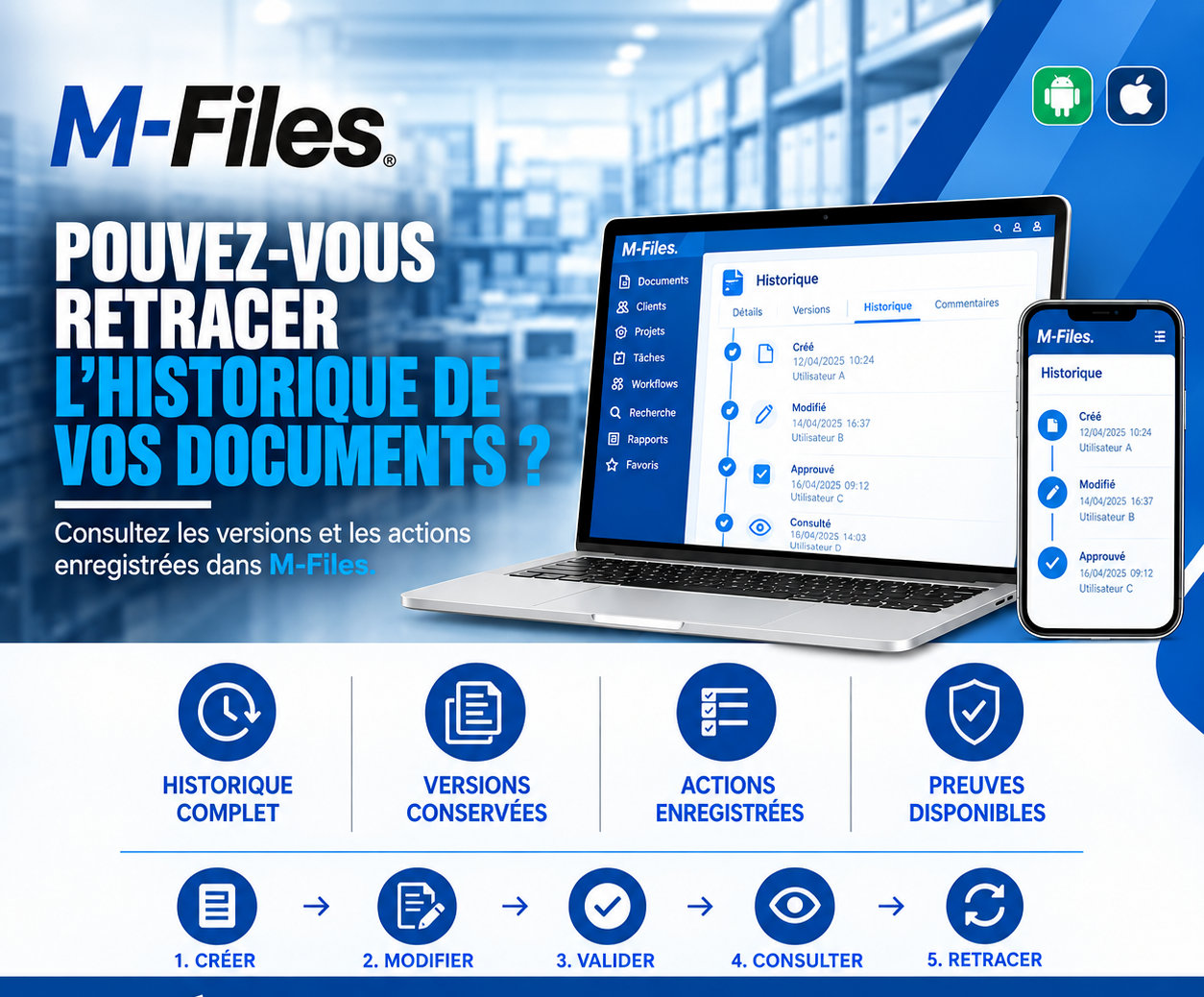
Can you trace the history of your documents?
Who approved this file, and when? If the answer takes days rather than seconds, the audit won't go easy on you.
Galaxy Conseils • Banking & financial institutions sector
Six months ago, the bank granted Société Alpha an increase to its credit line. The file followed its course: the credit memo was drafted by Aïcha's advisor, completed by the analyst, approved by the committee, then passed on to set up the financing.
Today, internal audit is reviewing the year's credit files. The auditor picks Société Alpha's and asks three simple questions: who approved the credit memo, and when? Is the approved version really the one used to set up the credit? Who has accessed the file since?
"To answer, you have to dig. The memo exists in several copies: one on the advisor's computer, one in the analyst's inbox, one printed and signed in the committee's binder. The dates don't quite line up. No one can say who has opened the file since the decision."
Aïcha's credit had been granted correctly. But for lack of being able to show it simply, the file is flagged in the audit report, and the team spends days reconstructing what happened.
Multiple versions
No way to say with certainty which one was approved.
Untraced actions
An edit or an approval is logged nowhere, except in someone's memory.
Invisible access
No one knows who had access to a sensitive file.
Evidence to reconstruct
Every audit request turns into an investigation.
The solution isn't to write everything down by hand in a register. It's to work in a system that automatically records every stage of a document's life: its creation, its edits, its approvals and its views, with the date, the time, and the person involved.
🕐 Every action, dated and attributed, in order, from day one to the last
1. Create — the advisor creates Société Alpha's credit memo in M-Files. The history logs: "Created," with the date, the time, and his name.
2. Edit — the analyst completes the memo. A new version is created; the history logs "Edited," and the previous version stays available.
3. Approve — the committee approves the memo in the approval workflow. The history logs "Approved," with the approver's name and the exact time.
4. View — every time an authorized person opens the file, it's logged: "Viewed," with the date and time.
5. Trace — six months later, the auditor opens the History tab: it's all there, in order, from creation to the last view.
She sees that the version approved by the committee is exactly the one used to set up the credit, and that only the people involved viewed the file. She even checks this information from the mobile app, between two meetings.
Aïcha's file is signed off in minutes, with no remarks. The team gets back to work, and the bank shows, evidence in hand, that it does things by the rules.
A complete history — every stage of a document's life is logged automatically, in order.
Versions kept — every version stays available: you know which one was approved and which one is in force.
Actions logged — creation, editing, approval, viewing: every action is dated and attributed.
Evidence available — you answer auditors and authorities in minutes, without reconstructing the past.
In a shared folder, a file only keeps its last modification date. In M-Files, every document keeps the history of all its versions, and the activity log records users' actions: creation, editing, status change in an approval workflow, viewing.
This information doesn't depend on everyone's good will: it's recorded automatically, and can't be erased by an ordinary user. It forms a solid basis for internal and external controls.
And because the history is attached to the document itself, you only need to open the document to view it, on computer as well as on mobile.
"If an auditor asked you today who approved a credit file six months ago, and exactly which version, how long would it take you to answer?"
If the answer is counted in days, your documents deserve a reliable history.
We help banks and financial institutions trace the life of their documents with M-Files, so they can face audits and controls with confidence.
Galaxy Conseils: innovation in the service of your performance.
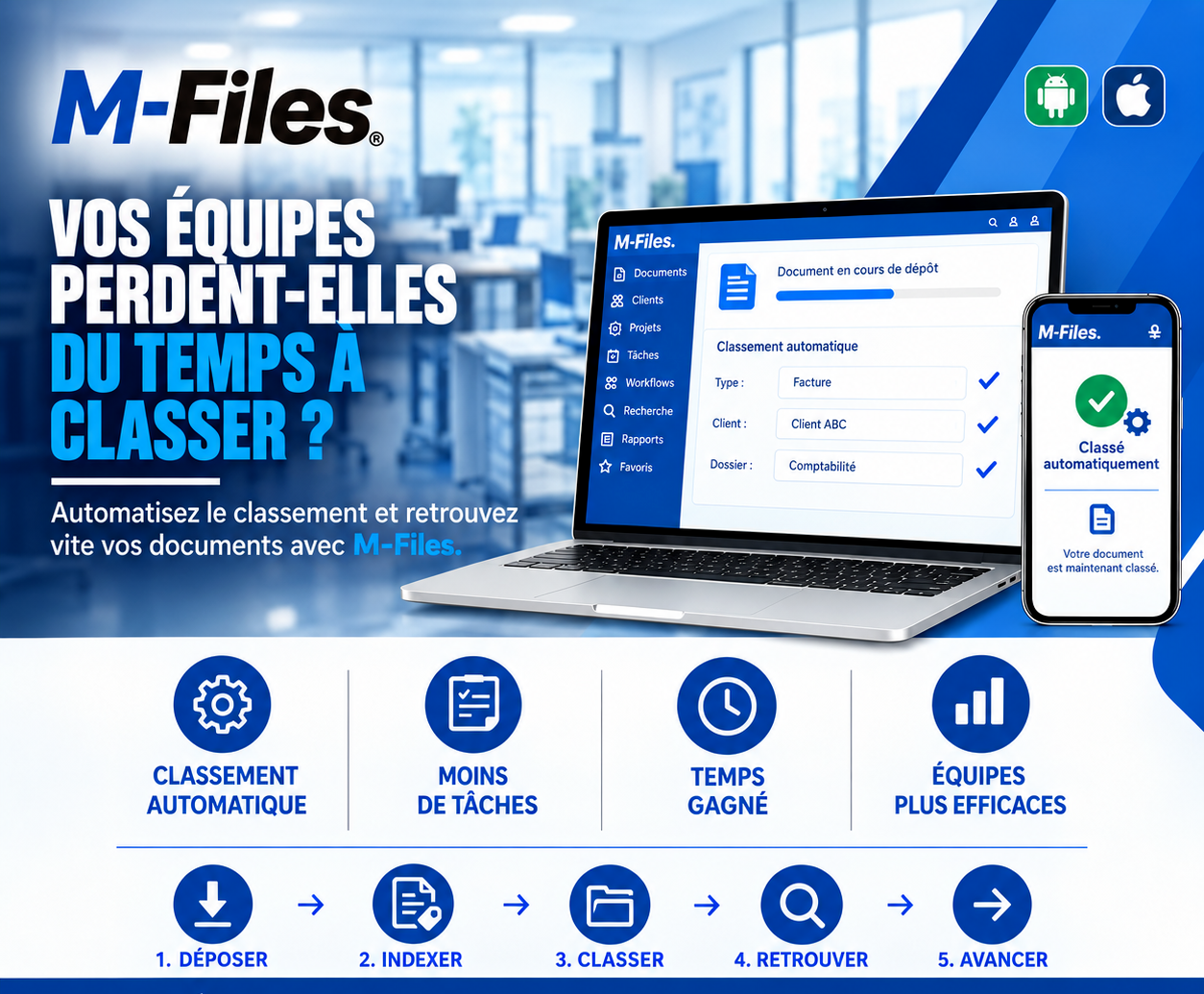
Is your team wasting time filing documents? Automatic filing, fewer repetitive tasks, time saved, more efficient teams: discover how M-Files files your documents for you.
Read more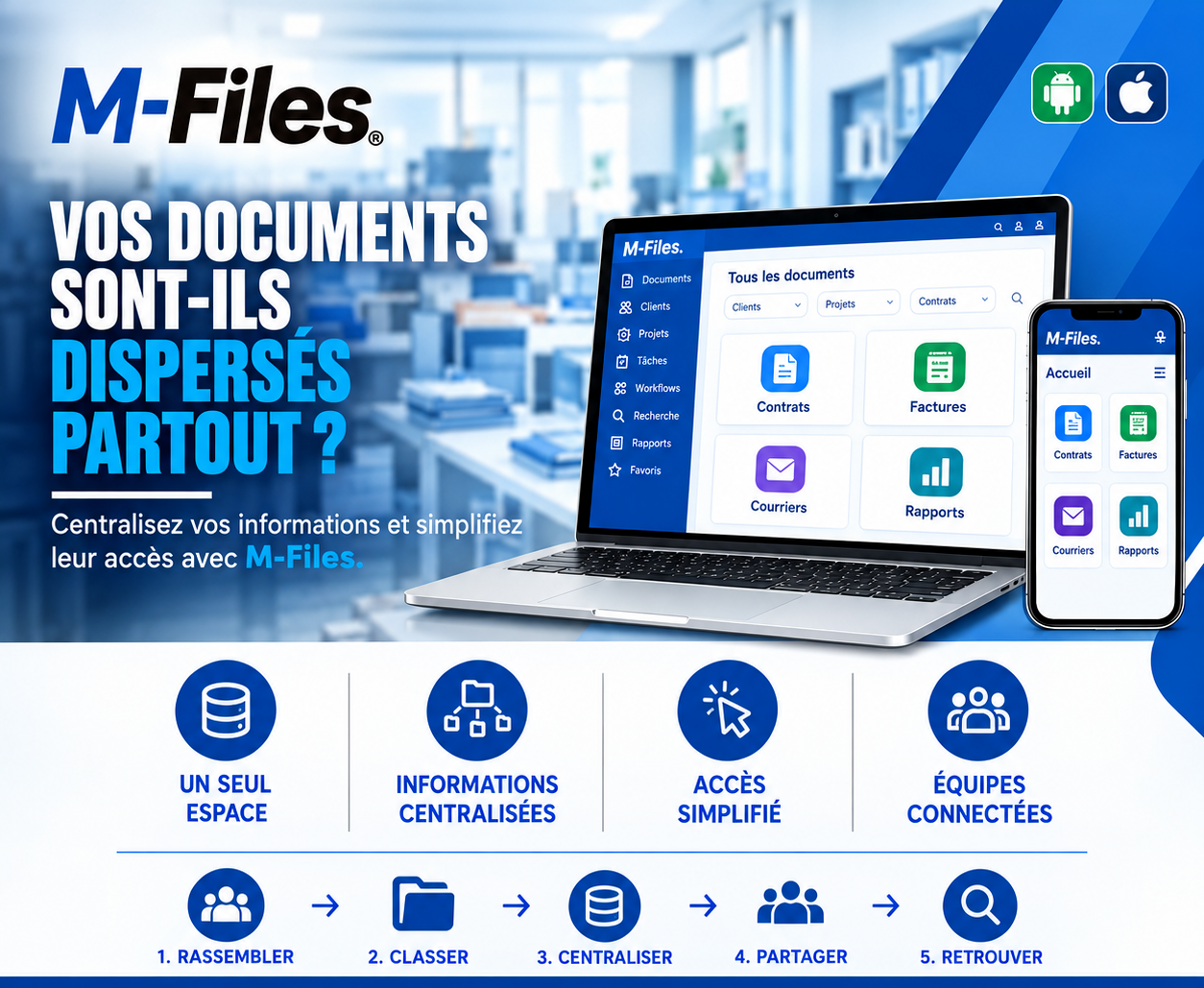
Are your documents scattered everywhere? A single space, centralized information, simplified access, connected teams: discover how M-Files brings your documents together.
Read more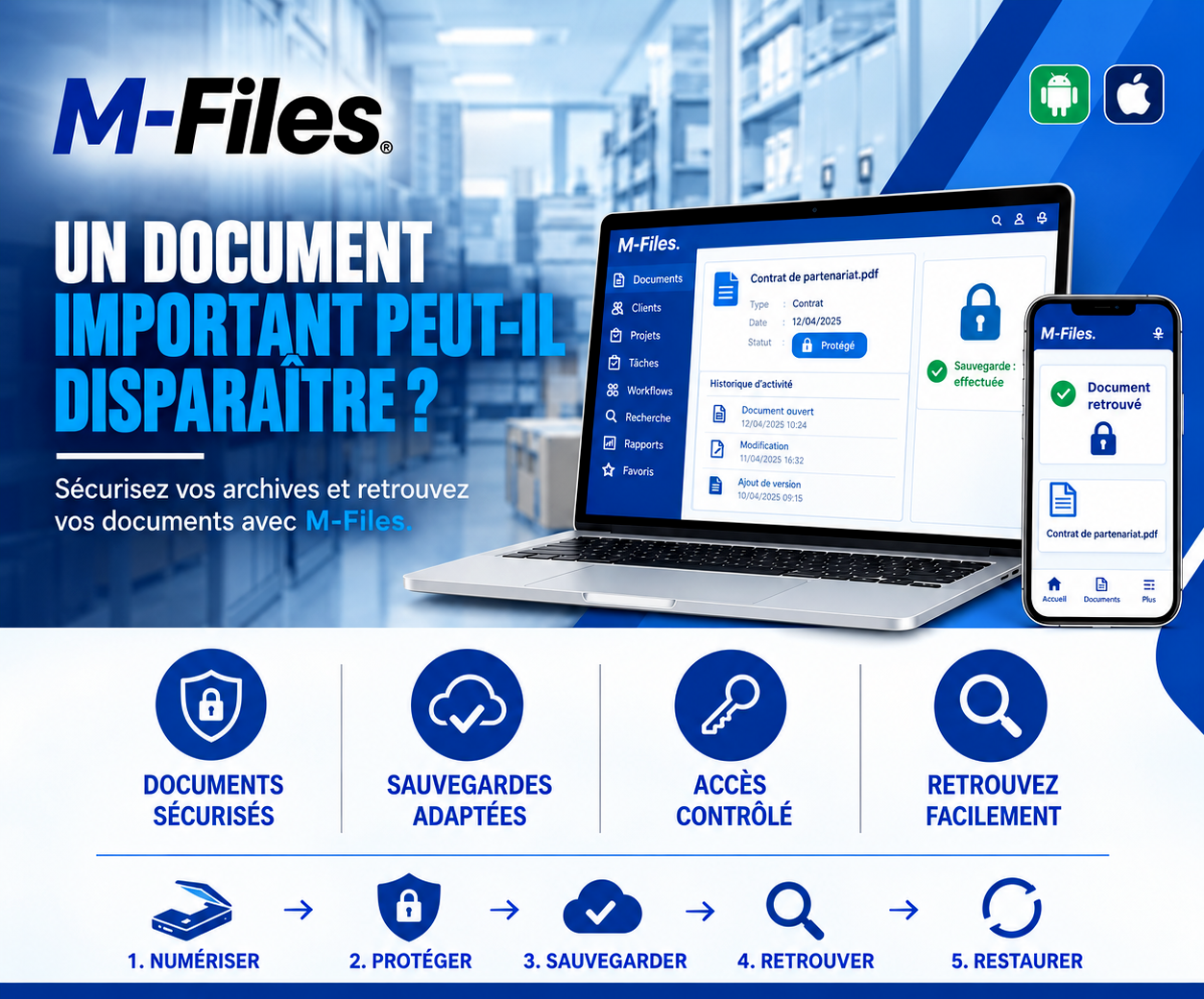
Can an important document disappear? Secured documents, suitable backups, controlled access, possible restoration: discover how M-Files protects your most valuable documents.
Read moreContact us to learn more about our news and upcoming events.
Our offers, news and document management tips, straight to your inbox. One e-mail a month at most.
Unsubscribe in one click at any time. Privacy policy
Check your inbox
We've sent you a confirmation link. Click it to complete your sign-up.
Comments
No comments yet. Be the first to react!